Port Authority
A port authority operates ports and other transportation infrastructure for a special-purpose district. Whether operated directly by the government or in cooperation with government agencies, North American port authorities are public entities and are governed by a board or commission. Most port authorities are financially autonomous. Port districts may also operate shipping terminals, airports, railroads, and irrigation facilities. The port authority often owns land, dictates fees, and collects taxes.

Hydrogen Fuel Cell Harbor Craft Pilot Study Launched in Singapore
ABS, Marinteknik Shipbuilders (S), SeaTech Solutions International (S), and VINSSEN…

MPA, PSA Singapore Invite Proposals for Autonomous Container Feeder Vessel Solutions
The Maritime and Port Authority of Singapore (MPA) and PSA Singapore (PSA) have launched…

Singapore, Los Angeles and Long Beach Renew Green Corridor Agreement
The Maritime and Port Authority of Singapore, Port of Los Angeles and Port of Long Beach…

Zinus to Support New London State Pier Shore Power Project
Zinus Power LLC has announced that it has been awarded a contract by the Connecticut…

Singapore: Container Ship Fire Extinguished
A fire involving containers on board the London-registered container vessel Ever…

Port Authority of Puerto Quetzal to Receive Damen ASD Tug 2312
Damen Shipyards Group client Arrendadora Continental has been awarded a contract…

Russian Oil Producers Threaten Force Majeure Over Baltic Port Attacks
Russian oil producers have warned buyers they could declare force majeure on supplies from major Bal

MoU for Newbuild Ammonia Bunkering Vessel Ops
Sumitomo Corporation, Kawasaki Kisen Kaisha, Ltd., and NYK Bulkship (Asia) Pte. Ltd.

Japanese Consortium Plans Ammonia Bunkering Operations in Singapore
Sumitomo Corporation, Kawasaki Kisen Kaisha, Ltd. (“K” LINE) and NYK Bulkship (Asia)…

Singapore Bunker Sales Eased in February
Marine fuel sales in Singapore softened in February after two months of strong seasonal volumes…

Shipowners to Lead Maritime Transformation Talks at APM 2026
The transition towards digitalisation and automation is speeding up in the maritime industry…

Russian Oil Exports Curtailed By Drone Attacks, Weather
Russia has been unable to capitalize on this week's surge in global crude prices…
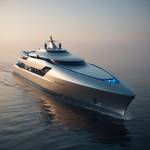
The maritime industry is on the brink of a revolutionary transformation with the advent of autonomous ships. These vessels, capable of operating without human intervention, represent a significant leap forward in technology, promising to reshape the future of global shipping. Autonomous ships, also known as unmanned vessels, are designed to navigate and perform various operational tasks using advanced sensors, artificial intelligence (AI), and communication systems. This innovation is set to enhance efficiency, safety, and sustainability in the maritime sector.
Naval architecture is the field of engineering which deals with the design, construction and repair of ships, boats, and other marine vehicles. Ship and vessel design relies on many of the same technologies and engineering expertise found on shore…
The vast, open oceans have long served as conduits for commerce, adventure, and exploration. However, along with the grandeur of maritime activities comes inherent risks, one of which is the specter of armed robbery at sea. Also known broadly as maritime piracy, this menacing threat envelops not just the economic marine highway but also the lives and safety of those who navigate it.
Modern pipelines are installed with and other control devices (pumps and valves) to efficiently move liquids, gases, slurries (solid particulates in liquid suspension) and even solids. Pipelines usually consist of welded sections of metal pipe…
A ship simulator is an advanced training device; an electronic or mechanical system used to expose vessel operators and crew members to typical shipboard conditions and systems. Simulation training is not a substitute for the experience of training on an actual vessel…

