Ship Simulators
A ship simulator is an advanced training device; an electronic or mechanical system used to expose vessel operators and crew members to typical shipboard conditions and systems. Simulation training is not a substitute for the experience of training on an actual vessel, but is used as a preliminary method to thoroughly familiarize students with equipment, procedures, and processes. Simulation also is useful for review and for demonstrating updates and modifications to existing craft.

Liberia Opens Maritime Training Institute
The Liberia Maritime Training Institute (LMTI) was officially opened by Liberia President…

Wallem Adds Three Ship Simulators in Ukraine
The Wallem Maritime Training Center in Odessa, Ukraine added three training simulators…

PC Maritime to Install ECDIS in 50-vessel China Shipping Deal
PC Maritime’s Navmaster ECDIS has been chosen by China Shipping Group to be fitted…
MSI to Train NOAA Officers
Maritime Simulation Institute to Provide Professional Maritime Training to NOAA Officers…
HR Wallingford Sign Navigation Simulator Agreement with FMSC
HR Wallingford has recently signed an alliance agreement with Fremantle Maritime…
Cal Maritime Will Host 2012 Koch Sea Scout Cup
The California Maritime Academy (Cal Maritime), a campus of The California State University…
Panama Canal Authority Opens Simulator Center
In commemoration of the Panama Canal’s 88th Anniversary on August 15th, Panama President…
3D printing, also known as additive manufacturing, is rapidly gaining traction in the shipbuilding industry. This innovative technology allows for the creation of complex components and structures by adding material layer by layer, rather than subtracting it from a larger block. As the maritime sector seeks to enhance efficiency, reduce costs, and improve sustainability, 3D printing is emerging as a powerful tool that has the potential to revolutionize shipbuilding and repair processes.
All ships need maintenance and repairs. Many repair and maintanance operations can be performed at sea or by the crew in port. Complicated or large-scale repairs might require the ship to be removed from commercial operation. Classification…
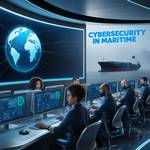
As the maritime industry undergoes a digital transformation, the integration of advanced technologies such as automation, Internet of Things (IoT), and big data is revolutionizing operations. However, this digital shift also brings significant risks, particularly in the realm of cybersecurity. Protecting maritime assets, systems, and data from cyber threats has become a critical priority as the industry becomes more connected and reliant on digital infrastructure.
Narco-submarines, the clandestine vessels used by drug traffickers, represent one of the most sophisticated and elusive methods of smuggling drugs across international waters. These semi-submersible and fully submersible crafts are a testament to the ingenuity and resourcefulness of criminal organizations in circumventing law enforcement efforts. This article delves into the history, construction, operation, and interdiction of narco-submarines, highlighting their impact on global drug trafficking.
The vast, open oceans have long served as conduits for commerce, adventure, and exploration. However, along with the grandeur of maritime activities comes inherent risks, one of which is the specter of armed robbery at sea. Also known broadly as maritime piracy, this menacing threat envelops not just the economic marine highway but also the lives and safety of those who navigate it.