
Number of Indian Seafarers Grows 45%
Employment of Indian seafarers on Indian and foreign ships witnessed a growth of 45 percent in the last three years.The Minister of State for Shipping Mansukh Mandaviya informed the Parliament that the number has increased from 143940 in 2016 to 208799 globally in 2018.The Minister informed that the Government has taken several initiatives and policy decisions to help increase the share of Indian seafarers at the global level.For example, seafarers are being employed on ships through secured paths i.e. either by Indian shipowners on Indian flag ships,regulated under Merchant Shipping Act, 1958 or on foreign flag ships through registered…
Moving Ahead Powerfully
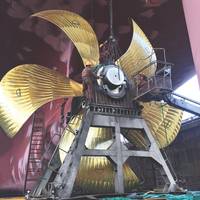
The layout of ship propellers is a balancing act between optimal power conversion and the avoidance of unwanted cavitation effects, which can result in damage to the propeller structure and higher noise levels. MAN Diesel & Turbo in Frederikshavn, Denmark, is using the computational fluid dynamics (CFD) simulation solution STAR-CCM+ from Siemens PLM Software to model cavitation and optimize ship propellers. Two mid-size container ships of 8,500 TEU – CSCL Europe and CSCL America – will be upgraded by retrofitting a efficient Kappel propeller.
DNV GL, South Korean Yards Kicks off Standardization
The first phase of a joint industry project (JIP) to promote a global standard for engineering and construction of offshore oil and gas installations has delivered four recommended practices (RPs). The outcome of the JIP, led by DNV GL, will be reduced complexity, less rework and delays and greater predictability. This will help reduce cost and increase quality further, enabling more projects to move forward. Phase 1 of the JIP has comprised DNV GL, Hyundai Heavy Industries (HHI), Daewoo Shipbuilding and Marine Engineering Company (DSME), Samsung Heavy Industries (SHI), the Korea Offshore and Shipbuilding Association and the Korea Marine Equipment Research Institute. The RPs provide guidance for meeting requirements in multiple recognized standards applied globally.
Rotterdam Unions, Container Firms Reach Deal on Job Security
The trade unions FNV and CNV Vakmensen, the Rotterdam container companies and the Port of Rotterdam Authority concluded consultations on employment in the container industry. The trade unions will present the outcome of the negotiations to their members with favourable advice. The most important part of the negotiation result is that the companies involved will offer a job security guarantee until 1 July 2020, to those of their employees who already had an employment contract for an indefinite period by 1 January 2015 and who are covered by a CLA of the corresponding company. Furthermore, the Port Senior Fit Scheme will be extended to employees aged 60 years. It has also been agreed that the 120 employees of ailing RPS will be offered a customised solution.
The Legal Consequences of 46 CFR Subchapter “M”

As the holiday season and the end of another year quickly approaches, the towing industry patiently waits for the Coast Guard to finalize the long-awaited towing vessel inspection rule. More than 10 years ago, Congress passed the Coast Guard and Maritime Transportation Act of 2004, requiring more stringent regulation of uninspected towing vessels (UTVs). Since that time, the Coast Guard and several industry groups (including the Towing Safety Advisory Committee (TSAC), American…
Study: An Arctic Oil Well Blowout Could Spread More Than 1,000km
Oil from a spill or oil well blowout in the Arctic waters of Canada's Beaufort Sea could easily become trapped in sea ice and potentially spread more than 1,000 kilometres to the west coast of Alaska, a World Wildlife Fund study showed on Friday. The WWF contracted RPS Applied Science Associates to model 22 different oil spill scenarios and map the spread of the oil, potential impact on the water and shoreline, and interaction with sea ice, wildlife and the surrounding ecology. Types of oil spills analyzed included shipping spills, shallow-water blowouts and deep-water blowouts. The BP Plc Macondo oil well rupture in 2010 that unleashed more than four million barrels of oil into the Gulf of Mexico was a deep-water blowout.
Marine Salavage: Responder Immunity Benefits a Responsible Party
Putting to rest the fears and misconceptions about what responder immunity means and what it will eventually do. It’s all good. As many in the response industry, and in many cases the marine industry in general appreciate, there has been an extended effort to enact an enhanced responder immunity regime following the lessons learned from the Deepwater Horizon incident. It is hard to believe that we only recently observed the fourth anniversary of this unfortunate incident. And…
Inside Paraguay’s Oil Boom
The Republic of Paraguay is a landlocked country in South America bordered by Argentina to the south and southwest, Brazil to the east and northeast, and Bolivia to the northwest. The Paraguay River runs through the center of the country from north to south. Due to its central location in South America, it is sometimes referred to as the Heart of South America. Paraguay’s geography consists of grassy plains and wooded hills in the east and mostly low, marshy plains to the west. Paraguay has a population of around 6.5 million, who consume 28,000 barrels per day (bpd) of refined petroleum products. Paraguay currently imports all of its oil, as it does not yet have any domestic production.
Trelleborg Names RPS Evans-Hamilton Service Partner
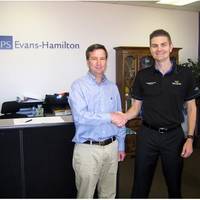
Trelleborg will provide a local presence for onsite marine services in North America, Central America and the Caribbean by appointing RPS Evans-Hamilton as Service Partner for the Docking and Mooring division of Trelleborg Marine Systems for these regions. Under the agreement, RPS Evans-Hamilton will be the sole provider of aftersales services for Trelleborg’s docking and mooring systems. The product portfolio includes Quick Release Hooks (QRHs) and Capstans, the Smart Dock family of docking aid systems (DAS)…
Forewind Spends to Make North Sea Wind Zone a Reality
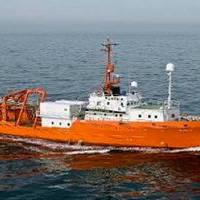
The latest seabed survey of the Dogger Bank offshore wind zone takes the cost of the Forewind consortium's spend on offshore surveys to almost £45 million. Since being awarded the rights to develop Dogger Bank in January 2010, Forewind has undertaken a huge range of geotechnical, geophysical and fish ecology surveys to understand and characterise the seabed and marine conditions of the zone as part of its environmental impact assessment work. The majority of the contracts have gone to UK companies including Hull-based Precision Marine Survey Limited…
Kirk Petrophysics Cuts to the Core
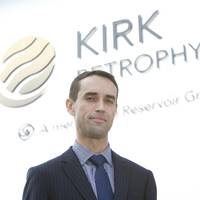
Global leaders in the oil and gas industry will descend on the U.K. for an annual technical day organized by Reservoir Group member company Kirk Petrophysics. Experts from across the field will lead the discussions at the event, which is being held at the firm’s newly expanded Core Center in Guildford next month. Specialists from leading international firms including Schlumberger, Dhahran Carbonate Research Center, SGS and Empirica will be among those attending the event. The technical day on May 30 will provide insight into the latest techniques being used in the coring industry.
Principle Power Names WindFloat Partners
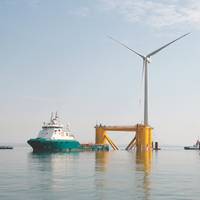
Renewable energy technology developer, Principle Power, was awarded a Department of Energy grant worth $4M and up to $47M in total funding, to support its WindFloat Pacific Demonstration Project. Principle Power has announced the list of official project partners, all marked to deliver essential contributions to the WindFloat project. The list of project partners include MacArtney Underwater Technology, Siemens Wind Power, Houston Offshore Engineering, the Pacific Northwest National Laboratory…
The Continued Pressing Need for Responder Immunity Enhancements
It has been over 2.5 years since the tragic incident involving the Deepwater Horizon occurred, resulting in the deaths of 11 and injuries to 17 men working on the platform and the discharge of approximately five million barrels of oil. The cleanup response required thousands of responders working several months to contain and clean up the spill under challenging conditions. In addition, immediately following the explosion emergency response vessels rushed to the rig to save lives and render assistance to those in peril.
Virtual Towing Tank State-of-the-Art and Future Trends
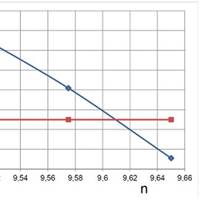
The use of computers to solve hydrodynamics problems in shipbuilding started in early days of scientific computing – as early as in aerodynamics and aerospace. Due to limited computing resources at that time, potential flow model was used in both aero- and hydrodynamics. However, while simulations based on Euler equations, Reynolds-averaged Navier-Stokes equations (RANSE) and most recently partially resolved Navier-Stokes equations (so-called “large-eddy” – LES – or “detached-eddy” – DES – simulations) have become established tools in aerodynamics…
Virtual Towing Tank State-of-the-Art and Future Trends
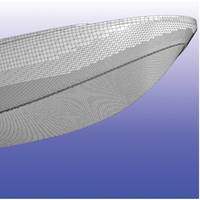
The use of computers to solve hydrodynamics problems in shipbuilding started in early days of scientific computing – as early as in aerodynamics and aerospace. Due to limited computing resources at that time, potential flow model was used in both aero- and hydrodynamics. However, while simulations based on Euler equations, Reynolds-averaged Navier-Stokes equations (RANSE) and most recently partially resolved Navier-Stokes equations (so-called “large-eddy” – LES – or “detached-eddy” – DES – simulations) have become established tools in aerodynamics…
Concordia Orders New P-MAX Tankers
predetermined price. for delivery in 2005-2006. on double propulsion systems, rudders and steering gear. to be either dredged or closed down. bottlenecks affecting oil transportation. important component of the country's economic and political development. year outside Russian export ports in the Baltic Sea. broken ice, prepared by icebreakers. is transported through the narrow and difficult-to-navigate Bosphorus. Bosphorus during daytime. companies, which have invested billions of dollars in the region. problem. through the Bosphorus without having to wait for lengthy periods. in the future. safely even if one engine room or its systems should fail. superior manoeuvrability. trafficked waters with strong currents such as the Bosphorus. has also been utilised in the new tankers, i.e.
Concordia Leads Tanker Innovation
Concordia Maritime of the Stena Group has again taken the industry lead announcing firm contracts for four (with two options) for an innovative new series of 49,900 dwt tankers dubbed P-MAX. Croatia’s Brodosplit Shipyard was tapped for the job, with delivery of the first ship scheduled for 2005.. The P-MAX is an extension of the creative Stena MAX concept, which was the development of an advanced class of tankers with features to ensure safe operation in the world’s most sensitive waters. The 600- x 131-ft. (183- x 40-m) P-MAX ships are designed to have lower draft and higher speed than traditional, modern products tankers, and will offer 70,000 cu. m. of cargo capacity, almost 30 percent more than the 55,000 cu. m. of today’s largest MR vessels.
The Floating Volvo
Vision, a unique VLCC built by Korea's Hyundai Heavy Industries Co., Ltd. (HHI) in that it features twin-engines and twin-propellers, was recently christened at the Ulsan Shipyard. Concordia Maritime AB's new ultra-large 315,000-dwt VLCC was christened by Mrs. Karen Fidler, wife of the president of Sunoco Inc., the company that chartered the VLCC. Built for Concordia Maritime, of the Stena organization, the VLCC is a revolutionary type of crude oil carrier. The 1,102 ft. (336 m) long Stena V-Max design VLCC differs from other large tankers built in the world to date. In addition to double hulls, the VLCC has double, completely separate engine rooms, double rudders and double propellers.
Galician Grit
Independent Spanish shipbuilder Hijos de J Barreras has again showed its mettle by delivering two specialized vessels within the space of just a few days, and by landing a three-ship contract to take its orderbook into mid 2003. Three years after being spun-off from the former Astilleros Espanoles (AESA), the Vigo yard demonstrates how a well-managed and motivated undertaking can successfully make the transition into private control. It provides a template for broader Spanish endeavors to slim the state's holding in a number of industrial sectors, not only shipbuilding. Barreras always displayed something of an independent style within AESA (now IZAR), of which it was part for nearly a quarter-century.