
Lifting the Call for Tightened Security
Keeping small response boats operating at top speed and ready for action is a key challenge in meeting tightened maritime security rules. Moving away from conventional technologies by incorporating high-speed hydraulics into boat lift design has brought forth a new solution. In addition to keeping their fleets operational ready, by using high-speed boat lifts, port authorities can now lift suspicious boats in seconds to inspect their hulls for drugs or bombs.
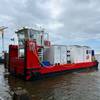
The US Coast Guard was the first to incorporate hydraulic boat lift technology into their operations. By combining high-speed hydraulics with remote control and stable platforms, the unique FloatLift by Sunstream has the boat ready to go by the time the crew can run out the dock. Not only does this meet the Coast Guard's need for fast response, immediate access to the hull and drive reduces the overall cost of maintaining their fleet. The speed and degree of lift have proven to be ideal for immediately inspecting the hulls of suspicious boats. The U.S. Navy has expanded the use of the FloatLift to other time critical missions, such as oil-skimming boats. Fire and police departments are finding the FloatLift ideal as their boats sit for long periods of time between responses.
With the FloatLift heavy-duty hydraulic cylinders move the foam-cored floats from the side of the boat to lock securely beneath it; patented over-center gravity locks provide additional assurance and protection.
This unique action not only allows for speed, it keeps the lift stable and level in all phases of the lifting. The FloatLift does not vary its buoyancy; the unsinkable foam-cored floats are not susceptible to air leaks. The sturdy floats double as maintenance platforms. "Because it's portable, ties like a boat and is AC or solar charged, the applications for this technology are endless," says Ken Hey, CEO and Founder of Sunstream. "The original version of the FloatLift was introduced to the consumer boating market in 2001 and quickly gained popularity since boaters found lift operation to be as easy as using an automatic garage door opener. The commercial version has similar performance but is engineered for the demanding applications of government and commercial customers."