Ferries, Freighters, Cruise Useful in Oceanographic Research
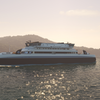
As the 36,000-ton ferry Norröna makes its weekly trip from Denmark to Iceland, it not only carries a load of up to 1,500 passengers and 800 automobiles, it will also help scientists learn about the movement of warm and cold waters into and out of the Nordic seas. It is the latest among a small group of commercial vehicles that oceanographers are enlisting to aid in their research. The vessel is equipped with an instrument called an acoustic Doppler current profiler. The device measures the velocity of water moving beneath the ship – from the surface to as deep as 800 meters – by calculating the speed and direction of floating zooplankton.
To better understand the variability of Gulf Stream currents, especially over long periods of time, it’s necessary to take frequent measurements along the same course for many years, an effort that would be impossible using conventional research vessels, given their expense and busy schedules. But since many merchant vessels travel the same route week after week and year after year, they are ideal for collecting the necessary data. Once it is installed on a ship, the acoustic Doppler current profiler takes measurements without requiring any human assistance. Due to natural variability in the oceans, the Norröna, built in 2003, will likely need to collect data for at least five years to provide enough useful information to analyze, and even longer than that to determine long-term trends. Other scientists has been collecting similar information from the freighter Oleander, which travels between New Jersey and Bermuda and which is equipped with the same instrumentation in 1992. The first 12 years of data collected by the Oleander demonstrated that the Gulf Stream off the U.S. East Coast is quite stable and varies little. The same data also showed that cold water from the Labrador Sea moves west and exhibits significant variability. Merchant vessels have been used for many years to collect sea surface temperature data and weather observations, but more complex measurements have required sending a scientific observer along, which is usually cost-prohibitive. It has only been in recent years that technological advances have made it convenient for equipment like acoustic Doppler current profilers to be placed in service on such vessels. Ships in Japan, Holland and Long Island Sound, as well as a Miami-based cruise ship and a Denmark-to-Greenland container ship, are among the vessels now collecting data for researchers. Scientists believe that the use of merchant vessels for oceanographic research will increase in frequency as a new generation of automatic measuring devices are developed and as scientists see the role of regular and repeat sampling made possible by commercial ships. (Source: Newswise)