Global Fleet Station Pilot One Step Closer with Arrival of Swift
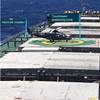
U.S. Navy High Speed Vessel Swift (HSV 2) enters Naval Station Mayport. Swift has two water jets that can move the ship to speeds greater than 45 knots and bring it into port without using tugboats. Swift pulled into Naval Station Mayport to prepare for its participation in the pilot program Global Fleet Station (GFS). U.S. Navy photo by Mass Communication Specialist Patrick J. Cook
By Mass Communication Specialist 1st Class (SW) Cynthia Clark, Commander, U.S. Naval Forces Southern Command Public Affairs
Global Fleet Station (GFS) pilot deployment to the Caribbean is one step closer to starting, with the arrival of High Speed Vessel (HSV) 2 Swift at Naval Station Mayport, April 6.
GFS pilot 2007 is a U.S. Southern Command-directed operation implemented by U.S. Naval Forces Southern Command and carried out by HSV-2 SWIFT. Onboard SWIFT will be a command element and several training teams.
The ship will visit several countries in the Caribbean where training teams will offer hands-on and classroom instruction on a range of maritime subjects.
This summer’s GFS pilot deployment is designed to analyze the GFS concept for the Navy and support U.S. Southern Command (SOUTHCOM) objectives for its area of responsibility by enhancing cooperative partnerships with regional maritime services and improving operational readiness for the participating partner nations.
“This is why it’s so important to start in the Southern Command,” said SOUTHCOM Commander Adm. James Stavridis. “It’s a great way to help strengthen our ties with regional partners and provide a more persistent presence.”
This GFS pilot deployment is being carried out under the operational control of U.S. Naval Forces Southern Command (NAVSO), the Navy component for SOUTHCOM.
According to NAVSO Commander Rear Adm. James W. Stevenson Jr., the embarked training teams will work alongside partner nation navies and civil services to improve capabilities and efficiencies. In turn, increased readiness enhances regional maritime stability and security.
“When the GFS concept came to light last year, we jumped at the opportunity to lead the first pilot in the SOUTHCOM area of responsibility,” said Stevenson. “Our active engagement program with our partner navies and the interoperability we work toward during exercises provides certain aspects of the ideal backdrop to test the GFS concept.”
In addition to the 43-member crew in Swift, embarked personnel will include the command element Commander, Task Group 40.9 (CTG 40.9) as well as training teams from Navy Expeditionary Combat Command, U.S. Coast Guard and U.S. Marine Corps.
“Our group is looking forward to putting the GFS concept into action,” said CTG 40.9 Commander Capt. Douglas Wied. “This is a great opportunity to work with our partner nations, understand where they are coming from, what their needs are and how we can better assist them in meeting our common goals.”
The teams embarked for the GFS pilot will offer training topics such as port security, non-commissioned officer professional development, operational risk management, medical readiness, outboard motor maintenance, patrol craft operation, and much more. This Global Fleet Station pilot is scheduled to continue through the late summer 2007.
High Speed Vessel Swift is a 98-meter, aluminum-hulled catamaran and was delivered to the U.S. Navy in August 2003. A completely automated “sea-frame” ship, it can perform many missions and brings new capabilities and unparalleled opportunities for tactical innovation to the Navy-Marine Corps team of the 21st Century.
GFS is scheduled to visit the nations of Belize, Dominican Republic, Guatemala, Honduras, Jamaica, Nicaragua and Panama.