Siemens Supplies UASC Newbuilds
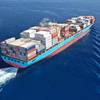
The United Arab Shipping Company (UASC), U.A.E., commissioned the Siemens Industry Solutions Division to equip nine of its new-building container ships each with one booster propulsion with shaft generator function and a waste heat recovery energy management system. This order is in line with UASC’s continuous efforts to imbed the latest technologies into its ships and actively contribute to preserving the environment in reducing CO2 emissions. With the aid of waste heat recovery, ships' exhaust gases are converted to electric power. This cuts fuel consumption and reduces CO2 emissions, boosting cost-effectiveness of ship operation and relieving the environment. The order volume is in the two-digit euro millions. The container ships are being built by Samsung Heavy Industries, Korea, and are to commence operations in 2011.
UASC is a major player in the Middle East region and adjacent markets, both in terms of liner cargo and port coverage with a network covering over 200 port destinations worldwide, offering containerized and conventional cargo transportations, temperature controlled cargo and value added services to a diversified client-base across the Arabian Gulf, the Red Sea and the largest trading centers in the Far East, Europe, the American East Coast and the Indian Subcontinent.
These nine new-building ships type A13 with a capacity of 13,100 TEU (twenty foot container unit) each were ordered by UASC in 2008 as part of the Company’s capacity-expansion plan to meet the region’s growing clients demand.
Siemens will supply for each ship a four-megawatt booster motor with shaft generator function and an energy management system that optimally provides the energy recuperated from the WHR (waste heat recovery) system to the ships' on-board power system. All systems and components used are part of the Siemens "Siship" solution platform.
With the aid of the WHR system, the exhaust of the ships engine is converted in a waste heat boiler to steam, which then drives turbo-generators. The electric power thus generated can be used for the ships consumers (hotel load and reefer cargo) and/or to boost the ships propulsion – with the electric motor integrated into the shaft line. This device can also be used as a shaft generator in the stand-alone mode, thus relieving the auxiliary diesel engines from running. With the aid of waste heat utilization, the overall efficiency of the ship's propulsion is improved while the operating times of the existing auxiliary generators and related maintenance costs are reduced. In combination with the booster propulsions from Siemens, this ensures an improved energy balance.
(www.siemens.com/marine)