The Electronics Revolution in the Pilothouse
By Larry Pearson
Back in 1986 when I first started reporting on workboats, the most modern thing in the pilothouse may have been the coffee maker. Navigation was mostly "between the sticks" and via compass and communication was mostly VHF.
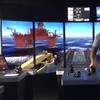
Today's vessels, especially those working offshore, have a myriad of electronic devices that make the job easier, more precise and most importantly, safer.
The new series of 10 supply boats being built by Bender Shipbuilding & Repair, Mobile, Ala. for Rigdon Marine, Houston, Texas are good cases in point.
The 210-ft. by 54-ft. vessels are models of efficiency, load carrying capacity and performance.
The electronics necessary to keep this sophisticated ship running at peak performance is truly staggering. The heart of the vessel is its diesel electric power plant utilizing a pair of Cummins QSK 60 engines and a Cummins KT-38 engine.
All three engines are connected to generators that produce over 3600 kW of electric power. Every thruster, motor and even light bulbs onboard the ship use this electricity.
Keeping the widely changing demands for power in line with the ability to produce the power is controlled by an Alstom Vessel Management System. It monitors the power needs of the vessel on a continuing basis. Operator controls for this system are located at the forward helm and the aft facing station.
The vessels are DP-2 rated by ABS. With this type of rating, most of the electronics in the pilothouse have an identical backup system.one located at the forward helm and one at the aft facing station.
The DP-2 system is also by Alstom consisting of two Alstom ADP-21 consoles, two Leica MX 420 DGPS, one Alstom Cyscan Laser Reference Unit (also called a Fan Beam) two wind birds, two vertical reference units, two gyrocompasses, a pair of DP alarm and event printers and two uninterrupted power supplies.
If any piece of this equipment does not operate, the backup system automatically takes over the function of the off-line equipment.
And that is just the beginning of the redundant systems on these Rigdon vessels.
The electronic eyes of the ship are two 96-mile Furuno X-band radars, two Automatic Radar Plotting Aids, a pair of gyro converters and a performance monitor.
An important relatively new piece of electronic is the Automatic Indentification System or AIS. It works with the radar and ARPA to identify the position, speed and identification of all vessels in radar range.
To display the depth of the water is a Furuno IMO LCD sounder, two remote displays and the needed transducer and transducer tank.
The Rigdon vessels also carry a Furuno Navtex Receiver for safety, weather and navigation updates.
This unit has its own built-in printer A Furuno Weatherfax unit prints out 8" high-resolution prints of weather systems and has a standalone SSB receiver.
In communications systems, the Rigdon vessels have multiple ways to communicate.
They have a complete GMDSS system suitable for operation in area A3, the most distant from shore. GMDSS includes an InmarSat C ship earth station, a MF radio system, a 2187.5 kHz watchkeeping receiver, and a 406Mhz EPIRB. Operating in Area A3 also means they need two VHF receivers and a MF/HF receiver.
Other radio sets on the vessels include three ACR handheld VHF units for lifeboats, four handheld Motorola UHF units, a Motorola UHF base station and three ICOM VHF radios.
Communication and navigation systems have come a very long way in a short period of time.
By way of update, the first three vessels (Orleans, Bourbon and Royal) are at work with the Chartres due out in October and one every two months from that point until all 10 are delivered.