Marine & Hydrokinetic Power Holds Promise

Corporate Investment and government price supports are critical to expansion of the marine and hydrokinetic power sector says a recent report
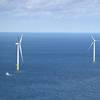
In many ways marine and hydrokinetic power systems offer one of the most promising areas for renewable energy development.
Marine and hydrokinetic resources – including ocean waves, tidal streams, river flows, ocean currents, and ocean thermal differences – are abundant, the technology is improving rapidly, and countries that have strong marine resources, such as the United Kingdom, United States, Australia, South Korea, Spain, and Portugal, have committed to supporting the industry.
Marine energy, however, still faces significant technology, policy, and financing challenges. According to a recent report from Pike Research , marine energy will require the participation of large corporations that have the experience in project development, the tax appetite, and the sophistication to pull off large-scale projects in the 100 MW to 500 megawatt (MW) range.
“But interest among these larger companies will continue only to the extent that commercially viable technologies exist, can be smoothly permitted, and are cost-effective. Perhaps more importantly, long-term price supports must also exist, as they do in the United Kingdom.”
“Examples of big companies, from major utilities to defense contractors, moving into marine and hydrokinetic energy are not hard to find,” says research analyst Dexter Gauntlett. “But interest among these larger companies will continue only to the extent that commercially viable technologies exist, can be smoothly permitted, and are cost-effective.”
In Europe, E.ON and ScottishPower Renewables have jumped into the marine energy sector by partnering with early innovator companies. Morgan Stanley is the majority shareholder of Atlantis Resources Corporation, while Swedish power giant Vattenfall is investing in marine and transmission projects in the North Sea.
Defense contractor Lockheed Martin has partnered on projects with a number of wave and tidal power companies, and ABB, Bosch & Rexroth, and Kawasaki Heavy Industries are all testing the waters as well. Only a small handful of companies, though, can claim they have products on the verge of commercialization.
Pike Research’s report is available here.