
'Emma Maersk' Likely Months Out of Service
Press Release
Thursday, February 07, 2013
File Afterpart
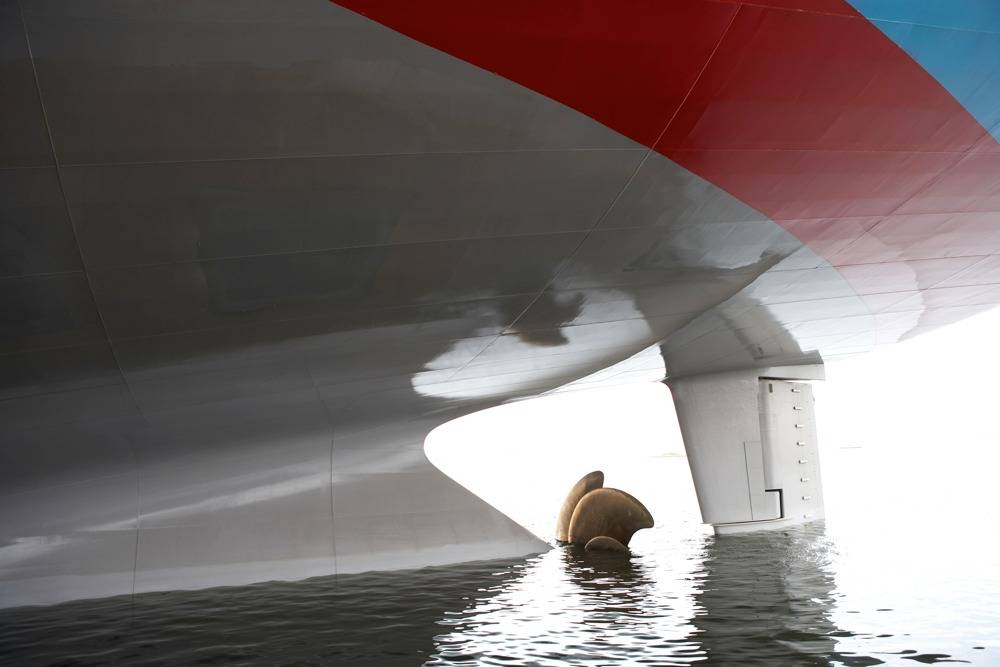
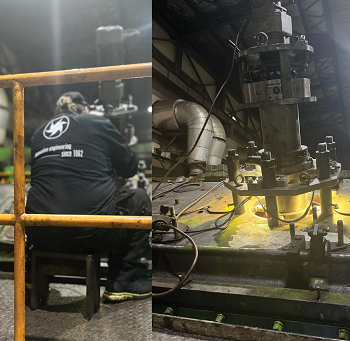
Afterpart 'Emma Maersk': Photo credit Maersk Line

Palle Laursen, Head of Ship Management for Maersk Line, shares the latest update on the 'Emma Maersk' Suez incident.

Initial inspections by divers show that the water ingress was caused by damage to one of the stern thrusters. Thrusters are used for improving the vessels manoeuvrability and consist of a shaft tunnel fitted with a propeller delivering sideways thrust. It is now known that several propeller blades have broken off and there is severe damage to the propeller mounting, resulting in a crack in the forward stern thruster tunnel which caused the ingress of water.

The water flooded the engine room which consequently led to the loss of main engine power, and Emma Maersk was towed to the quay at Suez Canal Container Terminal.

While it is still unclear what caused the damage, Palle rules out any human error by the crew. “The crew handled the situation very well and did exactly what they should at all stages,” he says.

“The E-class has been sailing well since 2006, and the thrusters are used at every port call,” Palle adds, stressing that for now it is seen as an isolated incident. “Until we know the exact reason, however, we have as a precautionary measure instructed the other vessels in the E-class fleet not to use their stern thrusters.”

At no point was Emma Maersk in danger of sinking. Naval architects have confirmed that a fully loaded E-class vessel can sustain full flooding of the engine room and still stay afloat. Large container vessels have a natural better stability than smaller vessels. Had the incident occurred at sea, it would have been a matter of getting an oceangoing tugboat in place to assist.

Fixing a hole
Making Emma Maersk seaworthy again is a complicated process, and Palle admits it is probably a matter of months before she can enter service again.

The first priority is to preserve the equipment, which ironically means keeping it submerged for the time being. Due to its exposure to salt water, any contact with oxygen will result in corrosion. So the plan is to have underwater welders plug the hole before lifting the vessel further, after which the remaining cargo onboard will be unloaded, water will be pumped out, and the equipment will be washed with fresh water, dismantled and retrofitted.

All this may sound simple enough, but there are several uncertainties, says Palle. It is still unclear whether a full dry-dock operation is needed, for instance. Even if it can be done while the vessel is waterborne, there is the question of location: is Suez suitable for the operation, or is it necessary to tow the vessel to another location?

These and other questions will be determined during the coming days and weeks.
 

Email AddThis Feed Button
Maritime Reporter May 2013 Digital Edition
FREE Maritime Reporter Subscription
Latest Maritime News    rss feeds

Technology

Spying Oil Spills from Space

The Australian Maritime Safety Authority (AMSA) is trialing the use of satellites to detect oil spills in Australian waters. Satellite-based Synthetic Aperture

FMC Opts For Rina LNG TQ

FMC Technologies entrusted Rina Group’s company, RINA Services, with the Technology Qualification of its new technology loading arms designed for installation on

New Subsea Snubbing Unit Safer, Optimizes Rig-Time

Balance Point Control Ltd. (BPC), a Superior Energy Services, Inc. company, has developed the Concentric Snubbing Unit- 160 (CSU – 160) rig assist snubbing unit.

Container Ships

Maersk Floats First Tripple-E

A milestone was reached with the semi-launch of the first Triple-E at the shipyard in Okpo, Korea. To make room for completing the next ships, the drydock was

Five 18,400 TEU Containerships to be Classed by GL

Germanischer Lloyd (GL) has signed a classification agreement with Hyundai Heavy Industries (HHI) for the construction of five 18,400 TEU containerships. The so

Port of Montreal Open to post-Panamax Ships

The Canadian Coast Guard (CCG) authorizes the passage of vessels up to 44 metres wide in the Quebec-Montreal section of the St. Lawrence navigation channel. The previous authorized width was 32.

Casualties

Coast Guard Evacuate 78 From Blazing Fishing Vessel

Crewmembers aboard the 314-ft fishing vessel 'Arctic Storm' extinguised an engine-room fire using the ship's Halon chemical firefighting system. The Coast Guard

Costa Concordia: Board Members Under Investigation

Five board members of owners, Costa Crociere, have been placed under investigation in connection with the January 2012 cruise ship accident. The executives are

Passenger Ship Grounded off Scotland Coast

The passenger ship 'Serenissima' grounded Monday night in Oban Bay, was refloated the next day & awaits underwater inspection. The UK Maritime and Coastguard Agency

News

U.S. Steel Imports Up from March, Down for 2013

The U.S. Census Bureau announced that preliminary April steel imports were $2.5 billion (2.4 million metric tons) compared to the preliminary March totals of $2.

Overboard Sailor Rescued off French Coast

A British man has been rescued after falling overboard from a yacht off the coast of Ushant in France. Brixham Coastguard received a 999 call just after 3 p.

Vice President Biden Addresses USCG Class of 2013

Vice President Joe Biden welcomed the U.S. Coast Guard Academy’s Class of 2013 as the Coast Guard’s newest officers, saluting their service and emphasizing the


mobi | rss feeds | archive | history | articles | privacy | contributors | top news | about us | copyright