POLB Gives New Oil Terminal a Green Light
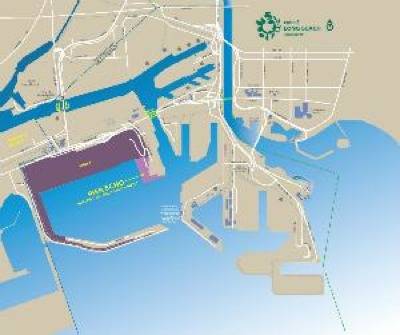
The Long Beach Board of Harbor Commissioners inks Letter of Intent to study development of a a 28-acre site on Pier T.
The project is to construct a deep-water terminal for crude oil and petroleum products including gasoline, and the port has chosen Vopak Terminals North America Inc. to study the development.
The preliminary agreement between the Port and Vopak sets basic deal terms and green-lights an environmental impact study of a “liquid bulk” terminal for petroleum tanker ships. The terminal would be the fourth crude oil terminal in the Port of Long Beach, and the first in the port complex since 1983. All relevant environmental, safety and security issues would be reviewed as part of the environmental study.
It would take up to 4½ years to do a full environmental review, design, permit and construct the new terminal. If the environmental impact report, or EIR, is certified and plans approved, the Port would conduct about $37 million worth of dredging and other waterside improvements, and Vopak would invest $120 million on land-side improvements for the first phase of construction.
Preliminary estimates show that the first phase would generate nearly 1,200 jobs for the 1½-year construction period. More refined job estimates will follow as construction plans and schedules are further developed for the EIR.
On land, the terminal would be served by nearby pipeline connections to oil and petroleum product distribution facilities and oil refineries.
Vopak is a division of the Rotterdam, Netherlands-based Royal Vopak, the world’s largest operator of liquid bulk marine facilities.
The Port currently has three crude oil terminals: a BP terminal on Pier T, a BP Terminal on Pier B and a Tesoro terminal on Pier B.
In 2010, the Port invited proposals from the industry to develop and lease the “Pier Echo” site, which is part of the former U.S. Navy site. The Port received three proposals, including Vopak’s. The proposed terminal would include the latest safety standards and would help modernize the state’s aging oil-transfer infrastructure.
Estimated annual throughput at the Vopak terminal would range from 21 million to 55 million barrels of oil per year. Currently, about 200 million barrels of oil is brought into the Port of Long Beach each year. Under the preliminary agreement, the Port would receive at least $2.9 million annually in revenue once the terminal is constructed, for phase one. The project would have up to three phases.