
Trawlercat Introduces Anti-Piracy (PEV) Design
press release
Thursday, January 12, 2012
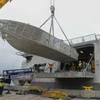
File purpose-designed anti-piracy personal escort vessel (PEV).
purpose-designed anti-piracy personal escort vessel (PEV).

Trawlercat Marine Designs of New Westminster, British Columbia, Canada is seeking joint venture partners to join them in building their purpose-designed anti-piracy personal escort vessels (PEV).


Trawlercat Marine’s president, Captain Graham Pfister states that “Individual PEV’s can chase pirates away from unarmed and even armed ships. They can prevent groups of pirates from “swarming” and getting close enough to fire their weapons and cause injuries, do damage or even board a ship. Swarming is now “a clear and present danger”, he said. “With pirates improving their techniques and their ability to seize a ship at sea we have come up with a means to prevent them which costs far less and will be far more successful than employing large expensive war ships burning huge amounts of fuel and housing large numbers of crews costing millions of dollars.”


Captain Pfister believes PEV CONVOYS are the next logical step with one PEV escorting two or more ships.  “We also envisage fleets of 5 or more PEV’s escorting “convoys of up to 20 ships” through pirate infested waters; something not seen since the Second World War”, Captain Pfister added.  “If you have ever made Suez Canal transits, as I have”, he said, “and seen the gathering of ships that follow procedures, line up and proceed, night or day in an organised convoy you will know that convoys can be set up and carried out successfully”.  “This is much easier to accomplish with today’s satellite navigation and communications equipment enabling ships to report and rendezvous at a specific place and depart at a specific time.” He said 


“Convoys will be more cost effective for the shipping companies while being very profitable to the security companies due to the economy of scale paid “by so many too so few”.  “We can envisage fleets of our long range PEV’s going backwards and forwards escorting convoys of ships safely through troubled waters for weeks or even months at a time”, Captain Pfister claims. 


The success of PEV Convoys would lead to a major drop in hijacking leading to a reduction in shipping insurance. This would reduce shipping costs which in turn will lower the cost of imported and exported goods including oil and other raw materials. Ultimately the whole global economy would benefit.
 

The PEV design work is almost completed and builders have been approached for quotes.  The PEV’s are to be built in production molds using the epoxy resin infused carbon fibre and Kevlar foam sandwich construction method similar to Airbus and Boeings latest commercial airliners.  Carbon fibre is lighter and stronger than aluminum and popping them out of production molds results in a faster build time that is very cost effective.   The first vessel is expected to be completed by June 2012 with one vessel completed every week thereafter if all goes according to plan and funds materialise to finance the project Captain Pfister concluded.                  
www.trawlercatmarine.com        
 

Email AddThis Feed Button
Maritime Reporter May 2013 Digital Edition
FREE Maritime Reporter Subscription
Latest Maritime News    rss feeds

Shipbuilding

U.S. Shipbuilding Supports $36B in GDP

The U.S. Department of Transportation’s Maritime Administration (MARAD) said that the nation’s shipyards support $36B in gross domestic product, as part of a report on the U.

LR Issues Guide to Shipbuilding in South Asia

As shipbuilding nations in South Asia mature, Lloyd's Register's new guide provides an overview of over 80 shipyards and 18 ship designers in Bangladesh, India,

FSRU Toscana Sails Away From Drydocks World

Drydocks World said that Floating Storage Re-gasification Unit (FSRU) Toscana sailed away from Drydocks World – Dubai.    The unit, formerly the 138,830-cbm LNG carrier Golar Frost,

Maritime Security

UDT Speaker Addresses Maritime Security Threats

Military history teaches that the future is largely unpredictable, presenting those responsible for the defense of undersea security with a spectrum of challenges.

AEUK Completes Sonar FAT for German Navy

Atlas Elektronik U.K. Ltd. (AEUK) confirmed that that their Cerberus Mod2 Diver Detection Sonar has now successfully completed its Factory Acceptance Testing (FAT) at their premises in the U.

HMAS Toowoomba Returns From the Middle East

Minister for Defense Stephen Smith today welcomed HMAS Toowoomba home from a six-month deployment to the Middle East Area of Operations (MEAO). Minister Smith

Naval Architecture

LR Issues Guide to Shipbuilding in South Asia

As shipbuilding nations in South Asia mature, Lloyd's Register's new guide provides an overview of over 80 shipyards and 18 ship designers in Bangladesh, India,

QinetiQ Updates Ship Design Software

QinetiQ Maritime’s Paramarine software, a ship and submersible design tool, has released its latest version of software including a number of new capabilities. The

HiPer Craft Forum 2013: New Speakers Announced

The American Society of Naval Engineers (ASNE) will host the High Performance Craft (HiPer Craft) Forum on June 19-20, 2013 at the Half Moone Cruise and Celebration Center in Norfolk, Va.

Maritime Safety

Breaking Down The Cost of MARPOL

Since January 8, 2009, United States (U.S.) and foreign flagged ships operating in the waters of the U.S. have been subject to MARPOL Annex VI. The Marine Environmental

Economic Impacts of STCW 2010

Our global economy and the maritime community have been greatly impacted by the implementation of the International Convention on Standards and Training, Certification

Crowley's 'Alert' Tugboat Commended for Alaska Rescue Tow

Representative Eric Feige from the Alaska State Legislature presents a letter of commendation to the 'Alert's crew for their rescue tow of drill barge 'Kulluk'.


mobi | rss feeds | archive | history | articles | privacy | contributors | top news | about us | copyright