

American Waterways, Global Volatility: Making the Right Policy Choices

Today’s headlines bring constant news of international shipping hubs across the global supply chain experiencing major volatility and disruption – from Iran sending shockwaves through global energy markets by forcefully obstructing vessel traffic in the Strait of Hormuz; to the Iran-backed Houthis in Yemen signaling intent to restart attacks on shipping in the Red Sea; to China detaining Panama-flagged vessels in an escalation of ongoing disputes over the Panama Canal; and beyond.By contrast, the American tugboat, towboat and barge industry continues to move our nation’s cargo on U.S.
U.S. Coast Guard Counters Maritime Threats With New Special Missions Command

The Coast Guard is standing up the Special Missions Command to oversee its deployable specialized forces. The command will enhance the operational effectiveness of the Coast Guard in responding to a wide range of national emergencies and events as the demand for deployable specialized forces capabilities increase. The Coast Guard selected the existing Coast Guard C5I Service Center facility in Kearneysville, West Virginia, as the future site of the Coast Guard’s Special Missions Command (SMC).
At the Helm: How the U.S. Coast Guard is Shaping the Future of Maritime Nuclear Power

Introduction. Looking back at history one could argue that it was French author Jules Verne in his book “20,000 Leagues Under the Sea”, published in 1869, who was speculating about a new power source much in the same out of the box thinking that H.G. Wells employed when he wrote about inter-planetary flight in “War of the World’s. Verne was writing about “electricity” from batteries using seawater which he created after studying the model of the newly developed French Navy submarine “Plongeur” at the Exposition of 1867.In the novel…
Insights: As Ships Get Bigger, Pilots Keep Maritime Commerce Flowing

Over 95% of large ocean-going vessels moving in U.S. waterways are under the direction and control of a pilot that is a member of the American Pilots’ Association (APA). The enormous increase in vessel sizes – as much as five times bigger than just twenty years ago – without corresponding expansions of waterways has made the already difficult work of these pilots even more challenging.APA-member pilots are generally the only U.S. citizen aboard foreign ships moving in the fragile bays, ports, rivers, and lakes that are the lifeline of this country.
U.S. Coast Guard Authenticates Keels for Three Waterways Commerce Cutters
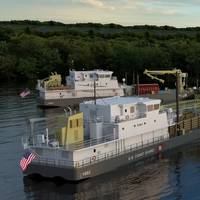
The U.S. Coast Guard authenticated the keels for future Coast Guard cutters Allen Thiele, Fred Permenter and Samuel Wilson on Friday in Bayou La Batre, Alabama.The cutters are the first three of 30 future Waterways Commerce Cutters (WCCs) that will replace the Coast Guard’s legacy inland tender fleet. The WCC fleet will play a critical role in controlling, securing, and defending America’s ports and waterways and maintaining the United States’ 12,000-mile marine transportation system.
16th Annual Maritime Risk Symposium-Student Research Poster Contest

CALL FOR STUDENT RESEARCH POSTERS!The 16th Annual Maritime Risk Symposium invites undergraduate and graduate students from colleges and universities worldwide to participate in the 2026 Maritime Risk Symposium Student Research Poster Contest. The poster competition, sponsored by the CCICADA Center based at Rutgers University, will be held online with winners invited to present their posters at the Maritime Risk Symposium on June 2-3, 2026 in Houston, Texas, USA.The Maritime Risk Symposium…
US Subcommittee Mulls Technology: Can the Coast Guard Keep Up?

US Coast Guard and Maritime Transportation Subcommittee Chairman Mike Ezell (R-MS) chaired a hearing, entitled “Changes in Maritime Technology: Can the Coast Guard Keep Up?” on Tuesday.The maritime industry is undergoing a rapid period of transformation, including the adoption of autonomous technology and robotics that could transform the sector, as well as threats from drones and cyber-attacks that require increased vigilance.Ezell introduced the hearing saying: “Last February…
Student Research Poster Contest Opens for MRS 2026

CALL FOR STUDENT RESEARCH POSTERS!The 16th Annual Maritime Risk Symposium invites undergraduate and graduate students from colleges and universities worldwide to participate in the 2026 Maritime Risk Symposium Student Research Poster Contest. The poster competition, sponsored by the CCICADA Center based at Rutgers University, will be held online with winners invited to present their posters at the Maritime Risk Symposium on June 2-3, 2026 in Houston, Texas, USA. The Maritime Risk Symposium…
Coast Guard Orders Additional Waterways Commerce Cutters

The US Coast Guard is moving forward with the acquisition of the new Waterways Commerce Cutter (WCC) class, designed to replace the legacy fleet of inland tenders and facilitate commerce vital to the nation’s economic security and strategic mobility.The service has ordered production of the first river buoy tender (WLR) and long lead time material (LLTM) for the second inland construction tender (WLIC), with construction to take place at Birdon America, Inc.’s shipyard in Bayou La Batre…
Coast Guard Awards Contract for Mariner Credentialing Program Modernization
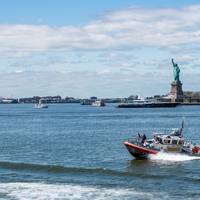
The U.S. Coast Guard has awarded a blanket purchase agreement to Stealth Solutions Inc. to modernize the service’s Mariner Credentialing Program (MCP) information technology system and support revitalization of the maritime workforce and industry.The MCP is essential to vetting and denying criminals access to critical maritime infrastructure and supporting the Marine Transportation System (MTS). The National Maritime Center (NMC) processed nearly 75,000 credential requests and 66…
Coast Guard Establishes Robotics Office
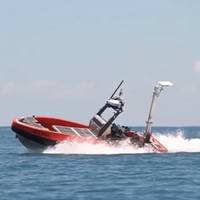
The U.S. Coast Guard has set up the initial operating capability of a Robotics and Autonomous Systems Program Executive Office.The office is a key component of the Service's Force Design 2028 (FD 2028) plan, and the Coast Guard claims it is poised to be the most transformational enhancement to capability since the inception of aviation. The office is dedicated to the rapid operationalization of the Unmanned Systems Strategic Plan.Robotics and autonomous systems are anticipated to revolutionize Coast Guard operations…
Coast Guard to Begin Production Activities for Polar Security and Waterways Cutters

The Department of Homeland Security approved full production of the first U.S. Coast Guard Polar Security Cutter (PSC), April 30, 2025. The Service also received approval for low-rate initial production of the the Waterways Commerce Cutter (WCC). This is a milestone for the Nation, as it brings the Coast Guard closer to renewing and enhancing operational capabilities in both the American heartland and the polar regions.Approval for full production enables the Coast Guard and U.S.
Sea Change in Cybersecurity: USCG's New Maritime Reg Set to Transform Digital Safety at Sea
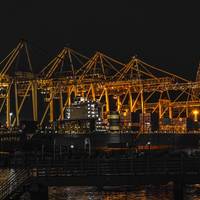
The $5.4 trillion global maritime industry faces a perfect storm of cyber vulnerabilities, and a new government regulation aims to be the lighthouse guiding stakeholders to safer digital harbors.On January 17, 2025, the US Coast Guard (USCG) published a final rule titled “Cybersecurity in the Marine Transportation System,” aiming to bolster the cybersecurity posture of the nation’s marine transportation system (MTS). This rule introduces mandatory cybersecurity measures for US-flagged vessels…
Shipbuilding Plan Could Undermine U.S. Operators, Industry Execs say
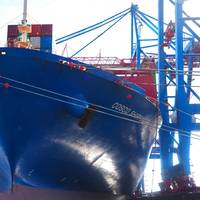
A Trump administration proposal aimed at reviving the U.S. shipbuilding industry may backfire by imposing steep fees on China-linked vessels—penalties that industry leaders say would hurt American ship operators and ports rather than help them, industry executives said at U.S. Trade Representative hearings on Monday.At issue are proposed, stacking fees on China-built vessels that could top $3 million per U.S. port call. The Trump administration says the fees would curb China's growing commercial and military dominance on the high seas and promote domestically built vessels. U.S.
Marine Cybersecurity: Key Takeaways from the Coast Guard's Final Rule
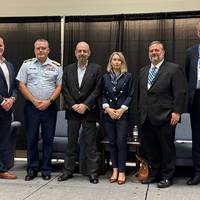
The U.S. Coast Guard (USCG) published a final rule on January 17, 2025, addressing Cybersecurity in the Marine Transportation System (the “Final Rule”), which seeks to minimize cybersecurity-related transportation security incidents (“TSIs”) within the maritime transportation system (“MTS”) by establishing requirements to enhance the detection, response, and recovery from cybersecurity risks. Effective July 16, 2025, the Final Rule will apply to U.S.-flagged vessels, Outer Continental Shelf, and onshore facilities subject to the Maritime Transportation Security Act of 2002 (“MTSA”).
Maritime Coastal Border Security and the Role of USCG R&D
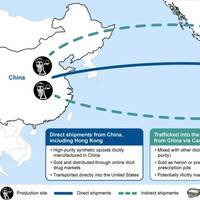
The United States' maritime coastal security poses a significant challenge due to the vastness of its coastline and the complexity of its maritime borders. According to the National Oceanic and Atmospheric Administration National Geodetic Survey there are approximately 95,000 miles of coastline. According to the Department of Homeland Security 2007 Transportation Systems publication there are “361 ports, and 3.3 million square miles of Exclusive Economic Zone (EEZ) to secure”.
INTERVIEW: Patrick Murphy, PVA President and President, Blue & Gold Fleet, LP
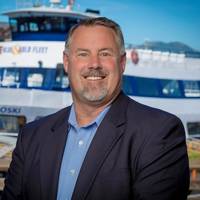
Patrick Murphy has been President of Blue & Gold Fleet, L.P., the San Francisco Bay Area’s largest and premier provider of Bay Cruises and ferry service, since 2016. Murphy grew up in the Maritime business. His father, Roger Murphy, founded Blue & Gold Fleet in 1979. Patrick Murphy began his career in 1982, working part-time in the Box Office and as a Deckhand before receiving his United States Coast Guard’s license in 1995 and was promoted to Captain in 1996. In 2005, Murphy advanced to Blue & Gold Fleet Operations Manager, and then to Director of Operations in 2009.
US Coast Guard Publishes Final Rule on Cybersecurity

The US Coast Guard has published a final rule in the Federal Register to update cybersecurity requirements for U.S.-flagged vessels, outer continental shelf facilities and facilities subject to Maritime Transportation Security Act of 2002 (MTSA).The rule addresses current and emerging cybersecurity threats in the marine transportation system by adding minimum cybersecurity requirements to help detect risks and respond to and recover from cybersecurity incidents. These requirements include developing and maintaining a cybersecurity plan…
USCG RADM Timme (Ret.) Joins OMSA as Senior Advisor

The Offshore Marine Service Association (OMSA) announced that Rear Admiral Richard V. Timme, U.S. Coast Guard (Ret.), has joined OMSA as a Senior Advisor.This appointment underscores OMSA’s longstanding commitment to working collaboratively with the U.S. Coast Guard (USCG) and other regulatory agencies to develop practical, common-sense solutions that enhance the safety and security of the U.S. maritime industry.“I’m excited to join the OMSA team and continue more than three decades of service to the maritime community,” said Admiral Timme. “OMSA members are a crucial part of our U.S.
Cyber Security in the Maritime Sector - What You Need to Know Now
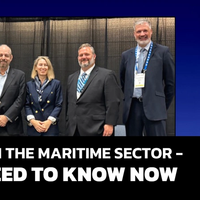
The U.S. Coast Guard proposes to update its maritime security regulations by adding regulations specifically focused on establishing minimum cybersecurity requirements for U.S.-flagged vessels, Outer Continental Shelf facilities, and U.S. facilities subject to the Maritime Transportation Security Act of 2002 regulations. This proposed rule would help to address current and emerging cybersecurity threats in the marine transportation system. In this Maritime Matters: The Marinelink Podcast…
AWO at 80: Looking Back, Looking Forward on Safety, Security & Sustainability
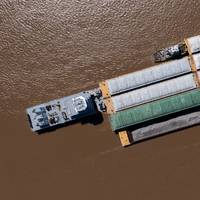
This year, AWO marks its 80th anniversary as the tugboat, towboat and barge industry’s advocate, resource and united voice for safe, sustainable and efficient transportation on America’s waterways, oceans and coasts. As we celebrate this milestone, we not only recognize and reflect on 80 years of advocacy for our industry as a key driver of the U.S. economy, but also 80 years of vital work as a safety and sustainability leader and security partner – protecting mariners, communities and our waterways from harm.At a time when the men and women of America’s essential workforce…
MARAD Picks ABS as Partner for New US Maritime Innovation Center
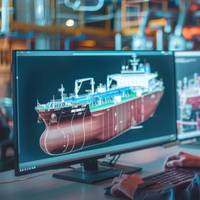
The United States Maritime Administration’s (MARAD) Office of Environment and Innovation has selected American Bureau of Shipping (ABS) to establish and maintain the U.S. Center for Maritime Innovation under a five-year cooperative agreement.Authorized by the U.S. Congress, the center is intended to support the adoption of clean energy on U.S. vessels through a wide-ranging program of research and development and training support.The center will work to facilitate development of infrastructure to support the deployment of clean energy…
Four Seafarers Abandoned on Tugboat in the US
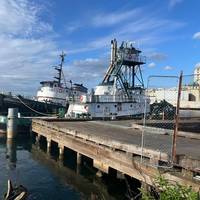
Four seafarers have been abandoned without pay on a 60-year-old tugboat in Washington State.The vessel, Wycliffe, recently changed its flag to Vanuatu, and was scheduled to help tow two retired Washington State Ferries vessels for a 34-day transit to Ecuador – where the new owner is based – for scrap, but the contract was canceled after the tug experienced technical issues.The four crew members on board from Colombia, Panama, and Peru faced dire conditions, including inadequate food…