Ocean Acidification Putting Coastal Jobs at Risk
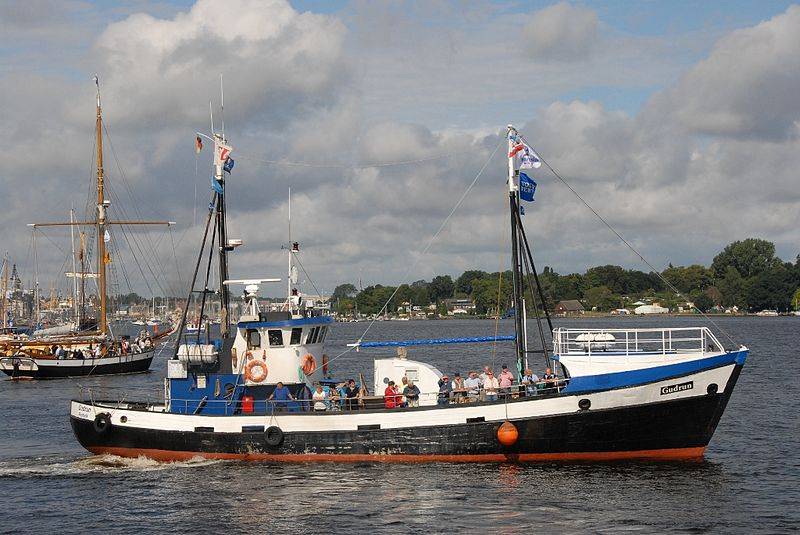
A NOAA study finds that ocean acidification is accelerated in nutrient-rich areas putting marine resources, coastal economies, at risk.
Carbon dioxide released from decaying algal blooms, combined with ongoing increases in atmospheric carbon emissions, leads to increased levels of ocean acidification, and places additional stress on marine resources and the coastal economies that depend on them, according to a new study published by NOAA.
Ocean acidification occurs when the ocean absorbs carbon dioxide from the atmosphere or from the breakdown of organic matter, which then causes a chemical reaction to make it more acidic. Species as diverse as scallops and corals are vulnerable to ocean acidification, which can affect the growth of their shells and skeletons.
Research by NOAA's William G. Sunda and Wei-jun Cai of the University of Georgia points to the process of eutrophication - the production of excess algae from increased nutrients, such as, nitrogen and phosphorus -- as a large, often overlooked source of CO2 in coastal waters. When combined with increasing CO2 in the atmosphere, the release of CO2 from decaying organic matter is accelerating the acidification of coastal seawater.
The effects of ocean acidification on the nation's seafood industry are seen in the Pacific Northwest oyster fishery. According to NOAA, ocean acidification is affecting oyster shell growth and reproduction, putting this multi-million dollar industry at risk. Annually, the Pacific Northwest oyster fishery contributes $84 million to $111 million to the West Coast's economy. According to an earlier NOAA study ocean acidification could put more than 3,000 jobs in the region at risk.
Sunda and Cai used a new chemical model to predict the increase in acidity of coastal waters over a range of salinities, temperatures and atmospheric CO2 concentrations. They found that the combined interactive effects on acidity from increasing CO2 in the atmosphere and CO2 released from the breakdown of organic matter were quite complex, and varied with water temperature, salinity and with atmospheric CO2.
"These interactions have important biological implications in a warming world with increasing atmospheric CO2," said Sunda. "The combined effects of the two acidification processes, along with increased nutrient loading of nearshore waters, are reducing the time available to coastal managers to adopt approaches to avoid or minimize harmful impacts to critical ecosystem services such as fisheries and tourism."
Sunda and Cai found that, given current atmospheric CO2 concentrations and projected CO2 released from organic matter decay, seawater acidity could nearly double in waters with higher salinity and temperature, and could rise as much as 12 times current levels in waters with lower salinity and lower temperature.
These model predictions were verified with measured acidity data from the northern Gulf of Mexico and the Baltic Sea, two eutrophic coastal systems with large temperature and salinity differences, which experience large-scale algal blooms. The observed and modeled increases in acidity from eutrophication and algal decay are well within the range that can harm marine organisms.