M/V Aiviq
Chouest Delivers Giant Icebreaker To Shell
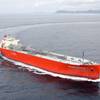
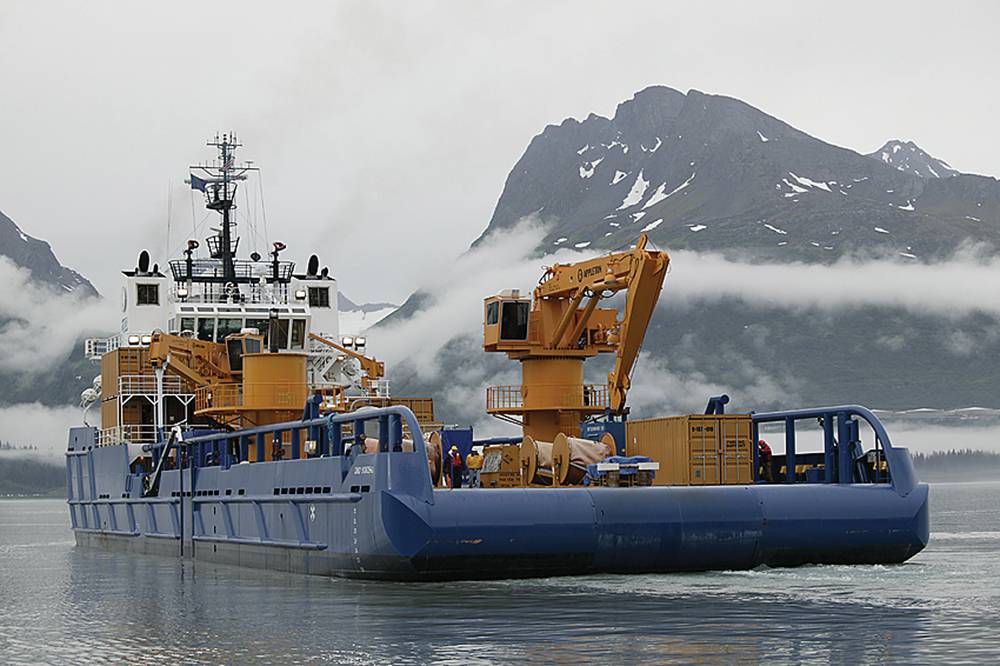
The M/V Aiviq icebreaker, contracted by Shell Oil to support drilling in Alaska’s Chukchi Sea, was ordered in July 2009 and completed by Edison Chouest Offshore in early 2012. The $200m Aiviq is the largest vessel ever built by Chouest, and will be among the most advanced and powerful, non-military icebreakers on the waters.
In order for a ship to be “ice class,” the hull must be thick, and extra girders, beams and bulkheads are needed for structural integrity. The Aiviq is designed to American Bureau of Shipping A3 capabilities to operate in frigid, minus-40-degree Fahrenheit temperatures, and can slash through a meter of ice with 20 centimeters of snow at 5 knots. Crafted specially for harsh winter conditions, the ship can also work in Alaska the rest of the year.
The vessel is being built to International Maritime Organization's Polar Code 3, and measures 111.8 m long, with a 22-m beam and 22-m draft. “It has hybrid generators, noise-reduction equipment, and meets or exceeds the U.S. Environmental Protection Agency's Tier 4 emission standards,” said Shell Oil spokesman Curtis Smith. Because the ship will be stationed far from medical facilities, is it outfitted with a hospital on board.
“Like other vessels in the Chouest fleet, we designed the Aiviq, built it and will operate it,” said ECO spokesman Lonnie Thibodeaux. “We will crew the Aiviq, and personnel from Shell will be on the vessel too.” The icebreaker can accommodate 65 staff in cruise-ship-like quarters.
While South Louisiana, which seldom sees snow, may be an unlikely place to produce icebreakers, Thibodeaux said “we built the Nanuq ice-class supply vessel for Shell in 2007 and have also built two icebreakers for the National Science Foundation.” The Nanuq was outfitted with oil-spill-response capabilities well before the 2010 Macondo spill in the Gulf, he noted. Aiviq is designed to work in tandem with the Nanuq.
Aiviq is designed with the habits of marine animals in mind.
“We're being as proactive as possible in an effort to reduce our overall sound footprint,” Smith said. “Insonification is a significant issue for stakeholders who rely on marine mammals for subsistence hunting.” Man-made noises disrupt mammals communicating via the emission of sounds in water, often at great distances.
(As published in the December 2012 edition of Maritime Reporter - www.marinelink.com)