First Ship Completes Second ULTRA-S
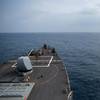
Sailors aboard USS Milius (DDG 69) completed their second Unit Level Training Assessment-Sustainment (ULTRA-S) on March 14.
All U.S. Navy surface ships are familiar with the Unit Level Training Assessment, Engineering (ULTRA-E), Unit Level Training Assessment, Certification (ULTRA-C), and ULTRA-S, but Milius is the first ship to complete a second, in a series of continual ULTRA-S assessments.
According to Cmdr. Tom Rowley, senior assessor and SHIPTRAIN department head, all surface ships following Milius will start performing an ULTRA-S every four to seven months.
“In the past, we’ve seen different ships start out with a high level of proficiency and then slowly and steadily drop down after the certification process,” he said. “What we’re trying to do here is maintain that proficiency and keep the levels high all the time.”
With the global war on terrorism, it’s imperative for the fleet to be ready at all times, Rowley said.
“We no longer have a predictable deployment schedule,” he said. “We have to be prepared at all times for an unpredictable enemy. We must meet every requirement in order to be successful in our mission.”
ULTRA-S is an assessment of the ship’s training proficiency level in warfare areas such as engineering, damage control, combat systems, medical, aviation, and maintenance and material management.
A fundamental purpose of ULTRA-S is for the Afloat Training Group Pacific (AFLOATRAGRUPAC) to provide an outsider’s opinion on the ship’s training and overall readiness.
“ULTRA-S takes the ship’s self-assessed level of proficiency, referred to as the TFOM [Training Figure of Merit), and compares it against that of ATG,” said Lt. Joseph Mitock, AFLOATRAGRUPAC Maintenance, Material Management Division officer.
“The TFOM averages the number of exercises and mission areas ships have completed and compares the level of success they’ve had to the ATG set standards [in order to be successful the ship must be within 10 points up or down of ATG standards],” Mitock said.
According to Rowley, it’s a way for the ships to train and measure their abilities themselves.
“All the ships are capable of training each other and their departments,” he said. “TFOM allows them to see where they’re efficient and where they need help. It will also enable us at ATG to expand our resources and train them only in the necessary areas, which will save time and money.”
According to all assessors from ATG, Sailors aboard Milius did very well during their ULTRA-S.
“The ship was well prepared,” said Rowley. “They knew what to expect since we were assessing what the ship has already been doing.”
By Mass Communications Specialist 3rd Class Arianne Anderson, Fleet Public Affairs Center, Pacific