EPA, USCG MOU for Enforcement & Compliance
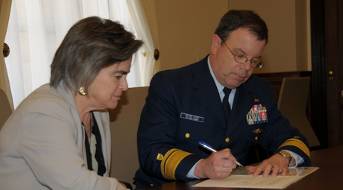
The U.S. Environmental Protection Agency (EPA) and U.S. Coast Guard (USCG) today signed a Memorandum of Understanding (MOU) outlining steps the agencies will take to better coordinate efforts to prevent illegal discharges of pollutants from more than 61,000 commercial ships based in the U.S. and more than 8,000 foreign ships operating in U.S. waters. Today’s MOU creates a framework for improving EPA and USCG cooperation on data tracking, training, monitoring, verifying compliance, and industry outreach.
Under the MOU, the Coast Guard has agreed to incorporate components of EPA’s vessel general permit (VGP) program into its existing inspection protocols and procedures to help the United States address vessel pollution in U.S. waters. The agencies have also agreed to improve existing data requirements so that information on potential violations observed during inspections can be sent to EPA for evaluation and follow-up.
“In the true spirit of partnership, the Coast Guard readily offers its assistance to help the EPA verify compliance with these discharge regulations,” said Rear Adm. Kevin Cook, director of the Coast Guard’s Prevention Policy for Marine Safety, Security, and Stewardship directorate. “Our current cadre of dedicated marine inspectors is poised to evaluate VGP compliance during our port state examinations and flag state inspections to ensure vessels operating in our waters are doing so in a legal, safe and environmentally friendly manner.”
"Protecting America’s waters is one of EPA’s seven priorities, and our compliance and enforcement work is critical to meeting this challenge,” said Cynthia Giles, assistant administrator for Enforcement and Compliance Assurance at the EPA. “By building on our partnership with the Coast Guard, we are working to improve the health of our nation’s treasured rivers, bays, harbors and estuaries.”
The vessel permit program applies to owners and operators of non-recreational vessels at least 79 feet long, such as cruise ships or oil and cargo tankers operating in U.S. waters. The vessel permit covers 26 types of discharges such as deck run-off from rain, ballast water used to stabilize ships and wastewater, also referred to as "gray water," from showers, sinks and laundry machines. These discharges may result in negative impacts on the environment, including the spread of invasive species that can harm sensitive ecosystems. The vessel permit program also specifies corrective actions, self inspections and monitoring, record keeping and reporting requirements.