
Germanischer Lloyd’s Technology Center for U.S. Gulf Coast
According to Germanischer Lloyd (GL), Offshore service vessels (OSV) are becoming larger, more specialized and technically sophisticated as a result of the rising demand for more complex deepwater field developments, including the Gulf of Mexico. Currently, there are some 2,500 OSV worldwide, with a steady growth projected from now through 2020. All this has led to an expanded definition of OSV which refers to "not only traditional supply boats, but also anchor handling tug/supply ships, well stimulation ships, and standby ships" and even those "built to carry hazardous and noxious substances, to fight fires, or to occasionally recover oil," said Stephen Gumpel, Area Manager North and Central America at GL.
At the Annual Workboat Show in New Orleans, Germanischer Lloyd showcased its services beyond traditional classification to provide the maritime, oil & gas and renewables industry with ways to grow, globally and locally. GL also is introducing its new Technology Center in Houston, Texas, which bring GL's worldwide technological expertise to the U.S. Gulf Coast.
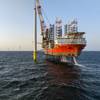
Aside from the traditional uses of OSV in the maritime and oil & gas industries, interest in OSV is rising in the growing offshore wind industry. Just look at these numbers: European offshore wind parks will create a demand for 15 to 20 installation ships; an additional 40 to 50 installation ships will be needed as China and the U.S. enter this market; and these vessels will require 200-300 service craft, such as crew supply and service and maintenance vessels.
Currently, GL is supervising several OSV newbuilding and re-building projects, including self elevating units for wind turbine installation purposes, anchor handlers, cable laying barges and vessels, and various supply and maintenance vessels, and is already involved in more than 18 wind installation and maintenance newbuilding projects.
On September 1, 2010 the GL Technical Center for Plan Approval of Hull, Machinery, Safety and Stability opened in Houston to serve the US Gulf Coast region. Capitalizing on the technological expertise of GL worldwide, the regional Technology Center provides:
* Machinery compliance with different IMO and governmental standards
* Testing and compliance of combustion machinery with many statutory regulations
* Specific approval of systems and components
* Several aspects of welding technology applications (quality, workshop, labor, equipment approvals)
* Material manufacturing and corrosion prevention certifications
* Ballast water tanks technology inspections, certification and compliance
* Pressure equipment design, certifications and consulting.