Are You Inadvertently Operating on Different AIS Channel?
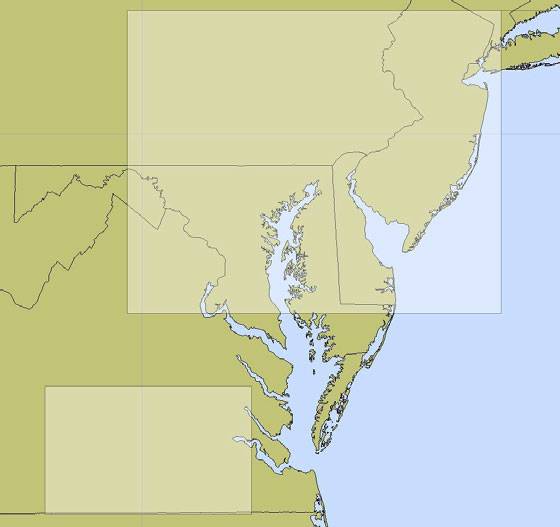
Between July 27 and August, 2010, while conducting development testing of its Nationwide Automatic Identification System (NAIS), the Coast Guard inadvertently tele-commanded most AIS users transiting the Eastern United States between lower Connecticut and North Carolina to switch to AIS frequencies other than the AIS default frequencies (161.975 MHz - Channel 87B - 2087 and 162.025 MHz - Channel 88B - 2088). As a result, those users within uniquely defined channel management regions (as shown in the picture) will neither see nor be seen by vessels operating on the default AIS channels when within these regions. Similarly, vessels operating on default frequencies will not see or be seen by those vessels that were inadvertently switched to other frequencies. No other AIS users or areas are impacted.
One of the lesser known and potent features of AIS is its ability to operate on multiple channels within the VHF-FM marine band. This frequency agility ensures AIS can be used even when the default channels are otherwise unavailable or compromised. In such conditions, competent authorities, such as the Coast Guard, can use an AIS base station to tele-command shipborne AIS devices to switch to other more appropriate channels when within defined regions of 200 to 2000 square nautical miles. This can be done automatically (and without user intervention) through receipt of the AIS channel management message (AIS message 22) or manually entered via the AIS Minimal Keyboard Display (MKD) or similar input device. Once commanded or manually entered, the channel management information will stay in memory for 5 weeks or until an affected vessel moves more than 500 nautical miles from the defined region. AIS channel management commands can only be manually overridden or erased by the user via the unit's channel (regional frequencies) management function or automatically overridden via another channel management message for the same defined region. Reinitializing or resetting your AIS or transmission channels will not necessarily reprogram your unit back to the default channels.
Commencing September 1st and continuing for the subsequent 5 weeks, the Coast Guard will broadcast new channel management messages that will tele-command all AIS users back to default channels. This broadcast will occur each hour between hh.05:30 and hh.05:59, but may change as needed. To ensure that these messages are received, they will be broadcast on Channel 70--Digital Selective Calling (DSC), which is also monitored by all type-certified shipboard AIS. While this will ensure all AIS users will get the message regardless of what AIS channel the unit is operating on, it could however cause a minor inconvenience to owners of older DSC radios who may receive an alert (tone) upon receipt of this message. It will have no other effect on DSC radios.
AIS users are encouraged to inform others whom they believe may be affected and are therefore not being seen by others. All AIS users are reminded to maintain their AIS in effective operating condition and to validate their AIS data prior to each voyage and as needed.
This safety alert is provided for informational purposes only and does not relieve any domestic or international safety, operational or material requirement. The Coast Guard has developed policy and procedures to ensure such inadvertent broadcast do not happen again and we apologize for any inconvenience this may have caused. For further information on AIS Channel Management or reprogramming your AIS read FAQ#19 at www.navcen.uscg.gov/?pageName=AISFAQ#19 or contact [email protected]. Developed by the Office of Waterways Management, U.S. Coast Guard Headquarters, Washington, DC.