
Insights: H. Elder Brown, Jr.
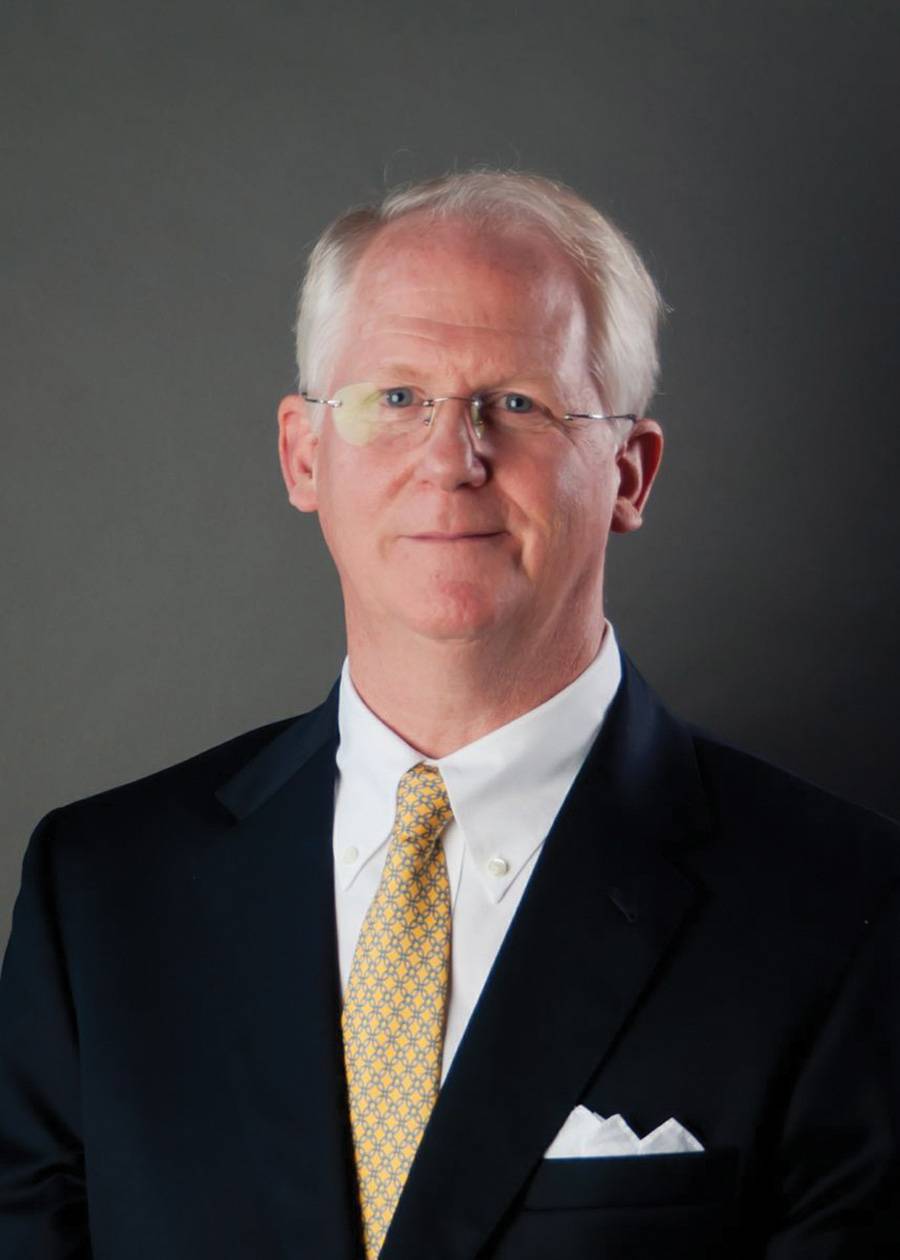
Chairman of the Board of Directors, Fidelis Group Holdings LLC and Continental Underwriters, Ltd.
For those in the marine insurance and underwriting communities, H. Elder Brown, Jr. needs no introduction. That’s because over the course of the past 27 years, Brown has taken Continental Underwriters Ltd. (CUL) from a small family business to one of the largest brown water marine underwriters in the United States. More recently, Brown returned CUL to private ownership by purchasing CUL back from Houston Casualty Company in 2009. Today, CUL is an industry leader in part due to the company’s excellent underwriting and claims handling. A 1974 graduate of Loyola University, Brown has steadily risen through the ranks of marine insurance, serving along the way in the Claims Department, as Assistant Underwriter, Senior Underwriter and eventually earning his current position as Chairman of the board of directors. Starting out as an Offshore Crew boat captain, Brown at one time operated and managed oilfield crew boats. As such, his knowledge of this unique market niche extends far beyond simple dollars and cents. This month, he weighs in for MarineNews readers on a host issues affecting marine insurance and those who depend on those services.
How do you view the marine insurance marketplace at the current time? How about in one year? Five?
The quick answer is the current market has far too much capacity. However, there are a few signs of hardening on the horizon. Despite those signs, there are still replacement insurers willing to enter the market, which is a bit astounding given the very limited margins for underwriters. It is very difficult to time the market between hard and soft cycles. Those who track the markets will tell you that there are far more soft markets than hard and the current soft market has lasted much longer than anyone would have predicted. Thus, to estimate the market cycle five years from now is incredibly difficult if not impossible. I would say that our underwriting model is and will always be bottom line focused. Good accounts will receive their just reward with favorable rates and conditions. Those accounts that are unprofitable to an underwriter will either need to rethink their risk sharing ability or risk placing their insurance with questionable security and those who seize upon naïve buyers.
Have we seen any improvement in safety? What is the role of insurance in all of that?
“Safety” has been the buzz word for years on end for a lot of operators. However, rather than simply paying lip service to safety, the better operators always spent part of their annual budget on a sound safety management system. Charterers have demanded that owners/operators must meet their own strict safety criteria or be dismissed from the charter opportunity. When safety hits the bottom line of a company, either by increased insurance costs, retentions or the loss of jobs, most vessel owners heeded the warning signs in a positive manner. The USCG has gotten serious about safety and their Subchapter M efforts will likely bear fruit when formally established. Although a long and painful process for many operators, these new safety standards will mean another layer of oversight, which we hope will become a meaningful tool for all operators. What we don’t need is another governmental program that simply requires pencil whipping of monotonous forms and processes. The AWO’s Responsible Carrier Program, for example, is a work in process but is fast becoming a standard for the maritime industry. Complimenting the RCP is the ISM Code which will result in a hybrid safety management system. The jury is out as to what the long term effect of the new Subchapter M on vessel owners/operators, but we are encouraged that safety is a real hot button to be taken seriously by all.
Underwriting rates are always important. Where are rates today; especially in comparison to one year ago and where do you see them going in the near term? What’s driving all of that?
Rates are flat to +10 on average. However, catch a cash flow underwriter at the right time and rates could be all over the map and generally lower. However, those types of underwriters attract a certain buyer and not generally one who prefers quality over price. While there is some talk of hardening, especially on the excess liability side of the business, the primary rates seem to be holding steady year over year. Claims costs are not getting lower and operational costs are increasing thus, you would think that higher rates must follow suit. Unless there is a meaningful increase in reinsurance costs generally resulting from a string of large catastrophes, primary carriers are not likely to raise prices in double digits. The insurance market has lots of capacity and as such, rates are hard to rise in such an environment. Remember, marine insurance represents 1/10th of 1 percent of the world’s insurance premiums. We are but a microorganism within a giant industry.
Underwriters push safety and LTI benchmarks as a way of keeping rates low and rewarding those clients who can do it. How do you foster that culture?
We are a leader in what we do; proactive within our specialty group and we think that our claims management and payment performance has few peers. Low rates are often times equated by some as “cheap” rates. What we aspire is a win-win relationship and a level playing field over time. Our clients know they can count on us, as their underwriters, to work closely with them in all areas of their operations that we insure to help keep their corporate premium costs reasonable while protecting their bottom line with their retention. No one likes to pay for insurance. The industry at times suffers from an identity crisis with the advertising of cheap rates everywhere you look. Professional marine insurers must stand to perform for those times that their valued clients have a claim. There is a base price to pay for the product we offer and better performing insureds are rewarded not just by rates but by enhanced coverage, and most importantly, given the benefit of the doubt when a claim arises. It is hard to put a price on the partnership that we establish with our clients over a long haul. If they are looking for “cheap” we aren’t their market, but there are “cheap” markets out there.
As one of the bigger players in brown water, you will no doubt be following the Subchapter “M” situation closely. How do you see the advent of subM on the inland markets affecting insurance premiums and underwriting metrics?
My father founded our company 43 years ago. I have been with the company for thirty-nine of those years and CEO since the late 80’s. Early on in my career I said I would never write an inland towboat account. Our experience in the early days was dismal. There was little to no safety management, no standards in vessel building or operation and quite frankly, lots of horrible things happening to the owners, their crews, equipment, third parties and the underwriters writing marine business. In my first thirty years in the business I counted one day close to 100 underwriters that I could recall that either quit underwriting the marine class or went out of business. That’s an incredible statistic. Safety was not an underwriting criteria early on in my career. Today, safety is a must. We ask about it, want to see a signed document that an insured or prospect has a real safety management system in place and we even send out experts to verify that safety management, as described, in fact exists. We recognize that underwriters are not the ones operating vessels and far be it from us to tell an owner how to operate their vessels. Thus, we try to partner with insured on safety and are willing to help out in any way to help it happen. I recall one particular account where we really wanted to keep the client insured but their claims were worsening almost by the day. We offered to bring in a reputable naval architect, at our cost, to see if there was a design flaw in the insured’s vessels. The insured accepted our offer, did what the architect suggested, and that type of loss was eliminated. Rather than moving on and cancelling long-time relationships, we instead partner with clients to help ensure a safer vessel which equates to stabilization of rates.
Claims Management can be the key to profitability or conversely, a bad year. Describe your claims process and what sets it apart.
Our model requires hands on in all aspects of the underwriting process. Claims management is an integral part of that process. We put our claims managers in front of the client and establish a working relationship from day one or even prior to accepting the risk. The insured knows how focused we are on their claims success and appreciate the attention they receive from our senior people. Not all claims are alike and not all insureds are alike. We work tirelessly within varying marine cultures to satisfy our insureds that they get a good night sleep every night. There are difficult claims, which don’t always have insurance as a fall back. Although painful when that happens, we always try to give our clients the advantage. I would put our claims reputation and payment history at the very highest percentile possible. We are dealing with many highly successful insureds that demand and get the very finest claims management possible. We do look deeply into all aspects of a claim but in the end, our clients are exceedingly satisfied with the service and quality of protection they receive from us.
Tell us about the importance of an “A+ Security” firm profile? Where does your firm stand in that picture?
You would think that quality connotes a higher price. As incredible as it sounds, many buyers don’t understand the insurance they buy or the insurers that are backing their policy. The serious markets know the good from the bad which is why they spend an inordinate amount of time studying financial statements of insurers and reinsurers. Confidential financial reporting agencies offer almost daily analysis of the industry which aids in the overall screening of security. The easy thing to do is to rely on stale information being submitted, when asked for, by salesmen trying to make the deal. Remember, no one comes in with a bad deal; there are good deals that go bad. Insurance is no different. You can’t see, smell, touch or taste the product being offered. It is only a promise to pay and we have all seen broken promises in our lifetimes. Minimally rated insurers now will likely have more chance of going south than north over time. Ask any savvy, seasoned insurance veteran and they will tell you of the A+ XV insurers who have fallen from grace, with some going bankrupt. If someone is selling an insurance policy too cheap to be true, don’t walk away from it – run! Marine insurance is not generally covered by a State’s Guaranty Fund nor do agents and brokers pay claims. When you need your insurance policy to respond, you don’t want that insurer to be DOA. I can’t tell you how many times I have heard a broker say that the insured made the decision to go with the failed company despite their offering the insurer to them. There is a fine line between good and very bad.
What Classes of Business are you engaged in, what’s your biggest sector and where do you rank in the market?
Fidelis Group Holdings, LLC, also known as Continental Underwriters, Ltd., specializes in marine insurance for non-blue water vessels. Our coverages include hull and machinery, Protection and Indemnity with or without the hull insurance, Maritime Employers Liability, Marine General Liability, Terminal Operators Legal, Builder’s risk, Ship Repairers Legal, Wharfingers Legal, Charterer’s Legal, Port Risk Insurance, Cargo and Cargo Legal, Stevedores and many other special type coverages. We are in the top 5% of the market in our specialty. Although offering underwritten products, we also have partnerships with other highly rated market complimenting our portfolio of marine business. Brown Water is definitely our focus and our biggest line.
If experience is a key metric in any underwriter’s office, drill down and give us a couple of instances where this has been a valuable asset for you and your firm.
You can’t place a premium on experience. You can count on one hand the turnover that we have had in our key management positions for the past 40 years. Our employees are our greatest asset. I know this is an overused statement but experience is more important in marine insurance that people realize. You need to know the right questions to ask and you need to know the right answers to receive when evaluating a risk. Seasoned experienced claims people will know where to look for coverage and how to minimize a situation before it gets worse. For example, experienced claims people know the right attorney to use for a case. Buyers need to know that the marine insurance personnel entrusted with their most valuable assets have the years in the trenches to protect those assets.
(As published in the January 2013 edition of Marine News - www.marinelink.com)