
Ship Traffic Remains Limited After Collision
Monday, July 28, 2008
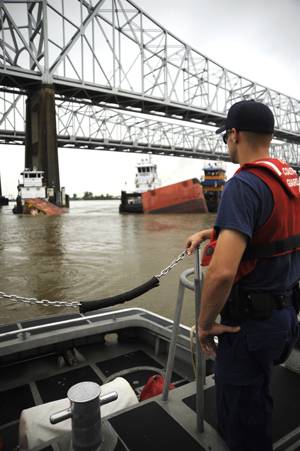
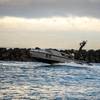
File A Coast Guard crewmember aboard a 41-ft. smallboat from Coast Guard Station New Orleans overlooks the sunken barge in the Mississippi River in downtown New Orleans after the motor vessel Tintomara and a tub and barge collided early Wed. July 23, 2008 spilling approximately 419,000 gals. of number six fuel oil.  (U. S. Coast Guard photo/Petty Officer 2nd Class Thomas M. Blue)
A Coast Guard crewmember aboard a 41-ft. smallboat from Coast Guard Station New Orleans overlooks the sunken barge in the Mississippi River in downtown New Orleans after the motor vessel Tintomara and a tub and barge collided early Wed. July 23, 2008 spilling approximately 419,000 gals. of number six fuel oil. (U. S. Coast Guard photo/Petty Officer 2nd Class Thomas M. Blue)

The clean up after Wednesday's oil spill continues, and so do the restrictions on the .  So far only a few ships have been allowed to sail southbound and only one ship, an oil tanker has been allowed to continue on northbound, reports said. 
Approval for ships on the river is limited due to clean up operations.. The ships that are approved, however, must be carefully cleaned, which can take several hours per ship.  Meanwhile, the barge that leaked all of the oil is still in the water.  Federal and state agencies are now working on a plan to remove it. 

Source:  WWLTV
Email AddThis Feed Button Share
Maritime Reporter May 2013 Digital Edition
FREE Maritime Reporter Subscription
Latest Maritime News    rss feeds

Coast Guard

Coast Guard World War Memorial Restored and Rededicated

The Coast Guard World War Memorial at Arlington National Cemetery was dedicated May 23, 1928, as a tribute to the Coast Guardsmen who lost their lives in World War I.

U.S. Coast Guard Commandant Papp Reveals Arctic Strategy

Uncharted Ice: The U.S. Coast Guard's New Arctic Strategy.   U.S. Coast Guard Commandant Bob Papp today revealed the nation's and the Coast Guard's blueprint for Arctic strategy.

BWT CASE STUDY: Hyde, PG & OSVs

While much of the focus on Ballast Water Management issues is on the big ship, blue water fleet, there is a growing large need for BWMS on large modern offshore vessels, too.


mobi | rss feeds | archive | history | articles | privacy | contributors | top news | about us | copyright