Deep Profiling Float Descends to 4000-meters

Teledyne Webb Research's new version of its Autonomous Profiling Explorer (APEX®) makes a record 13,123 ft dive off Hawaii.
APEX floats are based on a buoyancy engine and have been commercially available since founder Doug Webb started Webb Research in 1982. APEX floats descend to a programmed depth where they become neutrally buoyant and drift. After some interval, usually five to ten days, the buoyancy engine makes the float positively buoyant and it rises to the surface, where it transmits collected data such as temperature and salinity back to researchers via satellite communications.
Researchers use the data to build sophisticated climate, ocean, and weather models. The results are most meaningful when a large population of floats is at sea sampling the oceans.
By designing and manufacturing energy efficient, reliable, and low cost systems, Teledyne Webb Research has played a leading role in populating the world’s oceans with profiling floats.
At the World ARGO conference in Venice, held earlier in October, 2012, Dr. Thomas Altshuler, Vice President and Group General Manager for Teledyne Webb Research, Teledyne Benthos, and Teledyne Gavia told the research community that Teledyne was designing a profiling float that would profile at depths up to 6,000 meters, many times, and at a reasonable cost.
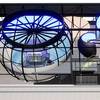
Unlike the standard APEX, the APEX Deep utilizes a surprising material for its pressure hull; glass. Glass spheres have been used for many years to provide buoyancy to bottom mounted sensors and instruments. Teledyne Benthos, sister company to TWR, is a world leader in glass flotation and instrument housing technology with state of the art grinding capabilities.
“Our investment in glass technology allows the combined Teledyne Webb Research and Teledyne Benthos team to manufacture the APEX Deep at considerably less cost and with greater price stability than would be available using a more traditional material like titanium,” said Altshuler.
Altshuler continued, “We have spent about a year proving that glass hulls can be cycled over 500 times to depths of 6,000 meters.” Along with repeating many cycles in the Teledyne pressure tanks, multiple iterations of hull penetrations and fittings have been tested.
The new system design is a direct result of feedback from the community and will give the community a method for conveying ocean sensors into deeper ocean waters. “We learned a lot about how the float will behave in the ocean and some very important logistics and handling considerations,” said Petzrick. “All of our lessons learned now, mean an easier transition to routine operations for researchers in the future.”