Great Lakes Shipyards Eying Busy Winter
Investment Averages $1.4 Million Per Vessel Maintaining and Modernizing U.S.-Flag Lakers Will Keep Great Lakes Shipyards Busy This Winter.
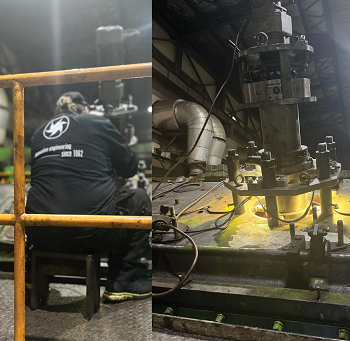
More than 1,200 boilermakers, welders, electricians and other skilled craftsmen will be hard at work this winter maintaining and modernizing U.S.-flag Great Lakes freighters when they lay up between late December and mid-January. The major U.S.-flag operators will invest more than $75 million in their 56 vessels so the fleet will be ready to replenish stockpiles of iron ore, coal, cement, salt and limestone when shipping resumes next March.
The work scheduled for this winter is as varied as the cargos the fleet carries. Eight vessels will be drydocked for the out-of-water survey of the hull the Coast Guard requires every 5 years. Huge concrete blocks are positioned in precise locations in the dry dock and the vessel gently settles on them as the water is pumped out of the chamber. Coast Guard inspectors then scour the hull for signs of any unusual wear and if any is found, order the steel replaced.
Although a study has determined that Great Lakes freighters produce 70 percent less emissions than trains and 90 percent less than trucks in moving a ton of cargo, that ratio will only get better with a number of main and auxiliary engine upgrades scheduled for this winter.
The industry’s commitment to reducing the potential that lakers’ ballast might spread a non-indigenous species introduced by an oceangoing vessel is evidenced by a number of vessels being fitted with high ballast water intakes. Traditionally vessels take on and discharge ballast water through seachests, as many as 18, located close to the bottom of the hull. High ballast water intakes not only reduce the potential that a fish or other living organism will be drawn in, they lessen the amount of sediment taken up with ballast water. Other projects include renewal of steel in cargo holds, replacement of conveyor belts in unloading systems, upgrades of communication and navigation equipment, and overhauls of galleys.
The major shipyards on the Lakes are located in Sturgeon Bay and Superior, Wisconsin; Erie, Pennsylvania; and Toledo, Ohio. Smaller “top-side” repair operations are located in Cleveland, Ohio; Escanaba, Michigan; Buffalo, New York; and several cities in Michigan. It is estimated that a vessel generates $800,000 in economic activity in the community in which it is wintering. Sub-freezing temperatures aren’t the only challenge facing Great Lakes shipyards and their craftsmen. Many vessels lay-up right after the locks at Sault Ste. Marie, Michigan, close on January 15, and get underway when the locks reopen on March 25. That leaves but nine weeks to prepare the vessels for 9-plus months of 24/7 operation.
For a few vessels, the winter lay-up is even shorter. The JOSEPH L. BLOCK, for example, often loads iron ore in Escanaba, Michigan, for deliverey to Indiana Harbor, Indiana, until the end of January and then opens that trade around March 10. Worn steel and other materials are recycled as much as possible, but in what might be something of a first, one job is going to help heat homes this winter. The entire wear deck on a barge is being replaced and the 75,000 board feet of oak lumber that must be removed will then fuel wood-burning furnaces.
When the fleet returns to service next spring, it will welcome a new 740-foot-long self-unloader. The as-yet unnamed barge is nearing completion at the shipyard in Erie, Pennsylvania. It will be able to carry nearly 38,000 tons of cargo each trip. Also joining the fleet will be an integrated tug/barge unit that previously worked the Gulf. When the economy is strong, the U.S.-flag Lakes fleet will carry more than 115 million tons of cargo per year. Iron ore for steel production is the largest commodity – 50 million tons. Roughly half of the country’s steelmaking capacity is located in the Great Lakes basin. Cargos of coal for power generation and limestone and cement for the construction industry can collectively top 50 million tons. Other cargos include salt to de-ice wintry roads, sand for industrial production, and cereal grains.
Lake Carriers’ Association represents 17 American companies that operate 56 U.S.-flag vessels on the Great Lakes and carry the raw materials that drive the nation’s economy: iron ore and fluxstone for the steel industry, aggregate and cement for the construction industry, coal for power generation.... Collectively, these vessels can transport more than 115 million tons of cargo per year when high water offsets lack of adequate dredging. Those cargos support more than 103,000 jobs with an average wage of $47,000. More information is available at www.lcaships.com.