

American Bureau of Shipping
The American Bureau of Shipping (ABS) is a leading global provider of classification and technical advisory services to the marine and offshore industries. Established in 1862, it is one of the oldest classification societies in the world. ABS is headquartered in Houston, Texas, USA.
Primary Functions and Services
Classification
ABS classifies ships and offshore structures, ensuring they comply with specific standards related to design, construction, and operational maintenance. Classification is the cornerstone of ABS’s activities. The process includes:
- Review and approval of design plans
- Surveys during and after construction to confirm adherence to standards
- Periodic inspections throughout the lifecycle of the asset
Certification
ABS provides certification services for various regulations and standards, ensuring that marine assets meet international and national safety requirements. This includes:
- Safety Management Systems (SMS) under the International Safety Management (ISM) Code
- International Ship and Port Facility Security (ISPS) Code
- Maritime Labour Convention (MLC) compliance
Technical Advisory and Consultancy
ABS offers advisory services to help clients enhance the performance and operational efficiency of their assets. This includes:
- Risk assessment and management
- Environmental compliance
- Energy efficiency and sustainability initiatives
- Data-driven decision-making using digital technologies and analytics
Research and Development
ABS invests significantly in research and development to stay at the forefront of industry trends and technological advancements. This helps them to offer forward-thinking solutions for emerging challenges in the marine and offshore sectors.
Industry Focus
ABS serves a wide range of sectors including:
- Commercial shipping (tankers, bulk carriers, container ships, etc.)
- Offshore energy (oil and gas platforms, wind farms, etc.)
- Government and military vessels
- Yachts and leisure craft
Digital Solutions
In recent years, ABS has incorporated digital technologies to provide smart solutions for asset management. This includes:
- Remote survey and inspection capabilities
- Condition-based monitoring and maintenance
- Integration of Internet of Things (IoT) for real-time data collection and analytics
Global Presence
ABS operates globally, with a network of offices and surveyors in major port cities around the world. This allows them to provide timely and localized services to their clients.
Commitment to Safety and Environmental Stewardship
A core part of ABS’s mission is to promote safety at sea and the environmental sustainability of marine and offshore operations. They collaborate with industry stakeholders to develop and refine standards that protect human life, property, and the environment.
Affiliations and Subsidiaries
ABS is part of the ABS Group of Companies, which provides risk management and technical services to a wide range of sectors beyond marine and offshore, including power and energy, manufacturing, and government services.
Leadership and Reputation
With a history of over 160 years, ABS has a well-established reputation for quality, reliability, and continuous improvement. Its leadership in the field is backed by its rigorous approach to technical standards and its proactive stance on innovation and sustainability.
For more information, you can visit their official website at www.eagle.org.
Ships and so on
- Phone: Li
- Web: www.eagle.com
- Fax: 281-877-6795
Locations
American Bureau Of Shipping News
Did You Know? TOP 5 Vulnerabilities Exploited by Ransomware Groups

Cyber Security in the maritime and offshore energy space has come front and center, with new Cyber Security rules expected soon from the U.S. Coast Guard.How will these new rules impact your bottom line? If you are in New Orleans on November 13, 2024, sign up now for a free lunch and moderated conference discussion on new United States Coast Guard (USCG) cyber security rules and their impact on the vessel owner/operators, OEMs and shipyards. Featured speakers include:Rear Admiral Wayne R.
MARAD Picks ABS as Partner for New US Maritime Innovation Center
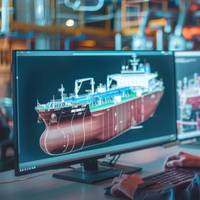
The United States Maritime Administration’s (MARAD) Office of Environment and Innovation has selected American Bureau of Shipping (ABS) to establish and maintain the U.S. Center for Maritime Innovation under a five-year cooperative agreement.Authorized by the U.S. Congress, the center is intended to support the adoption of clean energy on U.S. vessels through a wide-ranging program of research and…
“Cybersecurity is a Hoax” and other Maritime Misconceptions

With new rules on Cyber Security coming down from the U.S. Coast Guard, Angeliki Zisimatou, Director Cybersecurity, ABS, is uniquely positioned to discuss maritime cyber security in the round, with insights on what she’s seen and heard from the draft rules, with advise on what it could mean for vessel owners.Cyber security and all that it entails is quickly climbing the priority ladder in maritime…
ABS OKs SHI's Liquefied Hydrogen Carrier Vessel Design
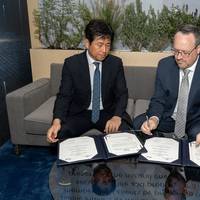
ABS issued general design approval (GDA) to Samsung Heavy Industries Co., LTD. (SHI) for its detailed design of a liquefied hydrogen carrier, a 20,000 cbm vessel with Type C tanks.“Hydrogen is a key enabler of the clean energy economy. In decarbonizing different industry sectors, hydrogen plays critical roles as a fuel, feedstock, energy storage and load balancing. As the demand for hydrogen grows…
IMODCO’s Terminals for Offshore Ammonia Transfers Receive ABS’ Seal of Approval
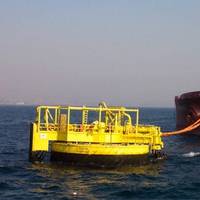
American Bureau of Shipping (ABS) has issued approvals in principle (AiPs) for a range of jetty-less new energy terminal concepts to move frequent, large-volume ammonia transfers away from shore, developed by SBM Offshore’s division IMODCO Terminals.IMODCO is applying a proven jetty-less system for moving crude oil to support the supply chain for new fuels such as ammonia.ABS reviewed the designs for IMODCO’s Catenary Anchor Leg Mooring (CALM) buoy…
ABS Grants Approval for HMD’s LCO2 Cargo Containment System
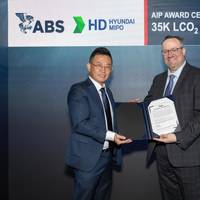
American Bureau of Shipping (ABS) has granted an approval in principle (AiP) to HD Hyundai Mipo (HMD) for the design of cargo containment system for a liquefied carbon dioxide (LCO2) carrier.HMD developed a cargo containment system optimized for a 35,000 cbm LCO2 carrier using new cargo tank materials.Ahead of issuing the AiP, ABS completed design reviews based on class and statutory requirements for…
Japanese Shipping Majors Secure AiPs for Two Types of LCO2 Carriers
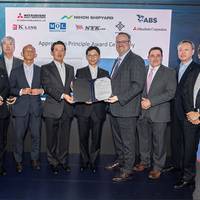
American Bureau of Shipping (ABS) and Nippon Kaiji Kyokai (ClassNK) have issued approvals in principle (AiPs) for two types of low-pressure type liquefied CO2 (LCO2) carriers developed jointly by Japan’s industry majors.The LCO2 carriers have been developed by Mitsui O.S.K. Lines (MOL), Kawasaki Kisen Kaisha (“K” LINE), Nihon Shipyard, Nippon Yusen Kabushiki Kaisha (NYK Line), Mitsui & Co, Mitsubishi…
ABS Greenlights Toray’s Innovative Technique for In-Situ FSO, FPSO Repairs
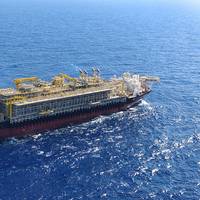
Japan-based Toray Industries has secured type approval from the American Bureau of Shipping (ABS) for the vacuum-assisted resin transfer molding (VaRTM) process for in-situ ship repairs, developed jointly with MODEC.The technique entails applying carbon fiber reinforced plastic (CFRP) to corroded areas with reduced thicknesses of floating production, storage and offloading (FPSO) and floating storage and offloading (FSO) systems.ABS is one of the world’s leading classification societies…
Alternative Fuels: Many Possibilities But a Clear Path is Evasive
“It was the best of times, it was somewhat confusing times, it was the age of wisdom, it was the age of the learning curve, it was the season of light, it was the season of, uh, still not enough light.” ― Deepest apologies to Charles Dickens, A Tale of Two Cities, 1859As the world zeroes in on alternative energy sources and products that can deliver power and performance, there are advances that could sway even the most hardened skeptic.
ABS and the US Coast Guard R&D Center Team Up for Maritime Tech Development

American Bureau of Shipping (ABS) and the United States Coast Guard Research and Development Center (USCG-RDC) signed a memorandum of understanding (MoU) as a stepping stone towards collaborative research and development on top-of-mind technologies impacting the maritime industry.Activity under the MoU can include developing joint research publications, new technology qualifications and information…
ABS Issues AiP for Pengrui and COSCO Gangway Design
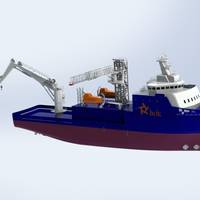
American Bureau of Shipping (ABS) has issued an approval in principle (AIP) to Nantong Pengrui Offshore Technology and COSCO Shipping Shipyard (Nantong) for its novel design of an offshore access gangway.The motion compensated, active and passive, gangway design offers a solution for the growing demand for efficient access for service operation vessels (SOVs) supporting wind turbines and offshore platforms.ABS…
ABS Joins EU’s Liquid Hydrogen for Commercial Vessels Research Project
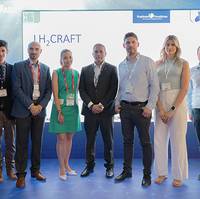
American Bureau of Shipping (ABS) has joined the LH2CRAFT project, a research initiative funded by European Union with the goal of revolutionizing liquid hydrogen (LH2) storage on a massive scale, catering to commercial vessels and emerging applications.Administered by Hydrus Engineering and Technische Universitat Dresden, the research consortium is comprised of 14 members from nine different countries.The consortium is working to design a membrane-type containment system…
Four Industry Players Join Forces to Design Ammonia-Fueled Tanker
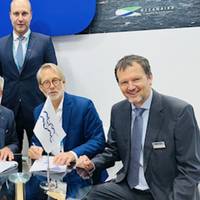
Swiss marine power company WinGD, Swedish marine technology leader Alfa Laval and the American Bureau of Shipping (ABS) will work with Korean shipbuilder K Shipbuilding (KSB) on the development of an ammonia-fueled MR tanker design.Two agreement follows the memorandum of understanding (MoU) signed in April. The design will feature a 6X52DF‑A engine from WinGD.WinGD will work with KSB to deliver fuel gas system specifications suitable for the vessel application and the selected engine…
HD Hyundai Mipo Gets ABS’ Nod of Approval for Ammonia-Powered Tanker
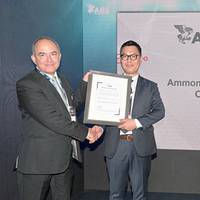
American Bureau of Shipping (ABS) has issued an approval in principle (AiP) for a 50K DWT ammonia-powered tanker design from HD Hyundai Mipo.The vessel will feature an ammonia engine designed by WinGD and manufactured by HD Hyundai Heavy Industries – Engine & Machinery Division (HHI-EMD).Also, it will boast ammonia fuel supply system designed by HD Korea Shipbuilding & Offshore Engineering (KSOE) and…
ABS and Lloyd’s Register Greenlight 3500 TEU Ammonia Container Ship Design
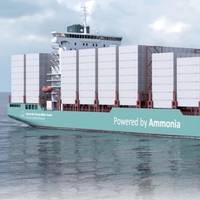
The two classification societies American Bureau Of Shipping (ABS) and Lloyd’s Register (LR) have issued an approval in principle (AiP) for a new ship design of an ammonia-fueled 3500 TEU container vessel.A cross-industry taskforce including A. P. Moller-Maersk, MAN Energy Solutions, Deltamarin, Eltronic FuelTech, ABS and LR led by the Mærsk Mc-Kinney Møller Center for Zero Carbon Shipping is behind the new design.The vessels is 212 meters long, with a breadth of 35 meters.
Future Fuels: Momentum Builds for Ammonia
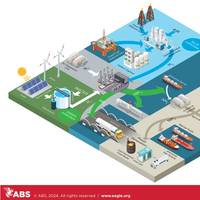
Strong demand is driving development but emissions issues remain, writes René Sejer Laursen, ABS Director – Fuels & Technology, Global SustainabilityThe interest in ammonia stems both from its zero emissions when used as fuel and because its production isn’t dependent on biogenic carbon sources.To realize large-scale production of green ammonia to serve new markets, its production capacity, along with that of renewable electricity and green hydrogen…
Classification and Building the New Fuels Pathway
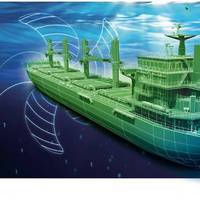
Long-term initiatives led by classification societies are building the foundation for future fuels uptake.About this time last year, ABS CEO Chris Wiernicki said: “When you look at where we are and the steepness of the curve ahead, the biggest risk is the unintended safety consequences of change.” Class, he says, is built for the intersection between technology, safety and regulations and must be prepared.Work is underway.
Simulators Track our Changing Relationship with Technology
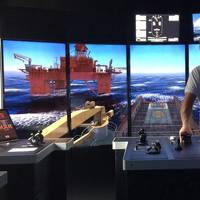
Simulation-based training has its whole-of-ship/whole-of-team scenarios, but zooming in, the industry is now working on more specific targets.We have a close relationship with technology, evidenced by, for example, the phones we are estimated to unlock around 50-80 times a day. It has changed us. Half the people surveyed in a 2022 King’s College London study said that they feel like their attention span is shorter than it used to be.
One-on-One: Rob Langford, VP, Global Offshore Wind, ABS

As the U.S. offshore wind industry endures a predictable number of stops and starts during its adolescence, common mantras are ‘learn from the established European model’ and ‘embrace technology transfer from the offshore oil and gas sector.’ In Robert Langford, the American Bureau of Shipping has all of that and more bundled in one neat package.Rob Langford has worked in the offshore industry for more than three decades…
Simulators Track our Changing Relationship with Technology
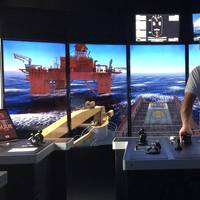
Simulation-based training has its whole-of-ship/whole-of-team scenarios, but zooming in, the industry is now working on more specific targets.We have a close relationship with technology, evidenced by, for example, the phones we are estimated to unlock around 50-80 times a day. It has changed us. Half the people surveyed in a 2022 King’s College London study said that they feel like their attention span is shorter than it used to be.