Propane Education & Research Council
Propane Education & Research Council News
PERC Leads Fuel Conversation at Port of the Future Conference

The Propane Education & Research Council (PERC) will showcase how propane and renewable propane can support reliable, lower-carbon port operations at the Port of the Future Conference at Hilton University of Houston on March 24-25.As a Gold Sponsor of the event, PERC will spotlight how propane helps ports reduce emissions while maintaining continuous operations. Jim Bunsey, senior manager of business development at PERC…
Propane’s Economic Edge for Ports During Trade Uncertainty

Click HERE to sign up for the October 16, 2025 webinar Power & Performance at the Port: See How Propane Moves Maritime Operations ForwardTrade has been a rollercoaster recently. Between the unpredictability of tariffs and uncertain economic outlooks, ports have faced big swings in trade volume as well as pressure to do more with less. Operational efficiency and cost control are critical, which is why propane continues to emerge as a cost-effective…
DOT Announces New Funding as Ports Prioritize Propane-Powered Equipment
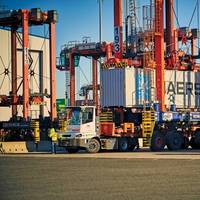
As U.S. ports face their annual surge in pre-holiday inventory arrivals, many are relying on propane-powered equipment to stay efficient, resilient, and cost effective. This surge in port activity comes just as the U.S. Department of Transportation (DOT) Maritime Administration announces $500 million in funding opportunities to upgrade port infrastructure across the country.Propane forklifts and terminal tractors help ports keep fuel and maintenance costs low compared to diesel.
ENERGY INSIGHT: Whatever the Weather, Propane Keeps Ports Moving
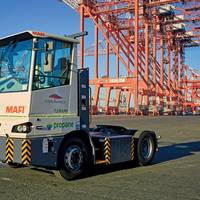
How propane offers unmatched reliability and resiliency when severe weather strikesPorts are critical hubs for global trade and shipping logistics, and they can’t afford to slow down due to extreme weather events. Especially in the Northern U.S., winter storms bring extreme freezing temperatures that can quickly create issues for any diesel or electric engines powering port equipment. Meanwhile, ports…
How Propane Can Help Ports Meet Emissions Goals
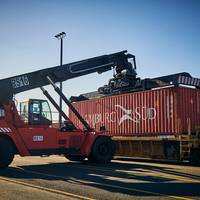
Ports can’t afford to slow down, and stricter environmental regulations and emissions standards are pushing port authorities to balance operational efficiency with reducing their carbon footprint. By replacing traditional gas and diesel as an energy source, propane can help ports reduce emissions and air pollution without sacrificing power or efficiency. Let’s explore how.Reduced EmissionsPropane is non-toxic and won’t contaminate soil or water.
Propane Cargo Handling Equipment Safety Tips

As the adoption of propane-powered equipment in ports continues to grow, implementing proper safety measures becomes more crucial.Supply chain professionals throughout the country rely on cargo handling equipment (CHE) to keep containers, trailers, and other materials on the move. With rapidly changing conditions in a port, it’s important to keep operators abreast of important safety considerations when working with equipment like forklifts and port tractors.Propane offers a clean…
The Time to Reduce Port Emissions is Now
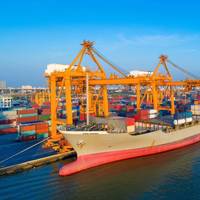
Port operations across the country are vital to America’s economy, often coming at a cost to health and welfare of neighboring communities—notably, by emitting harmful emissions and producing poor air quality.Incorporating propane can help ports support economic growth while safeguarding our environment.The loading and unloading of container ships at marine terminals requires a variety of cargo handling equipment, historically powered by diesel and gasoline.
Propane Poised to Help Reduce Port Emissions
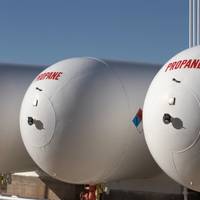
A new $1.2 trillion law to improve America’s infrastructure creates an unprecedented opportunity for propane and other low-emission fuels to power on-road and off-road fleets that have historically operated on diesel and gasoline.The Infrastructure Investment and Jobs Act provides over $9 billion in funding for refueling infrastructure and clean vehicles and equipment, including $5 billion earmarked for ports.Propane is recognized in the Act as an emerging alternative energy source…