

Greensea IQ
Greensea IQ News
Greensea Launches Hull Cleaning Spin-off Armach Robotics
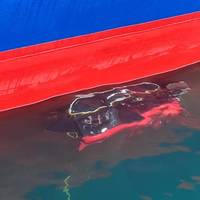
Marine software pioneer Greensea Systems Inc. has launched spin-off company Armach Robotics, that capitalizes on Greensea’s digital expertise to offer a subscription model robotic hull cleaning system using autonomy, intelligence and data fusion to tackle biofouling.Armach Robotics is not a technology company and does not sell robots; it is a service provider offering a subscription for clean hulls and hull intelligence.
Greensea Receives US Navy Award
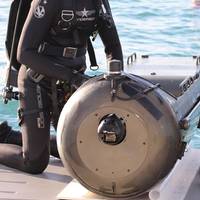
Greensea's open architecture technology on Remotely Operated Vehicles furthered by Small Business Innovation Research Phase II grantGreensea Systems, Inc. creator of OPENSEA, an open architecture robotics platform for the marine industry, won a Phase II Small Business Innovation Research (SBIR) ASAP grant totaling $1,100,000, with option for additional funding, for the continued development of Standoff Command and Control of Remotely Operated Vehicles (ROVs).
Greensea Expands, Again
Greensea recently added key personnel to its engineering team in its Plymouth, Mass., office to support their hull robotics program. James Truman, Senior Robotics Engineer, is leading the development of Greensea’s latest technology, a hull crawling robot with precise hull-relative navigation and autonomy capabilities. Assisting James on the hull robotics program is Sam Fladung, Robotics Engineer.“James is one of the best engineers I know.
Greensea’s New Ship Hull Crawler Tech Launches with VideoRay Defender ROV
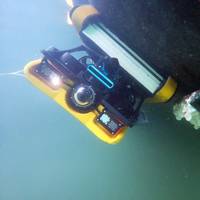
Greensea introduces a new hull crawler that easily attaches a Remotely Operated Vehicle (ROV) to a ship hull without magnetics, allowing the operator to “drive” the ROV and payloads over the hull. Initial hull crawlers are designed to work exclusively with the VideoRay Mission Specialist Defender ROV. The hull crawler represents a milestone in Greensea’s hull robotics program, which is advancing navigation…
The Future: Autonomous Robotic Hull Grooming
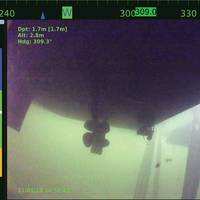
Ship hull biofouling has significant impacts on fleet readiness, ship performance, cost, and the environment. Biofouling results in increased hydrodynamic drag which results in greater fuel use and greater emissions per distance traveled than a hydraulically-smooth hull. A study by Schultz, et al. found the typical fouling rating (FR) of a US Navy DDG-51 class vessel, FR-30, increases fuel consumption by 10.3% over a hydraulically-smooth DDG-51.
- 1
- 2