

Preparing for S-100 Without Replacing Everything You Already Rely On
GeoNavigation Technologies’ FairSeas™ UNIFY™ bridges legacy maritime systems and the S-100 future, helping operators modernize without costly system overhauls
The maritime industry is undergoing significant change. New data standards and rising operational demands are reshaping how information is shared across vessels, ports, and shore-based operations.
At the center of this shift is S-100, a framework designed to improve how maritime data is structured, exchanged, and kept current. By creating a common data model, S-100 enables more interoperable information across systems, supporting safer navigation, better planning, and greater standardization across maritime operations. For many organizations, the challenge is not understanding where the industry is headed, but figuring out how to move forward without disrupting systems and processes already in operation.
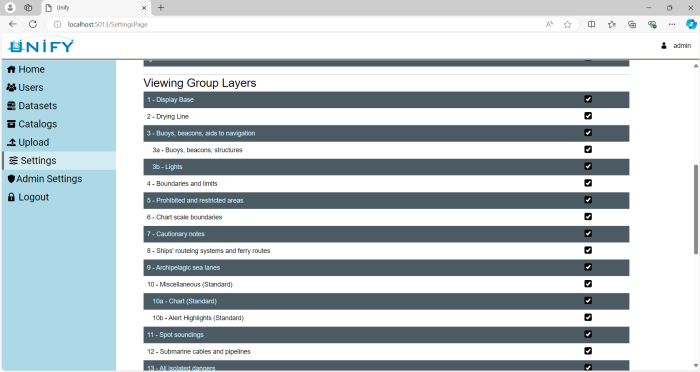
Example interface view: S-101 settings (Viewing Group).
The Reality of Legacy Maritime Systems
Most maritime navigation systems and operational centers rely on systems implemented over time to address specific needs. Navigation, planning, reporting, and monitoring tools often operate independently, creating manual workarounds that limit navigation information distribution efficiency, utilization, and visibility. These environments function, but they are rarely flexible or prepared for the upcoming hydrographic data changes.
As S-100 adoption accelerates, common challenges emerge, including:
- Fragmented systems that do not easily share data
- Duplicated effort across operational teams
- Limited visibility across vessels, ports, and shore operations
- Concern over the cost and disruption of large-scale system replacement
S-100 introduces new expectations around how data is structured, distributed, visualized, and updated across maritime systems. While the benefits are clear, the path forward can feel complex for owners and operators balancing modernization with safety, reliability, and budget realities. For many organizations, adopting S-100 requires coordination across legacy systems that were never designed for the new standards. This may require replacing software and systems that are costly and disruptive to operations.
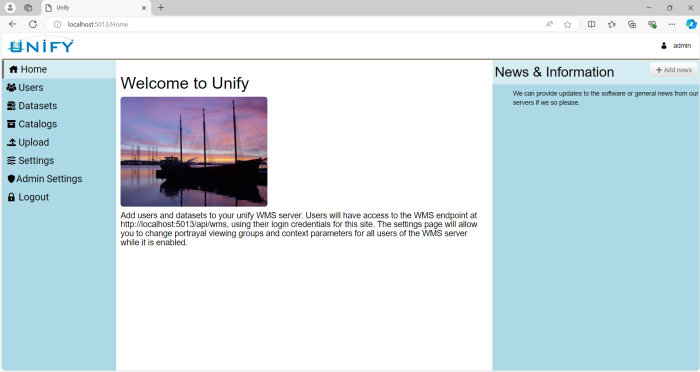
UNIFY example view: Homepage.
Connecting Today’s Systems to What Comes Next
This is where UNIFY™ comes in. UNIFY™ is a maritime data integration platform designed to support the transition to S-100 without forcing a full system overhaul. Rather than replacing existing navigation or operational systems, UNIFY™ works alongside them, serving as a backend application that organizes and distributes data where it is needed.
In practical terms, UNIFY™ helps organizations:
- Connect legacy and next-generation systems
- Support both legacy S-57 and the new S-100 data formats simultaneously (Dual Fuel Mode)
- Reduce system fragmentation and manual workarounds
- Modernize incrementally rather than all at once
By supporting mixed environments where legacy systems and newer S-100 data and services operate side by side, UNIFY™ allows organizations to move forward at a pace that fits their operational reality. Data that was once confined to individual applications becomes more accessible, consistent, and usable across applications and teams, improving situational awareness without disrupting established workflows.
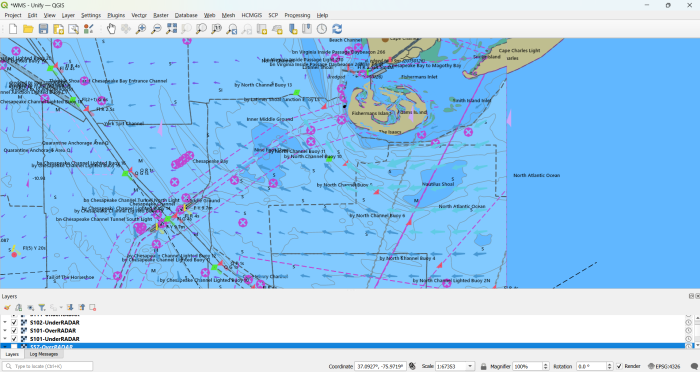
UNIFY example view: All Products (Base).
Reducing Complexity Without Starting Over
Beyond integration, UNIFY™ addresses a broader operational challenge: Complexity.
When systems are disconnected, teams spend time stitching together information from multiple sources just to understand what is happening. UNIFY™ delivers that information through a single integration layer, reducing manual coordination and allowing teams to operate with clearer, more reliable insight.
UNIFY™ is also designed to scale as needs evolve. The platform supports flexible deployment models and can adapt as additional S-100 services emerge without requiring organizations to reconfigure their entire technology stack.
This approach helps organizations:
- Control modernization costs
- Reduce operational risk during transition
- Protect existing technology investments
- Remain adaptable as standards evolve
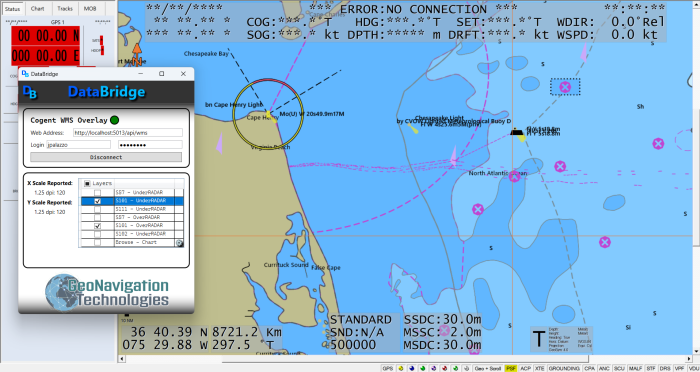
Example interface view: Single dataset (context parameters).
Preparing for S-100 Without Disruption
The transition to S-100 is not a question of if, but when. Organizations that begin preparing now can move forward deliberately and on their own terms. UNIFY™ provides a practical, measured path that balances innovation with stability and progress with operational reality.
For maritime organizations navigating the S-100 transition today, UNIFY™ addresses readiness now, turning a complex challenge into a manageable next step. To learn how UNIFY™ can support your organization’s move to S-100 without disrupting the systems you rely on today, visit GeoNavigation Technologies.


