

Marine Insurers Reaffirm Support for Middle East Trade

The global marine insurance market continues to show resilience and is maintaining the availability of cargo, hull, liability and offshore energy cover despite increasing geopolitical tensions in the Middle East, says the International Union of Marine Insurers (IUMI).Cargo insurers across global markets remain committed to supporting trade flows, including in high-risk areas such as the Persian Gulf and Red Sea.Although the evolving situation in the Middle East has prompted adjustments - particularly in war risk pricing and policy structures – significant capacity is still available.
Sunken Tugs Recovered from the Bottom of the Mersey River
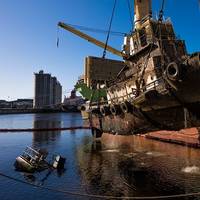
Salvors have removed two tugs from the Mersey River in Devonport on the northwest coast of Tasmania that had been sunk by a cement carrier in January.New South Wales based emergency response, salvage and environmental support specialist, United Salvage, engaged AAL Shipping to supply the 31,000DWT 700 tonne heavy lift vessel AAL Melbourne for lifting of the tugs and their onward shipment along the East Coast to Brisbane. The first tug, the 420 tonne York Cove, was pulled out of…
Marine Cargo Insurance Market Still Not Profitable

Sean Dalton, Chair of the Cargo Committee of the International Union of Marine Insurance (IUMI) has said at the organization’s annual conference in Toronto, Canada, that there has been a 2.5 percent increase in 2018 global premiums to $16.6 billion but that this increase was largely attributable to growth in global trade and exchange rate fluctuations. He added that the marine cargo market was in a state of “accelerating change” driven by underwriters taking action to address unprofitable results and to improve performance.Dalton stated: “On a global basis…
Hanjin - Possible Risks for Cargo Insurers
As a consequence of Hanjin Shipping's financial collapse one can anticipate that there will be displaced containers worldwide with Hanjin vessels being arrested short of or at destination, being moored up or remaining outside port limits to avoid arrest or being stuck at a port short of destination with the port authority unwilling to provide port services absent payment in advance, says Clyde & Co. One press report we have seen suggests that in excess of 500,000 TEUs already loaded on Hanjin vessels may be subject to delay. To name but a few consequences - there may be a greater theft and port accumulation risk if cargo has to be offloaded and stored. Temperature sensitive cargoes e.g. pharmaceuticals and/or cargoes with a short shelf life e.g.
Shortages of Bulk Cargo in Vietnamese Ports
Claims for shortage of bulk cargoes have become common in some Vietnamese ports and can lead to the arrest of the vessel by the receivers, says Gard Alert. Two of the ports frequently involved are Phu My (Cai Mep) in the south and Cai Lan in the north. Some vessels entered with Gard have recently been confronted with shortage claims upon discharge in Vietnam. One vessel was arrested, as the cargo insurers did not accept security in any form and insisted on a cash settlement in order to release the vessel. Our correspondents in Vietnam have issued a circular covering a similar trend. According to our correspondents, the discharge weights…
Losses Impacting Marine Cargo Insurance Market
Speaking at this year’s IUMI annual conference in Berlin, Nick Derrick, Chairman of IUMI’s Cargo Committee warned that large cargo losses were having a significant impact on the marine insurance sector. “Tianjin port covers an area of around 125 sq km”, says Derrick, “but only a small part of the port was affected by the explosion. Even so, we are expecting to see cargo losses of at least USD1.5 billion with some reports stating that the final figure could be as high as USD6 billion. Cargo insurers need to understand what the dollar loss might have been if the entire port had been affected, perhaps by a natural catastrophe such as an earthquake or tsunami”.
China Port Cargo Losses to Reach $1.5 bln
Explosions in the Chinese port of Tianjin last month would lead to cargo losses of at least $1.5 billion, and were having a "significant impact" on the marine insurance sector, a trade body said on Tuesday. "We are expecting to see cargo losses of at least $1.5 billion, with some reports stating that the final figure could be as high as $6 billion," Nick Derrick, chairman of the International Union of Marine Insurance's cargo committee, said in a statement. The incident should provide a "substantial wake-up call to all cargo insurers", he added. Reinsurance broker Guy Carpenter, a unit of Marsh & McLennan , said earlier this month that insurance losses for buildings, cargo, containers and property as a result of the explosions could total up to $3.3 billion.
Tianjin Explosion Highlights Growth of Accumulation Risks
The recent catastrophe at the port of Tianjin in China resulted in the loss of at least 100 lives and many more people are still missing. It is far too early to speculate on the cause, but the explosions left extensive physical damage as well as the appalling loss of life. Accumulation risks – when a single event causes an exceptionally large group of related losses – such as this, are continuing to grow, according to the International Union of Marine Insurance (IUMI). IUMI President, Dieter Berg said, “This extremely sad and regrettable incident demonstrates the persistent growth of accumulation of values in port and storage areas, particularly in highly industrialized regions.
On Board Fuel Blending
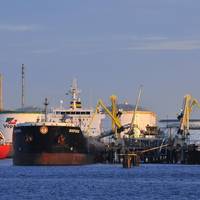
Dennis de Bruin, Marine Director at BMT Surveys, explains the current issues and new regulations concerning the on-board blending of fuels. Fuel oils are mainly a blend of oils and other components, for example; aromatic hydrocarbons such as benzene, toluene and xylene. Gasoline, for instance, is a refined product of petroleum, consisting of a mixture of hydrocarbons, additives and blending agents. Its composition varies widely depending on the crude oils used, the refinery processes, the type of product demanded and its specifications.
Engine Room Fire Prevention Below Par Say Experts
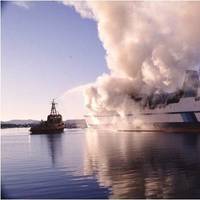
Lessons are still not being learnt when it comes to preventing engine room fires according to Braemar SA (Braemar Incorporating The Salvage Association). He adds: “On many of the vessels I visit, these hot spots are only too easy to find, with thermal imaging photographs readily identifying these defects”. Braemar SA says that, despite all the attention classification societies aim at fire prevention and protection design, potential problems must be detected earlier to ensure a fast and efficient first response.
Maritime Piracy Protection by UK Private Companies
The Inaugural Conference of the Security in Complex Environments Group (SCEG) announced that standards designed to ensure high levels of quality and professionalism of all Private Security Companies operating in a maritime environment would be in place before the end of 2012. SCEG is a special interest group within ADS, a UK government appointed body for the regulation and accreditation of private security companies. ADS believes that the high levels of risk of piracy in the seas off Somalia makes the development of maritime standards and independent accreditation a high priority, to reduce risks to private security companies and their employees, to ship owners and seamen, and to ship and cargo insurers and brokers.