Oil Leaking from USS Arizona Could Provide Guidance for Thousands of WWII Shipwrecks

A new study published in Marine Pollution Bulletin shows that oil is still seeping from the wreck of the USS Arizona, more than 80 years after its sinking at Pearl Harbor. The study focuses on samples collected by the National Park Service in 2016 and 2018.Researchers, led by the University of Houston and Woods Hole Oceanographic Institution (WHOI), analyzed oil samples collected from multiple leak points on the sunken battleship, using advanced molecular fingerprinting techniques. The results confirm the oil is a heavy fuel oil refined from California crude, consistent with U.S.
Study: Sunlight Degrades Polystyrene Faster than Expected
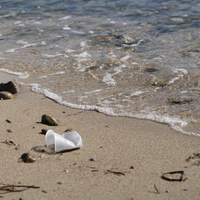
A study published by researchers at Woods Hole Oceanographic Institution (WHOI) shows that polystyrene, one of the world’s most ubiquitous plastics, may degrade in decades or centuries when exposed to sunlight, rather than thousands of years as previously thought. The study published October 10, 2019, in the journal Environmental Science and Technology Letters.“Right now, policy makers generally assume that polystyrene lasts forever in the environment,” says Collin Ward, a marine chemist at WHOI and lead author of the study. “That’s part of justification for writing policy that bans it.
Scientists Train Students on Oil Spill Research

As part of ongoing research nearly four years after the Deepwater Horizon oil spill, scientists from the Woods Hole Oceanographic Institution (WHOI) will team up with a group of high school students in Florida to collect remnants of oil from Gulf Coast beaches this week. Marine chemist Chris Reddy studies how the many compounds that compose petroleum hydrocarbon, or oil, behave and change over time after an oil spill. He and his researchers have collected and analyzed about 1,000 oil samples from the Gulf Coast since the Deepwater Horizon oil spill.