

Hans Buch and Loewe Marine Partner Up
Hans Buch Marine has signed a partnership agreement to become the Scandinavian representative of the young German company, Loewe Marine. “Loewe Marine immediately impressed us, and we are sure that our Scandinavian customers will be too, once we introduce Loewe Marines new rudder design allowing them to save thousands of dollars in fuel consumption,” said Carsten Larsen, Sales Director Hans Buch Marine. Dipl.-Ing. Carsten Löhmer, founder and CEO of Loewe Marine, said, “I am very proud about the new Scandinavian cooperation between Hans Buch and our company Loewe Marone. We are focused to serve both, locally and global newbuilding and service clients for rudder systems and steering gears in a competent, efficient and cost-efficient approach.
New Book Targets Better Ship Design
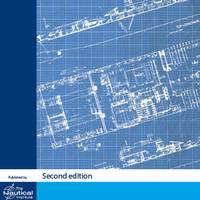
Bad ship design can make life onboard difficult and uncomfortable, cause accidents and even kill. Naval architects have a huge responsibility, but few of them have direct experience of how their designs affect those who use them. Improving Ship Operational Design, published by The Nautical Institute, hopes to make maritime operations safer and more effective by giving ship designers an insight into how those onboard work and live. The book was launched at the Royal Institution of Naval Architects’ (RINA) conference…
New Management at VULKAN
The Herne-based company VULKAN Kupplungs- und Getriebebau Bernhard Hackforth GmbH & Co. KG announced it has been under new management since March 2016. Under the new management scheme, Dr. Achim Brodde and Dipl. Ing. Dieter Klitzke will work together to steer the fortunes of the global coupling manufacturer. Dr. Brodde, who has also been Managing Director of VULKAN Lokring Rohrverbindungen since 2007, is taking on responsibility for the fields of Production, Quality Management and Engineering & Application. Klitzke will head up the business area VULKAN Couplings and is therefore also responsible for global sales activities in the field of maritime drive technology and energy generation. The new management duo is replacing Dr.
SCHOTTEL Boosts Customer Service Focus
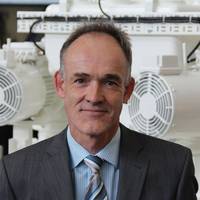
With the reorganization of its service interfaces, the SCHOTTEL Group announced it is bundling After-Sales Service and System Technology. After-Sales Service now combines SCHOTTEL’s customer service expertise that was previously spread over a number of decentralized interfaces of Customer Support and System Technology. The head of the newly organized division is Dipl.-Ing. Stefan Buch, who has worked in various management positions at SCHOTTEL since 2001 and has acquired considerable technical knowledge in design…
Green Shipping: Wessels Reederei Takes the Lead
International trade relies on transportation by sea, as about 85 percent of the freight volumes are shipped globally by vessels. But while maritime is widely regarded as the most environmentally benign of any transport system, maritime transport can cause a diverse environmental burden: It includes, beside the potential for damages and leaks, the inflow of waste water and, in particular, the emissions of air pollutants. Furthermore the improper cleaning of oil sludge, as well as the transfer of organisms into foreign ecosystems within ballast water.
Sulzer Appoints Dittrich as Interim CEO
The Board of Directors of Sulzer was surprised to hear of Klaus Stahlmann's personal decision to step down as CEO of Sulzer AG. The Board of Directors acknowledges Mr. Stahlmann's contribution to Sulzer's realignment, but in the interests of maintaining clarity and focus on the management of the company it has released Mr. Stahlmann with immediate effect. The Board of Directors appointed the CFO of Sulzer, Thomas Dittrich, in addition to his duties as CFO to the Group’s interim CEO, also with immediate effect. Thomas Dittrich, 51, holds Master of Science degrees in Mechanical Engineering (Dipl. Ing. Univ) as well as in Finance, Accounting, and Business Administration (HSG) and is Group CFO since August 2014.
Efficient Computer Control with G&D

For centuries, mariners have relied on paper maps to navigate the world’s oceans and waterways. Today, the computer technology used on board literally controls the vessel. Along with computers, KVM technology enters ships across the world. German manufacturers Guntermann & Drunck GmbH (G&D) were already working on KVM solutions before this technology had a name. The company was founded by Udo Guntermann and Martin Drunck in 1985. Maritime Reporter & Engineering News asked CEO Roland Ollek how a medium-sized German company has managed it to become part of numerous prestigious shipping projects.
Schottel Hydro Names Lange Managing Director
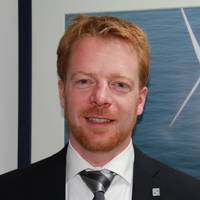
Niels Alexander Lange took over as Managing Director of the recently founded Schottel Hydro GmbH, a subsidiary of the Schottel Group comprising activities in three segments: Schottel Instream Turbines (SIT), semi-submerged Triton platforms and components, such as turbine hubs and drives. Dipl.-Ing. Lange joined the Josef Becker Research Centre of the Schottel Group in 2011. The naval architect brought along his experience as researcher at the Institute for Fluid Dynamics and Ship Theory of the Hamburg University of Technology.
Spotlight on German Shipbuilding
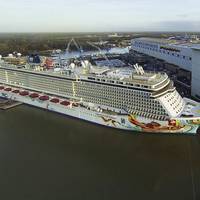
The German shipbuilding industry has a world market share of around one percent. This is certainly in another league compared to China, South Korea and Japan, which divide the global shipbuilding pie of containerships, bulk carriers and tankers among themselves. But the German shipyards are on top in Europe. Here, around 90,000 people in the shipbuilding and supply industry are employed, and the German maritime cluster remains in strategic and symbolic importance. Aside from the Norwegians…
Desulfurization of Exhaust Gases in Shipping
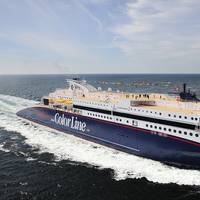
Are shipowners prepared to enter SECA zones? Due to existing regulations on air exhaust emissions from the International Maritime Organization (IMO), and with the European Union working towards an alignment with IMO MARPOL Annex VI, the marine industry will need to choose a path on how to achieve compliance, a choice that will have tremendous impact on shipping. Legislation has already had an effect on the fuel markets in regulated areas, as fuel prices are expected to increase even further in 2015 when the 0.1% fuel sulfur limit enters into force.
Pull the Handle Down...
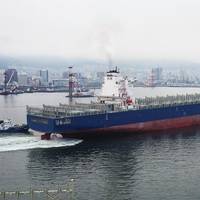
One of the most effective and easiest fuel reduction operations is reducing the engine power by reducing the speed of a vessel. Out of the total operational costs of a vessel, fuel costs account for, by far, the highest proportion. When fuel prices soared, the technical experts of one of the world’s biggest shipping companies set about to solve the problem, and slowing down was the solution they devised. By 2009 significant fuel savings resulted from sailing its ships at 12 knots instead of 24, and ”Slow Steaming” officially became the standard operating procedure in their fleet.
Interview: Dr. Herbert Aly
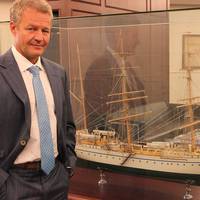
Shipyard boss Dr. Herbert Aly discusses Blohm+Voss’ radical reorganization as well as the strategies to secure new orders. When I started my nautical career at Blohm+Voss at the beginning of the early 1960s, one could see on the southside of the river Elbe nine independent operating shipyards. Today only one remains: Blohm+Voss. More than 100 years experience, technical know-how and modern production technology helps to ensure the international global competitiveness of the City of Hamburg as an important site for shipbuilding.
Advanced Simulation Helps to Solve Ballast Water Management Problems
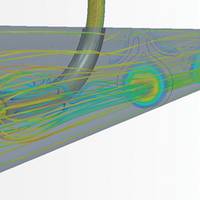
Ballast water management poses problems in design and operation of ships. Computational fluid dynamics (CFD) offers solutions with design, type approval and trouble-shooting. Computational fluid dynamics (CFD) denotes collectively techniques for solving equations describing the physics of fluid flow. CFD is by now widely known and accepted in the maritime industry, but mostly associated with flows around the hull and propellers, for example in the context of designing more fuel-efficient ships. However, CFD is in many ways far more versatile than classical model testing.
MV Cellus

It’s not new, but is MV Cellus one of the cleanest ship in the world? Quick question: When the words “Green Shipping” and “German Maritime” are put together, is the first thought in your mind modern cruise ships? If you answered yes, it would be understandable; but partially right, partially wrong. Recently Maritime Reporter & Engineering News German-based contributing editor Dipl.-Ing. A simple German freighter is a bonafide trendsetter for clean ships operation, becoming the first seagoing ship to earn the “Blue Angel” eco-label, the oldest eco-labeling of Europe.
CO2 & the Environment: A “Not Guilty” Verdict?

Governments of the world continue to encroach with increasingly stringent emission legislation – of the in no way scientifically proven debate – creating a situation that puts vessel owners and operators of engine driven transport equipments of all kinds under growing legal and financial burden. But, what role does soot and CO2 really play for the environment and the global warming? Maritime Reporter & Engineering News German-based contributing editor Dipl.-Ing. Peter Pospiech takes a closer look to this question and delivers some interesting analysis.
German Shipowner Invests in Fleet Rejuvenation
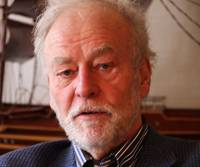
Leer, Germany, not to far from the river Ems entry into the North Sea, with its Institute of Maritime Studies, is the origin of a maritime trade association in the field of logistic, shipping companies, shipping, shipbuilding, carrying business and handling. Thus the city of Leer has grown, after the city of Hamburg, into the largest concentration of shipping companies according to the managed numbers of ships, with around 16 shipping companies operating more than 400 seagoing vessels from here. By its seaport, the city was characterized by trade for centuries.
German Maritime, Offshore Industries Strengthens
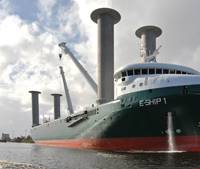
“We continue to be successful in world markets and have also found new customers in attractive niches in 2011. At the same time, our regular customers are now again ordering not only in the newbuilding segment but precisely also in the retrofit area,” said Dr. Alexander Nürnberg, Chairman of VDMA Marine and Offshore Equipment Industries, at a late 2011 press conference held in Hamburg. The German maritime economy is an essential industrial sector, which — particularly in the rather…
Disney Fantasy: German Shipbuilding at its Best
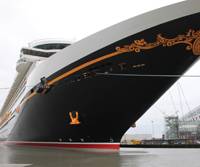
These are the pictures which are going around the world on the occasion of towing again an enormous cruise ship out of the covered building docks and pull it in high precision work via the very narrow inland waterway across the grassland of the river Ems towards the open ocean. These pictures brings the city of Papenburg, with its 35.000 residents, into focus. The pictures are unreal as well as fascinating. With its periodical rerun, always then, when a new cruise ship leaves the Meyer Werft of Papenburg, they are burnt into the memory as a kind of an icon of the new ultra-modern Northwest.
Eurogate to Order New Crane from Kalmar
ship-to-shore crane. currently on order is due for delivery in Summer 2003. Throughput at the terminal has risen steadily year on year since 1999, with a total of 1.5 million TEU passing through Eurogate in 2001. To be able to handle the expected future growth in container traffic, Eurogate is investing in its port infrastructure, and specifically in its handling equipment. ship-to-shore crane. through the terminal year in, year out. Having previously invested in Nelcon STS cranes we know what they can do. Kalmar's impeccable aftersales care provision. and they will send someone out to fix it immediately. "One overriding factor though…
MAN B&W Welcomes Spindler
MAN B&W Diesel AG, Augsburg, manufacturer of large-bore Diesel engines, has extended their Board of Directors: The Supervisory Board appointed Dr. Ing. Stefan Spindler Executive Vice President of the company. Dr. Ing. Spindler is responsible for the concentration of the four-stroke activities focussimg on Development and Sales. Further members of the Board of Directors are Dr. jur. Hans-J. Schulte (President), Dipl. Ing. Fritz Pape and Dr. Ing. Peter Sunn Pedersen.. Dr. Ing. Spindler was to date employed by the Liebherr AG in Bulle (Switzerland) and responsible for their Diesel engine product range. After graduating in mechanical engineering at the Munich Technical University, he worked for 13 years in various divisions of the engine manufacturer MTU Friedrichshafen.
Schottel Going Full Speed Ahead
Schottel ended the year 2003 with record sales. With 550 employees worldwide, the company continued the previous year’s trend, achieving sales in the new systems and service sectors totalling 90 million euro (2002: 81 million). Sales for the group were thus increased by 11%, and once again exports accounted for some 80% of the total. The extremely satisfactory volume of incoming orders in the last 12 months, amounting to some 88 million euro, means that 42 million euro of orders are on hand for the year 2004. Of particular significance are the latest worldwide sales successes in the areas of tug propulsion systems, offshore supply vessels, cruise ships, research vessels, ferries and military vessels.
HATLAPA Expands its Board of Directors
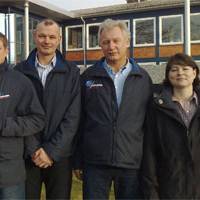
In addition to the Managing Partners, Dr. Alexander Nuernberg and Joerg Tollmien, Thomas Ketelhohn has been appointed as Financial Director and Dipl.-Ing. Kay Nolte as Technical Director. The Board of Directors will be completed by Natascha Pump as Group Controller. Mr. Ketelhohn was previously responsible for bookkeeping, human resources and administration. He started his career in the company as a commercial apprentice in 1980 and holds a bachelor in business administration since 2002. Mr. Nolte joined HATLAPA in 2005 as head of production.
Schottel Mourns Gragen Death
Uwe Gragen, Dipl.-Ing., sales and project manager for SCHOTTEL GmbH & Co. in Spay/Rhine, and responsible for worldwide sales of propulsion systems for tugboats and ocean-going vessels, has died. Uwe Gragen passed away quite unexpectedly on the evening of 13 May 2005 after returning home from work. He leaves behind a wife and three children. Born on 21 August 1943 in Königsberg, he undertook his apprenticeship from 1960 to 1963 at the Stülcken shipyard in Hamburg, a city in which he was to remain to study naval architecture. From 1966 to 1971 he worked as project engineer at Orenstein & Koppel in Lübeck. Uwe Gragen had placed his considerable expertise as a naval architect at the disposal of the propulsion specialist SCHOTTEL since 1 October 1971…



