
Cruise Vessel MS Amera Gets a New Lease on Life
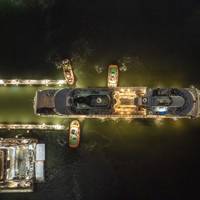
Shipowners in all sectors face the same decision: build new or refurbish older tonnage. In the booming cruise sector the decision is more pressing, particularly as new construction ships can take two to three years to build, perhaps longer today with global shipyard orderbooks packed full.When the decision was taken to upgrade the nearly 40-year-old MS Amera, trust for the project landed with BSM Cruise, the technical ship manager of MS Amera, and Wabtec channel partner VMS Group…
MAN Energy Solutions Launches EGR Blower
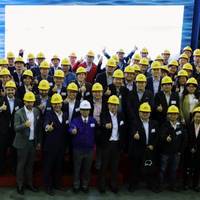
A Shanghai, China Celebration for MAN's newest solution for Tier III Compliance. The first order has already been won.ETB (Electrical Turbo Blower) raises exhaust-gas pressure to overcome the pressure difference between exhaust gas and scavenging air receiver by actively controlling the exhaust gas flow; strategic step to bring development in-house; design focuses on cost-optimisation and compactnessMAN Energy Solutions has launched its new EGR (Exhaust Gas Recirculation) electrical…
Inland Workboats Have Much to Gain from Diesel Electric Propulsion
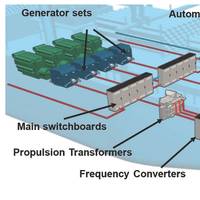
Diesel electric technology, as part of a comprehensive engineering design process, should be considered by the inland towboat sector. Diesel electric propulsion is not a new concept. Like azimuthing drives, its application to the inland marine market has lagged behind other areas of the marine industry. Diesel electric has gained traction in industries where fuel economy and redundancy of propulsion systems for safety is paramount. In particular, vessels like passenger ferries and offshore supply vessels have enjoyed the benefits of the diesel electric systems.
Insights: Kunkel Weighs in on Propulsion Technology
LNG? Methanol as fuel? Hybrid systems? Tier 4? Reducing noise? Cutting emissions without crushing fuel economy? Marine News readers have questions and Bob Kunkel has answers. Kunkel, President of Alternative Marine Technologies, previously served as the Federal Chairman of the Short Sea Shipping Cooperative Program under the Maritime Administration and Department of Transportation from 2003 until 2008. A past Vice President of the Connecticut Maritime Association, he is a contributing writer for Maritime Professional and Marine News. A graduate of the Massachusetts Maritime Academy, Kunkel sailed as a licensed engineer and eventually continued his career in ship construction at NASSCO, San Diego, Hyundai Heavy Industries, S. Korea, Chengxi Shipyard and Dalian New Shipyard in China.
Repower Brings Ferry into IMO Tier III Compliance
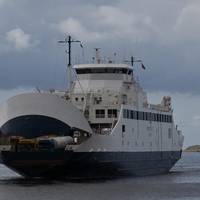
Norwegian ferry Bastø Fosen I is the first vessel commissioned with a globally certified International Maritime Organization (IMO) Tier III compliant marine engine that does not need urea based after treatment. The completely refurbished and repowered Bastø Fosen I has been equipped with GE’s Marine Solutions 16V250MDC, a 16 cylinder 250 mm bore marine diesel engine that is certified to meet both IMO Tier III and EPA Tier 4 emission standards, reducing key emissions by more than 70 percent, according to the engine manufacturer.
Emissions Control Takes Center Stage for Workboat Engines
Today’s workboat operators must navigate increasingly stringent IMO and EPA environmental and emissions regulations in and around ports and rivers. As the drama unfolds, selective catalytic reduction or SCR is emerging as a viable vehicle to do just that. At the same time, fears about space constraints for smaller vessels and the hassle of carrying and handing urea for these systems are rapidly evaporating, as well. Two different firms – both familiar names in propulsion markets – have embraced SCR as the way forward. Both, Tenneco and Volvo Penta, rely on deep roots in these markets and significant experience in the effort to reduce emissions from engines.
Alfa Laval EGR-HPE Economizer a Boon
With Tier III NOx limits entering into force in North America and the US Caribbean in January 2016, the time has come for many ship owners to choose their method of compliance. Exhaust Gas Recirculation (EGR) on MAN B&W engines has strong advantages on its own. But combined with a new pressurized EGR economizer from Alfa Laval, it also offers the potential for massive fuel savings. “EGR provides Tier III NOx compliance with a very compact footprint, but compliance itself is only part of the full potential,” says John Pedersen, Business Manager, Boilers, Combustion & Heaters at Alfa Laval. “Working closely with MAN Diesel & Turbo to optimize the EGR technology, we saw additional opportunities through our expertise in marine boilers.
New Generation of Turbochargers Announced

MAN Diesel & Turbo has announced the development of a new turbocharger series specifically matched to the requirements of two-stroke engines. For the first time ever, MAN Diesel & Turbo will develop a turbocharger series exclusively for two-stroke engines that is especially designed and optimized to fulfill Tier III requirements. Compared to the TCA turbocharger range, successfully introduced by the company during the last decade, TCT efficiency shows an increase of 5% through using newly-developed compressor and turbine-wheel geometry…