

Offshore Wind: Good Supply, Growing Demand
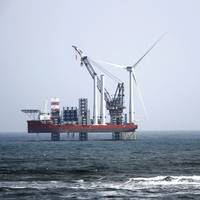
In its 2019 “Annual Energy Outlook” the US Energy Information Administration (EIA) projects that electric generation from renewables (wind, solar, hydro) will go from 500 billion KWh in 2018 to 1500 billion KWh in 2050, just 30 years from now.“The AEO highlights the increasing role of renewable energy in the US generation mix,” said EIA Administrator Linda Capuano. “Solar and wind generation are driving much of the growth. In fact, our reference case projects that renewables will grow to become a larger share of U.S.
Irish Wave Buoy to Be Deployed at US Navy Test Site
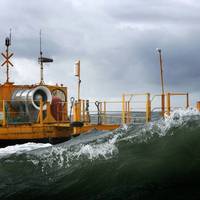
Despite some 7,000 miles separating Ireland and Hawaii, the two islands have a lot in common. The islands’ peoples have always looked to their respective oceans for resources, inspiration and opportunity. Today, Irish company Ocean Energy announced its wave energy convertor OE Buoy will be built by Oregon-based Vigor and deployed at the U.S. Navy’s Wave Energy Test Site on the windward coast of the Hawaiian Island of O’ahu in the fall of 2018. The contract value is $6.5 million out of a total project value of $12 million for this first of a kind grid scale project at the U.S.
Schottel Hydro Launches New Turbine Generation

The SIT Schottel Instream Turbine allows the harvesting of hydrokinetic energy for commercial projects at a reasonable cost. SIT makes hydrokinetic energy commercially viable for utility-scale and community-scale network applications. According to the designer, the SIT design purposely avoids complex subsystems: SIT features passive-adaptive composite blades with no need for any active pitch mechanism. Its drive train is standardized with a two-stage planetary gearbox and an induction generator.
Schottel Hydro Names Lange Managing Director

Niels Alexander Lange took over as Managing Director of the recently founded Schottel Hydro GmbH, a subsidiary of the Schottel Group comprising activities in three segments: Schottel Instream Turbines (SIT), semi-submerged Triton platforms and components, such as turbine hubs and drives. Dipl.-Ing. Lange joined the Josef Becker Research Centre of the Schottel Group in 2011. The naval architect brought along his experience as researcher at the Institute for Fluid Dynamics and Ship Theory of the Hamburg University of Technology.
WRRDA: Clearing the Channel for P3 Projects
Earlier this year, the U.S. maritime industry in general, and the inland waterways industry in particular, celebrated the long-awaited passage of the Water Resources, Reform and Development Act of 2014. Among the accomplishments of this legislation were provisions to address the funding needs of the ever-worsening condition of the inland waterways infrastructure. Among these provisions are Sections 2004 and 5014 of WRRDA. Of the two provisions, the public-private partnership (P3) pilot program under Section 5014 has received substantially more attention in the maritime press and at industry conferences than have the studies of federally tax-exempt bonds and potential sources of additional revenue for the IWTF under Section 2004.
US Closer to Wave Energy off Oregon
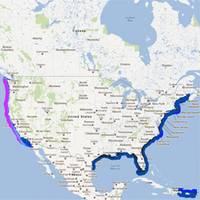
As part of President Obama’s Climate Action Plan to create American jobs, cut carbon pollution and develop domestic energy sources, the Bureau of Ocean Energy Management (BOEM) announced today it has taken an important step toward issuing a research lease for a facility to test utility-scale wave energy devices in federal waters off Oregon. The non-competitive lease would be for the offshore area where the Northwest National Marine Renewable Energy Center at Oregon State University (Center) would site the hydrokinetic energy research project.
BOEM Assesses Prospects of Wave Energy off Oregon
As part of President Obama’s Climate Action Plan to create American jobs, cut carbon pollution and develop domestic energy sources, the Bureau of Ocean Energy Management (BOEM) is assessing whether there is competitive interest in wave energy research or development in an area of federal waters offshore Oregon where the Northwest National Marine Renewable Energy Center at Oregon State University (NNMREC-OSU) proposes to site a hydrokinetic energy facility to test utility-scale wave energy devices. BOEM will publish the "Notice of Potential Research Lease on the Outer Continental Shelf Offshore Oregon, Request for Competitive Interest” in the Federal Register on March 24…
Marine & Hydrokinetic Power Holds Promise
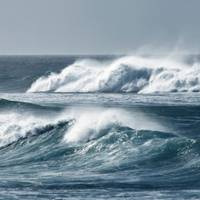
In many ways marine and hydrokinetic power systems offer one of the most promising areas for renewable energy development. Marine and hydrokinetic resources – including ocean waves, tidal streams, river flows, ocean currents, and ocean thermal differences – are abundant, the technology is improving rapidly, and countries that have strong marine resources, such as the United Kingdom, United States, Australia, South Korea, Spain, and Portugal, have committed to supporting the industry. Marine energy, however, still faces significant technology, policy, and financing challenges.
SNAME Focused Panel Sessions, 2009 Meeting
The focused panel sessions at the Society of Naval Architects and Engineers (SNAME) Annual Meeting and Expo (October 21-23 at the Rhode Island Convention Center in Providence, Rhode Island) will feature four timely topics: Electric Ships; Renewable Energy from the Oceans; Unmanned and Autonomous Ships of the Future; and Ship Efficiency in the Greenhouse Gas Era. Each two-hour panel session will be chaired and moderated by experienced SNAME members. Each session will have three leading experts who will make thirty minute presentations on their area of expertise, followed by a moderated thirty minute discussion period which will include questions and answers from the audience.
FERC OKs License for Hydrokinetic Energy Project
The Federal Energy Regulatory Commission (FERC) issued the first license for a hydrokinetic energy project. The license was issued to Finavera Renewables Ocean Energy, Ltd. for construction and operation of a wave energy conversion system in the Pacific Ocean at Makah Bay in Washington State. The license is conditioned on the company obtaining all other necessary permits and authorizations prior to commencing construction. When and if constructed, the project would consist of four 250-watt steel wave energy conversion buoys and an associated mooring/anchoring and electrical connection system. (HK Law)