

Oil Blast Sparks Off Major Fire in Mumbai Port Trust in Wadala
A fire broke out due to a suspected leakage in an oil pipeline passing through a land owned by the Mumbai Port Trust (MbPT) in Wadala in central Mumbai, but no one was injured. Fifteen fire tenders and 12 water tankers eventually doused the flames after a five-hour fight around 11pm. There were no casualties. Sources said the flames were spreading fast in the evening because of the strong monsoon winds blowing from the southwest. Dark smoke could be seen from up to 7km away in Lower Parel. The fire began at 5:50 pm. "An oil leakage was detected this morning and we had taken all the necessary precautions. But at 6 PM, we were informed of a fire," MbPT chairman RM Parmar said. He added that no casualties have been reported in the incident so far.
Shell's Marine & Power Innovation Center Enters Second Decade
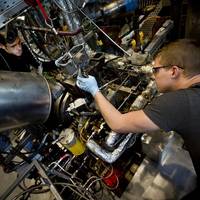
Shell Marine Products (SMP) is celebrating the 10th anniversary of its Marine & Power Innovation Center (MPIC) in Hamburg, Germany, marking a decade of its innovative approach in developing lubricant technology for the marine industry. Established in 2004 within Shell Technology Center Hamburg, the center has been pivotal in SMP’s ability to meet the fast-changing demands placed on cylinder oil performance in today’s maritime landscape. Its team of scientists and engineers are constantly using insights from Shell’s legacy of almost six decades of marine lubricant development…
Lubricant Technology Proven Tough Under Fire
When Texaco, now represented in the marine lubricants market by FAMM (Fuel and Marine Marketing), launched Taro 40 XL 40, the lubricant was designed to address pressing field problems in medium speed engines. Three years later FAMM is in a position to evaluate the performance in a large number of engines and to compare the field results with competitive lubricants. The pressing problems arose from a series of engine design and fuel processing changes. Although aimed at improving engine efficiency and making savings, the changes resulted in a series of difficulties. The best known are engine blackening, undercrown deposits, piston head corrosion, fouling of purifier heaters, increased oil consumption, base number depletion, oil scraper ring clogging and increased piston deposits.