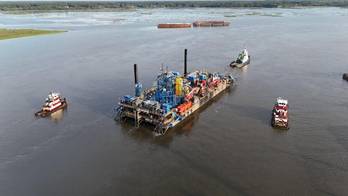

Gunderson Marine & Iron’s McMurdo Docking Pier Arrives in Antarctica

The McMurdo Docking Pier, constructed by Gunderson Marine & Iron (GM&I) and designed by Glosten for the U.S. Army Corps of Engineers, hassuccessfully arrived at McMurdo Station, Antarctica following a 9,159 nautical mile voyage across the Pacific Ocean and Southern Ocean.The pier, towed from the Pacific Northwest by TradeWinds Towing, was underway for 69 days, averaging 5.5 knots over the course of its journey. This total includes four days of route adjustments to avoid severe Southern Ocean weather systems.
The Five Ws (and How) of the IMO Polar Code
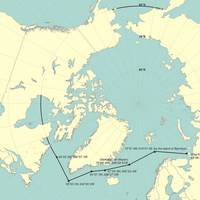
Since coming into force, the IMO Polar Code has had a positive effect on maritime operations in polar waters, write Dan Oldford and Ed Moakler, ABS HETC, St. John’s, Newfoundland and Labrador.What is the Polar Code, When and Why did it come into force?Polar regions have many unique hazards compared to warmer waters around the world. Since the earliest explorers sought to explore the Arctic and Antarctic by ship, many vessels have been lost due to sea ice, cold air temperatures and ice accretion.Prior to the Polar Code coming into force there were no international regulations…
US Coast Guard Icebreaker Returns Home After Operation Deep Freeze Deployment
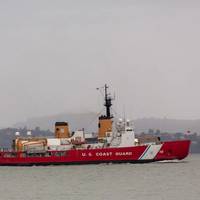
The U.S. Coast Guard Cutter Polar Star (WAGB 10) and crew returned to the United States, arriving in San Francisco Sunday, following a 128-day deployment to Antarctica in support of Operation Deep Freeze (ODF) 2025.Polar Star completed its 28th voyage to Antarctica in support of the joint military service mission to resupply and maintain the United States Antarctic Stations. Every year, a joint total force team works together to complete a successful Operation Deep Freeze in support of the U.S.
49-Year-Old USCG Icebreaker Polar Star Departs Antarctic Region
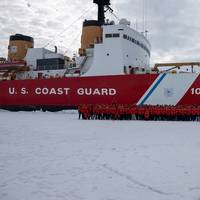
U.S. Coast Guard Cutter Polar Star (WAGB 10) and crew departed the Antarctic region Tuesday after 65 days south of the Antarctic Circle in support of Operation Deep Freeze 2025.Operation Deep Freeze is an annual event, led by the U.S. Antarctic Program (USAP) in conjunction with the Department of Defense, to support the U.S. National Science Foundation (NSF). The USAP advances the nation’s goals to support the Antarctic Treaty, fosters cooperative research with other nations, protects Antarctic resources…
USCG Icebreaking Vessel Polar Star Sets Sail for Antarctica
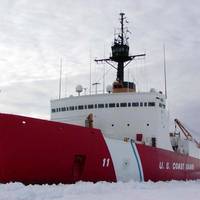
As the U.S. Coast Guard Cutter Polar Star (WAGB 10) and crew departed Seattle recently for its deployment to Antarctica in support of Operation Deep Freeze, all eyes come back around to the U.S. icebreaking fleet, or lack thereof, as the nation and its allies work to help build the fleet to be larger and stronger than ever, facing potential national security threats that come with a strong Russian and Chinese presence in the polar regions.Click here to read about "U.S. Polar Security…
US' Sole Heavy Icebreaker Arrives in Antarctica
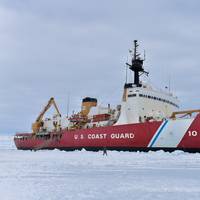
The 157 crewmembers of the U.S. Coast Guard Cutter Polar Star (WAGB 10) arrived at McMurdo Station in Antarctica Monday following an 86-day transit from the United States and the cutter’s departure from its Seattle homeport Nov. 13.This deployment marks the Polar Star’s 25th journey to Antarctica supporting Operation Deep Freeze, an annual joint military service mission to resupply the United States Antarctic stations in support of the National Science Foundation, lead agency for the United States Antarctic Program.Each year…
New Zealand's Largest Ever Naval Vessel Delivered in S. Korea
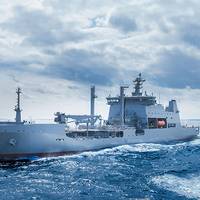
New Zealand Navy's largest ever ship Aotearoa, built by Hyundai Heavy Industries, is on its way to New Zealand, after Hyundai held a departure ceremony in its shipyard in South Korea on Wednesday.Ordered in 2016, the $493 million Aotearoa is an Auxiliary Oiler Replenishment (AOR) vessel that will be used to support Royal New Zealand Navy’s combat operations, humanitarian relief functions, and operational and training support.The vessel is built according to the Rolls-Royce Environship concept design, with a wave-piercing bow which reduces resistance and lowers fuel burn.
US Icebreaker Polar Star Reaches Antarctica
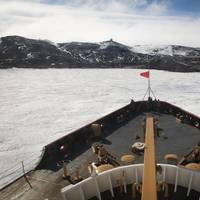
The U.S. Coast Guard's sole heavy icebreaker arrived January 22 at McMurdo Station, following a 58-day transit from the United States. Cutter Polar Star (WAGB 10) departed its’ homeport of Seattle on November 26.This year marks the Polar Star’s 23rd journey to Antarctica in support of Operation Deep Freeze, an annual joint military service mission to resupply the United States Antarctic stations, in support of the National Science Foundation, the lead agency for the United States Antarctic Program.The 399-foot…
USCG PSC Equals meaningful Polar Presence
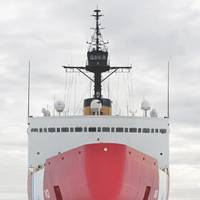
The Coast Guard needs a ship that can do more than just break ice; it needs a multi-mission ship to provide for the nation’s security, asserting its sovereign rights, and protecting its long-term economic interests. That ship is the Polar Security Cutter.Since Russia cashed the check in 1867 for the purchase of Alaska the U.S. has been an Arctic nation. Today, it is one of eight countries that have territorial land or seas above the Arctic Circle or in the polar region (six of those countries have Arctic Ocean coastline or an exclusive economic zone above the Arctic Circle). The U.S.
Fire Breaks out on USCG's Polar Star
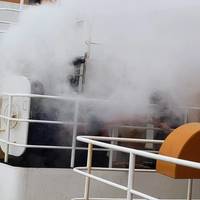
It seems the U.S. cannot do enough to fast-track the construction of its new icebreaking fleet, as the USCG announce last night that the 150-member crew of the U.S. Coast Guard Cutter Polar Star fought a fire at approximately 9 p.m. PST Feb. 10 that broke out in the ship's incinerator room about 650 miles north of McMurdo Sound, Antarctica.After initial response efforts using four fire extinguishers failed, fire crews spent almost two hours extinguishing the fire. Fire damage was contained inside the incinerator housing…
Coast Guard's Only Heavy Icebreaker Arrives at Antarctica
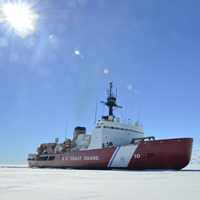
The 150 crew members of the U.S. Coast Guard Cutter Polar Star arrived Thursday in Antarctica along with a resupply vessel during Operation Deep Freeze – a joint military service mission to resupply U.S. interests in Antarctica.Homeported in Seattle, the 42-year-old Coast Guard cutter is the United States’ only operational heavy icebreaker, and the crew is making their sixth deployment in as many years to directly support the resupply of McMurdo Station – the United States’ main…
Interview: Admiral Karl Schultz, Commandant, United States Coast Guard

Maritime Reporter & Engineering News was offered the opportunity to interview Admiral Karl Schultz, the 26th Commandant in the history of the United States Coast Guard, in his office in Washington, DC. Just five months into his tenure, his plate is predictably full with a number of challenges, including: Attracting and retaining future U.S. Coast Guard personnel; addressing a number of assymetric threats, including cyber attacks; and ensuring captial and operating budgets are adequate to safely and efficiently carry out a global mission envelope, to name but a few.
Shipyards: FMG & its Quest to Build USCG Icebreakers
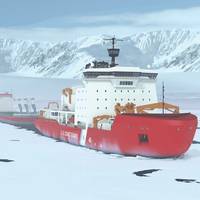
As the U.S. Coast Guard moves to rebuild its icebreaker fleet we spoke with RADM Bruce Baffer (Ret.), head of Fincantieri’s effort to win the contract to build the Polar Security Cutters.The case for the U.S. to build a new class of icebreakers is strong. While news of global climate change and the shrinking ice caps at both poles is daily headline fodder, maritime navigation in and around the Arctic and Antarctic remains one of the most difficult and dangerous operating arenas on the high seas.
US Icebreaker Suffers Flooding, Engine Failure in Antarctic
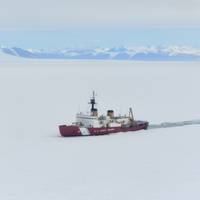
America’s aging, sole remaining heavy icebreaker suffered several engineering challenges, including flooding and engine failure, on its way to completing a recent mission in the Antarctic, highlighting the U.S.’ need for new polar icebreakers. The 1970s-era U.S. Coast Guard Cutter Polar Star is called upon each year to aid the delivery of fuel and supplies for National Science Foundation research stations in Antarctica, carving a navigable path through the Ross Sea where seasonal and multi-year ice is sometimes as much as 10 feet thick.
Antarctic Rescue Mission Underway
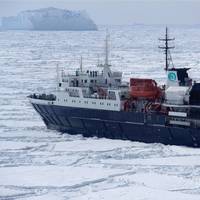
Emergency responders have launched an urgent rescue mission to Antartic waters to evacuate a cruise ship passenger who is suspected to have suffered a stroke early Monday morning. Working closely with the U.S. Antarctic Program and the vessel’s operator and crew, Rescue Coordination Centre New Zealand (RCCNZ) is coordinating the medevac after receiving a call from the expedition cruise ship MV Ortelius located in the Ross Sea, off the Antarctic ice shelf, 3,600 km south of New Zealand.
Polar Star Arrives at McMurdo Station, Antarctica
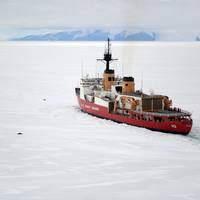
The crew of the Coast Guard Cutter Polar Star arrived at the National Science Foundation’s McMurdo Station Tuesday after cutting a resupply channel through more than 60 miles of Antarctic ice in the Ross Sea. By carving a navigable path through seasonal and multi-year ice, the Polar Star assists in the annual delivery of operating supplies and fuel for two of NSF's three U.S. research stations in Antarctica. The Polar Star is America’s only operational heavy icebreaker that is capable of conducting the Antarctic resupply mission.
America Needs Icebreakers
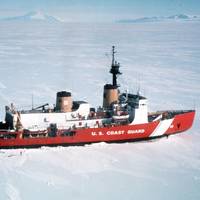
Russia has more polar icebreakers than the rest of the world combined. America has one polar icebreaker and that one is well past its prime. There has been talk of sharing icebreakers. Sharing may work with allies, who are generally on the same page. Sharing will not work with Russia, which views the world as a zero-sum game. In June 2016, Russia announced the launching of Arktika, the world’s largest polar icebreaker. With a full load displacement of 33,540 tons, a length of 173.3 meters and a breadth of 34 meters, it will be capable of breaking ice up to 2.9 meters.
US Polar Icebreaker Visits San Diego
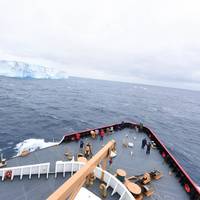
The U.S. Coast Guard’s polar icebreaker Cutter Polar Star has made a brief stop in a warmer climate, mooring in San Diego before returning to Seattle after a four and a half month-long deployment to the Antarctic in support of Operation Deep Freeze 2016. The Polar Star, a 399-foot cutter commissioned in 1976, is the nation’s only operational heavy icebreaker, and the most powerful non-nuclear icebreaker in the world. The cutter recently delivered necessary cargo to sustain the National Science Foundation managed U.S. Antarctic Program’s McMurdo and South Pole stations for the next year.
Icebreaker Returns from Antarctic Rescue
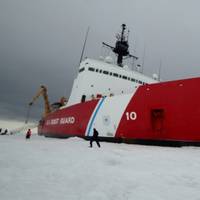
The crew of Coast Guard Cutter Polar Star, the United States’ only operational heavy icebreaker, is scheduled to return to Seattle after a 101-day Antarctic deployment Tuesday. Polar Star’s crew departed Seattle for Operation Deep Freeze 2015, the military resupply and logistical support mission for the U.S. Antarctic Program’s McMurdo Station. Coast Guardsmen aboard Polar Star escorted the cargo vessel Ocean Giant and fuel tanker Maersk Peary to McMurdo Station through ice ranging in thickness from 5 to 10 feet. These logistics allow scientific research to continue in the Antarctic.
U.S. Coast Guard Rescues 26 in Antarctic
The U.S. Coast Guard has rescued an Australian fishing vessel carrying 26 people that had been stranded in icy Antarctic seas since last week, the Coast Guard said on Tuesday. The crew was saved on Sunday by the Coast Guard cutter Polar Star, which broke through some 150 miles (240 km) of thick ice on its way to the 207-foot (63-meter) Antarctic Chieftain vessel, the Coast Guard said in a statement. The Chieftain had been stuck about 900 miles (1,450 km) northeast of McMurdo Sound since last Tuesday, after damaging three of its four propellers in the ice, the Coast Guard said. "There were some very happy sailors aboard Antarctic Chieftain upon our arrival," Polar Star commanding officer, Captain Matthew Walker, said in a statement.
Coast Guard Rescue Underway in Antarctica
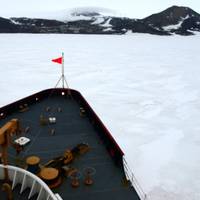
A U.S. Coast Guard crew is en route to assist a 207-foot fishing vessel with 26 people aboard beset in ice approximately 900 miles northeast of McMurdo Sound, Antarctica. The crew of the Coast Guard Cutter Polar Star is attempting to reach the crew of an Australian-flagged fishing vessel, Antarctic Chieftain, who contacted Rescue Coordination Centre New Zealand Tuesday evening for assistance after becoming trapped in the Antarctic ice. The crew of 40-year-old cutter has reported heavy, snow, wind and ice conditions at times as well as large icebergs along their course.
US Coast Guard to Free Aussie Fishing Vessel from Antarctic Ice
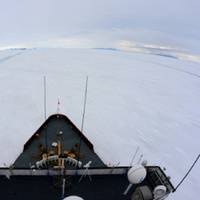
A U.S. Coast Guard cutter has been diverted from its path to rescue a 207-foot fishing vessel stuck in Antarctic ice, the US Coast Guard announced in a press release today. Antarctic Chieftain, an Australian-flagged fishing vessel with 27 passengers, contacted Rescue Coordination Centre New Zealand after becoming beset in ice 900 miles Northeast of McMurdo Sound, Antarctica on Tuesday. The vessel suffered damage to three of its four propeller blades when it became stuck in the ice and lost its ability to maneuver. RCC New Zealand diverted U.S.
House Subcommittee Hearing Highlights “Dismal State” of U.S. Icebreaking Capability

At the July 23, 2014, hearing of the House Subcommittee on Coast Guard and Maritime Transportation on “Implementing U.S. Policy in the Arctic” the committee chairman, Rep. Duncan Hunter (R-CA), opened the proceedings by holding up a graphic of the icebreaker fleets of the world—which depicts nearly 40 Russian icebreakers—and then commented on the “dismal state” of the U.S. icebreaker situation. The hearing background paper noted that the United States presently has only two working polar class icebreakers…