

DOMESTIC DREDGING: U.S. Ports Require a Diverse Fleet
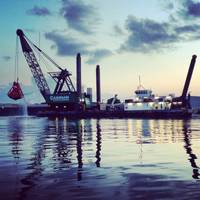
The reasons for that are many and these realities cater to regulatory, commercial and regional needs.The U.S. dredging market is complex and relies on the diverse fleet of private dredging companies to get the job done. In addition to design and technical capabilities, environmental restrictions and regulations often dictate whether a trailing suction hopper dredge, cutter suction dredge, or mechanical dredge can respond to the coastal protection, wetland restoration, port deepening, and channel maintenance needs of the Nation.
Rederi AB Gotland Looks to the Future
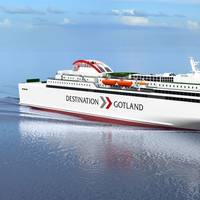
Nutrient removal in membrane bioreactor wastewater treatment systems is the future. Rederi AB Gotland acts now for both savings and the sake of our seas. Rederi AB Gotland, Sweden’s oldest passenger shipping company, has chosen Evac products to equip its new LNG-fueled passenger and cargo vessels which will ply Baltic Sea routes. Each vessel will carry approximately 1,700 passengers and crew. And since the Baltic Sea is classified as a Special Area (SA), the new vessels will also carry the most state of the art nutrient removal system.
SKF Debuts New Tank Skimming Equipment
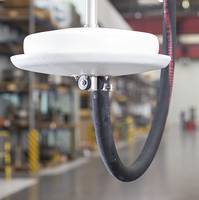
SKF introduces high performance and quick to install device for oil and water separation in marine applications. SKF has launched a new mechanical device for the fast and easy separation of oil and water in tanks in marine and offshore applications. Sludge oil is a term commonly used to describe the waste oil mainly derived from the process of purifying fuel oils and lubricating oils in order to ensure proper operation of ship’s machinery. During the process, the separated water from the purifying process mixes with the waste oil in the sludge tank.
Galley Grease Harms Equipment – and the Environment

Cleaning up the wastewater stream on marine vessels isn’t just about removing hydrocarbons out of oily separators and bilges. Workboat galleys harbor a tremendous amount of FOGs (fats, oils and grease) that, if not properly disposed of, can be a health risk, damage equipment and add to overall operational costs. Even if vessels are equipped with sophisticated grease trap systems, the introduction of nontoxic, neutral pH biologic compounds into the trap and/or waste stream is a necessary step to reduce toxic buildup and environmental pollution.
MHI Employee Wins Gold at National Skills Competition
An employee of Mitsubishi Heavy Industries, Ltd. (MHI) won the gold medal in the Mechanical Device Control category at the 52nd National Skills Competition held in Aichi Prefecture from November 28 to December 1. Company employees also won silver and bronze medals in the Welding category. Including various "Fighting Spirit Awards," 10 MHI employees captured awards in five categories. The gold medal in the Mechanical Device Control category was won by 22-year-old Yuhei Hiyamizu, who works at the Takasago Machinery Works in the Energy & Environment business domain. A total of 14 employees participated in five categories this year: Mechanical Device Control, Welding, Construction Steel Work, Mechatronics and Turning.
Young MHI Japanese Shipbuilders Win Slew of Medals
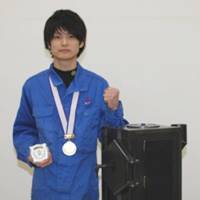
Yusuke Shiomoto (20), an employee of Mitsubishi Heavy Industries, Ltd. (MHI) who works at the Kobe Shipyard & Machinery Works in the Energy & Environment business domain, has won the gold medal in the Construction Steel Work category at the 51st National Skills Competition held at Makuhari Messe in Chiba and other venues in Japan. MHI participated in five categories this year: Construction Steel Work, Welding, Mechanical Device Assembly, Mechatronics and Turning. In the Construction Steel Work category, besides Mr.
Feature: Innovative Coastal Trader
An advance in hydrodynamic design has been endorsed by Norwegian energy group Statoil, as the prospective charterer of an innovative newbuild intended for coastwise distribution of oil products. The 4,200-dwt vessel contracted by Bergen Tankers will employ a diesel mechanical propulsion layout based on twin azimuth thrusters incorporating 'pulling' propellers. The project represents the first application of the Norwegian-developed Azipull system in the tanker market, and champions the principle of redundancy, conferred through the use of two, independent propulsion lines. The engineering and propulsion arrangements selected for the 90m coastal tanker have been shaped by exacting requirements as to maneuverability, design efficiency, safety and transport service dependability.
CH3OH: Make Room for Methanol
The newest buzz among offshore operators serving the oil and gas rigs in the Gulf of Mexico (GOM) is the increased use of methanol (CH3OH) by oil companies and contract drillers. This has meant more work for supply boats carrying this alcohol product to rigs along with rig water, fuel oil and liquid and bulk mud. Methanol is used to keep the flow lines from the wellhead to the surface of the water from becoming restricted or blocked. Restricted flow from wells is becoming an increasing problem for oil companies and drilling contractors whose bottom line depends on getting every drop of oil from a well. Flow assurance is a critical issue, especially with longer tiebacks in deepwater drilling operations.



