

Rolls-Royce's Autocrossing System for 13 New Ferries
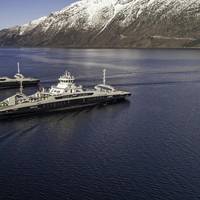
Rolls-Royce Marine has signed a deal to supply its Autocrossing system to a total of 13 new environmentally friendly ferries for the Norwegian company Fjord1. The vessels are currently being built by three yards in Turkey and two yards in Norway. All contracts also include two azipull propellers for each vessel with accompanying propeller control system from Rolls-Royce. With this contract, Rolls-Royce has sold autocrossing to a total of 18 new ferries to operate along the coast of Norway, of which 16 have been ordered by Fjord1 and two by another Norwegian ferry company, FosenNamsos Sjø.
Rolls-Royce Inks Landmark Automatic Ferry Crossing System Deal
Rolls-Royce has signed a deal to supply its first automatic crossing system to Norwegian ferry company Fjord1. The system, the first of its kind, will control two new double-ended battery ferries as they cross between Anda and Lote on the 1330 km long E39 which connects communities along the west coast of Norway. Battery powered ferries have strict yearly limits on energy consumption as part of the commercial agreement between the ferry operator and the government. Automatic systems ensure consistent behaviour during the journey and hence predictable energy consumption. The automatic crossing system ensures safe and energy-efficient transit back and forth by automatically controlling the vessel’s acceleration, deceleration, speed and track.
Rolls-Royce to Supply Propulsion for Battery-Powered Ferry
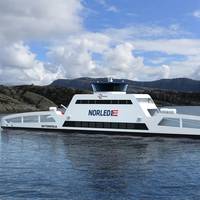
Rolls-Royce has signed a contract for the delivery of its Azipull propulsion and control system for the "ferry of the future," a new vessel which will operate on battery power alone. The vessel is being built at the Fjellstrand yard in Norway, and once in service will be operated by Norwegian transport company Norled between Lavik and Oppedal. In 2010, the Norwegian Ministry of Transport announced a tender to develop a new ferry that was 15-20% more energy efficient than existing vessels.



