Ballast Water Update: Weighing the Advent of VIDA
The hard-fought passage of VIDA promises a simpler, more unified and logical set of environmental standards related to the discharge of myriad vessel streams. Industry wanted it, and now it is here. Will it deliver, and if so, when? That depends on who you talk to.As most commercial maritime operators know, US ballast water regulations made a sharp turn last December. That’s when President Trump signed the Frank LoBiondo Coast Guard Authorization Act of 2018.That legislation contained Title IX – the “Vessel Incidental Discharge Act (VIDA)…
Date for Diary: BlueTech & Blue Economy Summit & Expo
The Maritime Alliance promotes the 6th Annual event Novemeber 12-13, 2014 at the McMillin Companies Event Center in San Diego, CA as a unique opportunity to understand trends, network with leaders from the public and private sector, see innovative technologies by the exhibitors, and identify possible partners. Recent studies are helping us understand the size and dynamic nature of the Blue Economy and particularly the BlueTech sector that is enabling us to explore, measure and develop ocean industries like never before. And financial and strategic investors are recognizing the opportunity evidenced by an increasing number of M&A and financing transactions - four sizeable transactions announced in the San Diego BlueTech community in the last 120 days alone. Leaders from the U.S.
Melting Sea Ice Opens Arctic Passages for Invasive Species
For the first time in roughly 2 million years, melting Arctic sea ice is connecting the north Pacific and north Atlantic oceans. The newly opened passages leave both coasts and Arctic waters vulnerable to a large wave of invasive species, biologists from the Smithsonian Environmental Research Center assert in a commentary published in 'Nature Climate Change' and excerpted here. Two new shipping routes have opened in the Arctic: the Northwest Passage through Canada, and the Northern Sea Route, a 3000-mile stretch along the coasts of Russia and Norway connecting the Barents and Bering seas. While new opportunities for tapping Arctic natural resources and interoceanic trade are high, commercial ships often inadvertently carry invasive species.
Jones Act Offshore: Navigating in 2013
Following the hubbub created in 2009-2010 by U.S. Customs and Border Protection’s (CBP) proposed modification and revocation of certain Jones Act ruling letters pertaining to offshore operations, all was relatively quiet in 2011-2012 with respect to Jones Act offshore issues. Indeed, in the aftermath of the tragic Deepwater Horizon incident in 2010, which included the implementation of more prescriptive regulatory and environmental requirements and a deepwater drilling moratorium…
USDOJ: Sentencing in Environmental Crime Case

Miami River Compnay Sen tenced to Five Years Probation and $1,000,000 Fine for Oil Pollution and Ballast Water Crimes. Wifredo A. Ferrer, United States Attorney for the Southern District of Florida, Rear Admiral William D. Baumgartner, Commander, 7th Coast Guard District, and John Sall, Special Agent in Charge, U.S. Coast Guard Investigative Service, announced the sentencing of defendant Americas Marine Management Services, Inc., d/b/a Antillean Marine, a Florida corporation, for oil pollution and ballast water crimes.
STUDY: Ballast Water Measures Are Falling Short
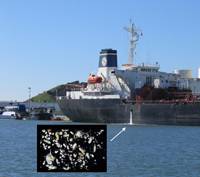
Invasive species have hitchhiked to the U.S. on cargo ships for centuries, but the method U.S. regulators most rely on to keep them out is not equally effective across coasts. Ecologists from the Smithsonian Environmental Research Center have found that ports on the East Coast and the Gulf of Mexico are significantly less protected than ports on the West Coast. Invaders are frequently introduced across oceans and along coastlines through the ballast water in ship hulls, water that often includes plankton and larval stages of marine and estuarine species.
Polembros Barred from U.S. Waters for 3 Years
Polembros Shipping LTD., a ship management company headquartered in Greece, was sentenced on Dec. 9 in federal court in New Orleans to pay a $2.7m criminal fine for violating anti-pollution laws, ship safety laws, and making false statements during a U.S. Coast Guard investigation of the M/V Theotokos, the Justice Department announced. Additionally, Polembros was ordered to pay a separate $100,000 community service payment to the Smithsonian Environmental Research Center, a subunit of Smithsonian Institute. The money will be used to research and mitigate the effects of marine invasive species suspected to be transported in ballast waters of ocean-going vessels. Invasive species can threaten native species and damage the ecosystems of the United States.
Polembros Pleads Guilty, Pollution Charges
Polembros Shipping Ltd., a ship management company headquartered in Greece, pleaded guilty on Sept. 30 in federal court in New Orleans for violating anti-pollution laws, ship safety laws, and making false statements during a U.S. Coast Guard investigation of the M/V Theotokos, the Justice Department announced. According to the plea agreement, Polembros will pay a $2.7m criminal fine and a separate $100,000 community service payment to the Smithsonian Environmental Research Center, a subunit of Smithsonian Institute. The money will be used to research and mitigate the effects of marine invasive species suspected to be transported in ballast waters of ocean-going vessels. Invasive species can threaten native species and damage the ecosystems of the United States.
NEI Treatment Systems Receives Ballast Water Management Certification
After many months of review and many years of testing, NEI Treatment Systems’ Venturi Oxygen StrippingTM (VOS) ballast water treatment system has been issued a Type Approval Certificate of Ballast Water Management System. The Certification was issued by the Liberian Register, with technical review by the American Bureau of Shipping (ABS). Land-based biological testing was conducted by the Chesapeake Biological Laboratory (CBL) of the University of Maryland Center for Environmental Science. U.S. Federal Government Laboratory. The testing was funded by the U.S. Atmospheric Administration (NOAA) as part of the U.S. Program. In 2004, the International Maritime Organization (IMO) finalized the International Convention for the Control and Management of Ships’ Ballast Water and Sediments…