Next Generation Workshops Set for Southampton
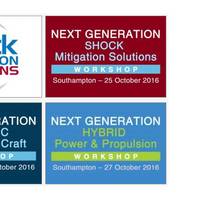
A unique program of three specialist events for the sub IMO / sub 24 meter professional sector is being held ‘back to back’ at the Grand Harbour in Southampton, U.K. this October. The fast moving workshop style program brings together an international group of experts armed with the latest knowledge to identify problems that affect the maritime sector worldwide – and highlight potential solutions. Event organizer and workshop lead John Haynes said, “We are really pleased with the diversity of high level presenters from military, commercial and SAR backgrounds.
FAST 2011: Focuses on Future of Fast Sea Transportation
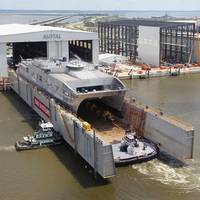
Naval Architects and marine engineers from around the world gathered in Honolulu in September for the 11th International Conference on Fast Sea Transportation (FAST 2011). The four-day biannual symposium promoted world-wide cooperation among scientists and engineers involved with all aspects of the high-speed maritime industry. FAST 2011 was the Fast Foundation’s 20th anniversary. Kjell Holden of the Norwegian Univ. of Science and Technology and FAST International Standing Committee…
Transonic Hull Technology for Offshore Vessels
Hydrodynamics theory establishes that wave making resistance of displacement hulls originate from their body shape, especially from shoulders, midbody, and rear quarter curvatures of their waterplane at the water-air interface. These curvatures create bow waves, midbody troughs, and stern waves, which set the “hull speed” limit when the distance between bow and stern wave equal the boat’s length (speed/length ratio 1.34). Above hull speed, resistance grows at a high exponential rate. Transonic Hull (TH) technology eliminates this problem by using a slender triangular waterplane with apex at the bow, and rectilinear sides, free of curvatures, extending from bow to a maximum beam at the stern. This shape also generates the sharpest possible entry angle at the bow.