'Stop machine' - Russia Releases Video Showing Navy Boarding Cargo Ship in Black Sea

Russia on Tuesday released video footage showing an armed naval inspection unit boarding a cargo ship in the southwestern Black Sea on Sunday and questioning the captain about why the ship had not stopped when demanded to by a Russian warship.Russia said that it fired warning shots with automatic weapons at the Palau-flagged Sukru Okan vessel after it failed to respond to a demand for it to halt, though it was unclear why the ship was boarded so close to Turkey.In a video released by the Russian defense ministry…
APL Halves Fleet Carbon Emissions

APL announced a 47.4% reduction in carbon dioxide emissions per container transported per km in 2018, compared to 2009.The result follows the Environmental Performance Assessment (EPA) of APL’s 2018 carbon dioxide emission data by the global non-profit organization Business for Social Responsibility’s (BSR’s) Clean Cargo Working Group (CCWG). The Clean Cargo EPA data was verified by Lloyd’s Register Group according to the Clean Cargo verification protocol and principles of ISO14064-3:2006 standard.Looking forward to the 2020 Global Sulfur Cap…
APL Further Cuts CO2 Emissions
APL has announced a 50.7% reduction in carbon dioxide emissions per transported container per kilometer in 2017, compared to its base level in 2009. This achievement marks APL’s eighth consecutive year of improved environmental performance, as reported in the Business for Social Responsibility’s Clean Cargo Working Group (CCWG) Environmental Performance Assessment (EPA) of APL’s 2017 carbon dioxide emission data. The CCWG EPA data was verified by Lloyd’s Register Group according to the CCWG verification protocol and principles of ISO14064-3:2006 standard. APL Global Head for Safety Security and Environment, Dennis Yee said, “We are proud to raise the bar in reducing the carbon footprint of our fleet operations once again.
APL Reports 48% CO2 Emission Reduction in 2016
APL has announced its highest recorded fleet carbon dioxide emissions reduction of 48 percent in 2016, compared to its base level in 2009. Verified by Lloyd’s Register Group according to the Clean Cargo Working Group (CCWG) verification protocol and ISO14064-3:2006 standard, this achievement marks APL’s seventh consecutive year of improvements. “APL is pleased to register our best carbon reduction performance as yet, improving our fleet emission level by about 3 percent, versus our reduction in 2015. APL prides ourselves as a responsible carrier and will persevere in our pursuits of environmental excellence as we facilitate global trade,” said APL Chief Executive Officer, Nicolas Sartini who champions APL’s sustainability course.
APL Reports 45.5% Carbon Emissions Reduction
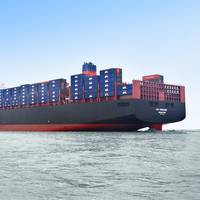
APL announced that it has reduced its fleet carbon dioxide emissions by 45.5 percent in 2015, compared to its emissions level in 2009. “APL has steadily reduced its year-on-year carbon emissions and this demonstrates the company’s unyielding focus on sustainable shipping,” said Kenneth Glenn, APL President. APL attributed its carbon emissions reduction to improvements in operational efficiency, fleet and voyage optimization, technical improvements, as well as a more fuel-efficient and environmentally-friendly fleet of vessels.
APL Reduces Carbon Emissions by 45.5%
APL today announced that it has reduced its fleet carbon dioxide emissions by 45.5% in 2015, compared to its emissions level in 2009. This achievement marks APL’s highest carbon dioxide emissions reduction in the last six years. “APL has steadily reduced its year-on-year carbon emissions and this demonstrates the company’s unyielding focus on sustainable shipping,” said Kenneth Glenn, APL President. APL attributed its carbon emissions reduction to improvements in operational efficiency, fleet and voyage optimisation, technical improvements, as well as a more fuel-efficient and environmentally-friendly fleet of vessels. Complementing its vessel performance management, APL’s maintenance strategy has been pivotal in ensuring that its operations stay efficient and green.
Shale Gas Verification Service Launched by DNV GL

DNV GL, an independent foundation with the purpose of safeguarding life, property and the environment, informs it has launched a comprehensive, tailor-made independent verification service based on the provisions of its Recommended Practice for Risk Management of Shale Gas Developments and Operations (RP), regulatory requirements and other publicly available standards. "As shale gas and liquids development are experiencing exponential growth in North America, a wide range of operational risks have been realized…