

Top Tips from a Full-Service Naval Architecture & Marine Engineering Firm
Our industry is undergoing its most profound technical evolution in a generation. Driven by growing pressure to reduce emissions and a rapid transition toward hybrid and fully electric propulsion, ship operators, shipyards, and municipalities face an increasingly complex web of design and engineering choices.
As systems and projects become more sophisticated, it has never been more important to work with a partner that sees the total picture of a given project and understands the cascading effects of even small changes on the overall budget, schedule and final product.
Boksa Marine Design (BMD), a Tampa-based, full-service naval architecture and marine engineering firm founded by mariners who understand the practical realities of working aboard vessels, has compiled these “top tips” to ensure your next commercial, government, or specialized vessel project is a success from drawing board to splashdown.
1. Anchor the Project with a Rigorous Feasibility Study
Before spending a single dollar on steel or components, you must prove that the project is both technically and economically viable. A comprehensive feasibility study is your most critical first step. It should rigorously evaluate vessel power requirements, battery weight budgets, regulatory alignment with entities like the USCG or ABS, and long-term life-cycle costs. Especially with hybrid or electrified platforms, an upfront feasibility study establishes a data-driven roadmap that eliminates expensive mid-route design course corrections and protects your capital investment.
2. Prioritize Production Engineering and Naval Architecture Simultaneously
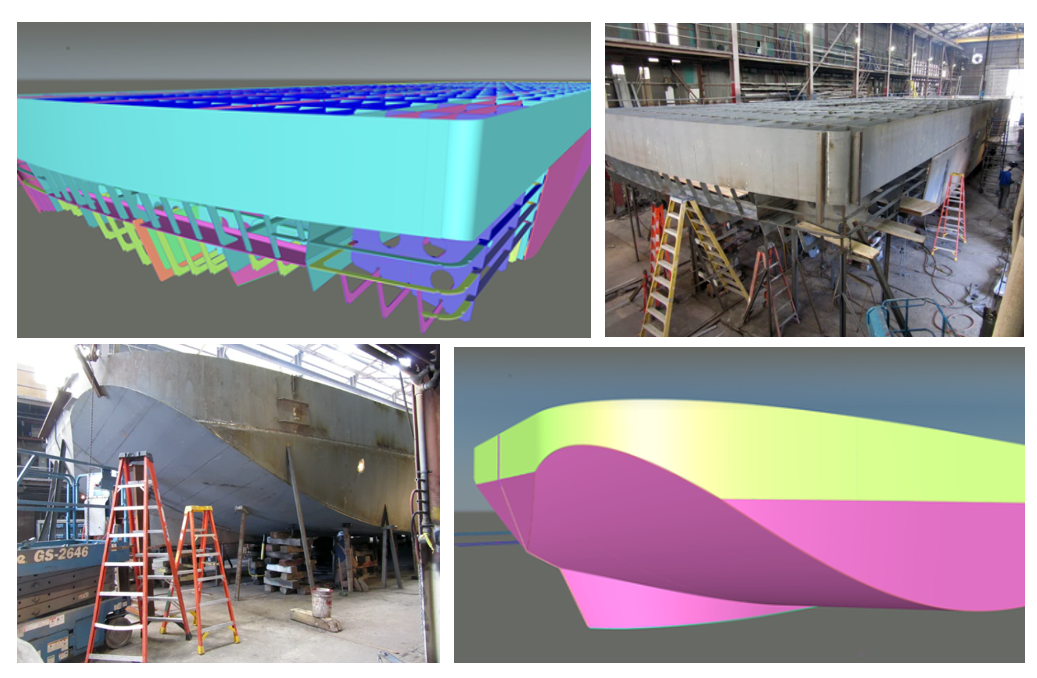
True efficiency happens when your naval architects intimately understand how the shipyard’s production team will actually build the boat. Do not treat naval architecture and production engineering as separate, isolated phases. When a single full-service firm manages both overarching hull performance and meticulous production engineering, complex technical risks are phased out early. Marine electrical engineers and structural designers can collaborate to eliminate spatial and routing conflicts before a single piece of plate is cut, ensuring a smooth, seamless transition to the shop floor.
3. Engineer Both Sides of the Water’s Edge
The modern maritime equation no longer stops at the hull. As fleet electrification accelerates, a critical bottleneck has emerged: the waterfront infrastructure itself. After all, an advanced vessel is only as reliable as the facility supporting it.
When planning a new vessel or retrofit project, you must simultaneously evaluate your shoreside capabilities. Look for an engineering partner that offers specialized shoreside electrical engineering to bridge the gap between the vessel and the dock. Whether you are engineering utility-scale grid connections for fast-charging electric ferries, updating electrical distribution at aging shipyards, modernizing heavy cargo-moving machinery at industrial terminals, mitigating floods and other weather-related threats, or designing municipal docks and recreational marinas to handle solar integration and plugged-in boats, shoreside infrastructure must be engineered with the same discipline as the vessels themselves.
The Full-Service Advantage
Ultimately, the lesson of next-generation vessel design is that engineering disciplines must work together seamlessly as vessel systems become increasingly complex.
 | “At Boksa Marine Design, we believe the greatest efficiencies are achieved through complete systems integration,” says Jeff Kuenning, president of BMD. “A vessel is an intricate network of interdependent structural, mechanical, electrical, and marine systems. We believe projects benefit when those disciplines are coordinated from the outset and aligned with the way the shipyard will ultimately build the vessel. Maintaining continuity of engineering from concept through production support and commissioning helps identify potential issues earlier, improves communication across disciplines, and supports a more efficient path to construction.” |
Contact Boksa Marine Design for a consultation on your next vessel or shoreside engineering project.


