
Sailing to Net-Zero: The Decarbonization Mandate and the Green Fuels Race in Shipping
The global maritime industry is under immense pressure to meet ambitious climate targets, spearheaded by the International Maritime Organization (IMO)'s strategy to reach net-zero emissions by or around 2050. This mandate has triggered the most significant technological and financial upheaval the sector has ever faced. This article explores the core challenge—the decarbonization dilemma—focusing on the complex regulatory landscape (CII, ETS) and the intense, multi-fuel race to find viable, scalable, and safe "green fuels." We analyze the leading contenders—ammonia, methanol, and hydrogen—highlighting their pros, cons, and the colossal infrastructure investment required to power the future of global shipping.
The Decarbonization Imperative: Regulations Driving Change
Decarbonization is no longer a choice; it is a legally binding necessity. The regulatory environment is creating financial urgency, forcing ship owners to act now to avoid severe penalties and asset devaluation.
IMO's Net-Zero Vision and Key Measures
The cornerstone of the industry's change is the IMO's revised Greenhouse Gas (GHG) Strategy, aiming for **net-zero emissions by or around 2050**. This goal is supported by key technical and operational measures currently in force:
- Carbon Intensity Indicator (CII): An operational measure that scores a ship's carbon efficiency annually (A to E rating). Vessels with low scores (D or E for consecutive years) face mandatory corrective action, which can significantly impact their charter value.
- Energy Efficiency Existing Ship Index (EEXI): A technical measure that sets a minimum energy efficiency standard for existing vessels, often requiring engine power limitation (EPL) or major modifications to comply.
Regional Financial Pressure: The EU ETS
The European Union's inclusion of shipping in its **Emissions Trading System (ETS)** creates a direct, ongoing operational cost. This system requires ship owners to purchase and surrender allowances for GHG emissions on voyages related to the EU, dramatically increasing the cost of fossil fuels and creating a strong financial incentive for switching to cleaner alternatives.
The Green Fuel Race: Solving the Decarbonization Dilemma
The biggest hurdle is the "decarbonization dilemma": the need to commit billions to a specific fuel pathway without a guaranteed global supply or regulatory consensus. Currently, three contenders dominate the discussion:
1. Green Methanol 🟢
- Pros: A well-understood liquid fuel that can be handled using near-conventional bunkering infrastructure. It offers a clear, immediate pathway for transitioning internal combustion engines.
- Cons: Lower energy density than Heavy Fuel Oil (HFO), meaning larger tanks are required, reducing cargo space. While it burns cleanly, it is highly toxic and its production must be verified as "green" (from biomass or renewable hydrogen) to meet climate goals.
2. Green Ammonia ( 🔵
- Pros: Expected to be highly scalable and cost-effective as a carrier for hydrogen. It is considered a zero-carbon fuel at the point of combustion (no $\text{CO}_2$ emissions).
- Cons: **Highly toxic** and corrosive, requiring extensive new safety protocols and material changes for engines and tanks. Its combustion can produce nitrous oxides ($\text{N}_2\text{O}$), a potent GHG, posing a serious environmental and technical challenge.
3. Green Hydrogen ⚪
- Pros: A true zero-emission fuel (water is the only byproduct). Can be used in fuel cells, offering extremely high efficiency for smaller, shorter-distance vessels.
- Cons: Requires cryogenic storage and has an extremely low energy density by volume, demanding massive tank sizes. The infrastructure for production, storage, and bunkering is virtually non-existent for deep-sea shipping.
Beyond the Tank: Technology and Operational Efficiency
Decarbonization involves more than just swapping fuels. Immediate and complementary steps are being taken to reduce energy demand and bridge the gap until green fuels are universally available.
- Energy Saving Devices (ESDs): Technology such as propeller boss cap fins, air lubrication systems, and optimized hull coatings that physically reduce drag and improve hydrodynamic performance.
- Wind-Assisted Propulsion (WAPs): The re-emergence of wind power using modern rotor sails or wing sails to supplement engine power, significantly reducing fuel consumption on long voyages.
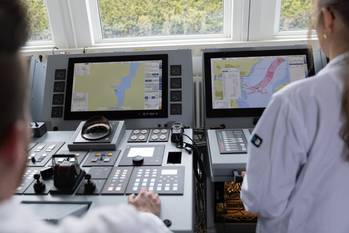
- Digital Optimization: Using **Artificial Intelligence (AI)** and advanced software for dynamic route optimization, predictive maintenance, and real-time performance monitoring to minimize fuel burn.
Conclusion: The Cost of Transition and the Path Forward
The journey to net-zero is characterized by immense capital expenditure: billions must be spent on new vessels, engine retrofits, and global bunkering infrastructure. This investment carries a "first mover" risk, but also offers a first-mover advantage in charter markets demanding green shipping solutions.
The industry consensus is moving toward a **multi-fuel future**, where different vessel types and trade routes will adopt the most suitable green fuel. Success hinges on unprecedented collaboration between energy producers, technology providers, regulators, and financiers to ensure safety, scalability, and ultimately, a viable, sustainable future for global trade.