

CMA CGM Signs Vessel Order, Launches R&D Hub in India

At gathering in New Delhi in the presence of Shri Shantanu Thakur, Minister of State at the Ministry of Ports, Shipping and Waterways, and the CMA CGM Group’s Chairman and CEO Rodolphe Saadé, the group reinforced its commitment to India. During the visit of its global leadership in India, CMA CGM signed the final Shipbuilding Contract with Cochin Shipyard Limited (CSL) for six LNG-powered containerships of 1700-teu capacity.Through CMA SHIPS, the CMA CGM has also recruited 1,000 Indian seafarers…
Shipping Companies: Is Bigger Better?
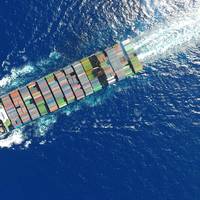
“If consolidation was the solution to all that ails shipping, then container liner companies would be super profitable. They are not. In ‘commoditized’ sectors of the shipping industry, which by now includes pretty much everything apart from very small niche markets, there is hardly any economies of scale at the company level. As long as bigger is not in fact much better, then meaningful consolidation will not happen.”Dr. Roar Adland, visiting scholar at MIT Center for Transportation and Logistics and Professor at the Norwegian School of Economics (NHH).Like any other business…
Cosco Eyes PIL Takeover
After buying several container factories from its smaller competitor Singapore-based shipping company Pacific International Lines (PIL), China’s Cosco Shipping Holdings Co. is eyeing it as a potential takeover target.The Chinese state-run ocean carrier had bought part of debt-ridden PIL’s container-manufacturing business, and executives at the Chinese carrier believe they could wrap up a deal for the entire business if family-owned PIL’s owners decide to sell, reported WSJ.Cosco Shipping is looking to expand its footprint in developing markets and a take over would be an edge towards deeper logistics services beyond conventional ocean shipping…
Container Equipment Market Surges Ahead: Drewry
The move towards container leasing and away from carrier ownership continues unabated and the leased fleet now has a clear majority over that owned by transport operators, according to the latest edition of the Container Census & Leasing and Equipment Insight published by global shipping consultancy Drewry. Leasing companies accounted for 55% of container purchases in 2017, which continues the trend seen for most of this decade. With the fleet of containers owned by transport operators growing by a mere 2.4%, the leased fleet added 6.7% and the share owned by lessors is now nearing 52%. “Drewry expects this trend to continue over the next few years,” said Drewry’s director of research products Martin Dixon.
COSCO Shipping Development Reports Higher Revenue
China-based ship leasing and transportation businesses company COSCO Shipping Development announced its 2017 performance and stated that the company realized revenue of RMB 16.34bln (USD 2.59bln) in 2017, up 2.4% compared with that of 2016. The net profit attributable to equity holders of the parent company is RMB 1.46bln (USD 230mln), up 296.6% compared with that of 2016. Over the past year, the Company continuously improved its management level, increased its asset size and economic benefits and achieved collaborative development in its three business sectors, a statement from the company said. In 2017, the Company actively forged its brand featuring shipping finance, steadily advanced the development of chartering, container lease and other industrial lease business.
Singamas Back in the Black
Singamas Container Holdings Limited, Hong Kong-listed container manufacturing company, turned around in the first half of this year, thanks to a 45 per cent surge in its revenue mainly due to a jump in container sales and a higher average unit. "During the review period, the recovering global economy, rise in international trade and the corresponding pick up in shipping volume as well as the strengthening market sentiment have been favourable for the container industry, leading to the improvement of container demand and a rise of average selling price (ASP)," said a statement from the company. The Group’s consolidated revenue amounted to US$595,042,000, a significant rise of 45.0% over the revenue of US$410,277,000 obtained in the corresponding period last year.
Container Equipment Prices Nosedive - Drewry
Prices for new dry freight containers declined to their lowest point since 2002 during first-quarter 2016 and are still going down, according to the latest edition of the Container Equipment Insight, published by global shipping consultancy Drewry. Average container equipment prices fell 15% through the first quarter, as the deteriorating outlook for trade growth impacted pricing. As a consequence of this and the fact that steel and other material costs are no longer in decline, Drewry estimates that the container manufacturing sector made a small net loss in the first quarter of 2016. Used dry freight container prices also declined further, to a level not seen since in almost a decade.
CIMC Plans $928 Million Share Sale
The world’s biggest maker of shipping containers China International Marine Containers Group Co. (CIMC) plans to raise 6 billion yuan ($928 million) selling shares to fund an expansion of a business park in Shenzhen and other assets, reports Bloomberg. CIMC will sell yuan-denominated stock to a maximum of 10 investors, it said in a filing April 9. CIMC’s expansion of diversified businesses comes amid a global slump in container-shipping rates and overcapacity in the sea-freight market. Shipping lines worldwide have been selling assets and exploring consolidations to stem losses as the fees they charge customers plunged after years of slowing trade and overcapacity.
TT Club Calls for ‘Utmost Good Faith’ in the Container Supply Chain

TT Club has long championed a variety of measures designed to increase safety throughout the container supply chain. In Rotterdam last week, Kevin King, the Club’s Regional Director EMEA took the opportunity to address an audience of container operators, port and terminal executives and logistics professionals to highlight the crucial importance of an under lying principle of best practice, which would improve the industry’s safety record. “As articulated in the UK MAIB’s report into the loss of MSC Napoli, safety margins are being eroded or eliminated,” said King.
Container Census Predicts Limited Box Availability
After the critical shortages of containers of last year, production has picked up again, but high container prices and a tight ratio of containers to vessel slots will continue to constrain the availability of boxes, according to the Container Census – Annual Survey and Forecast of Global Container Units, a new report from Drewry Maritime Research. At the end of 2010, the global fleet of containers exceeded $90 billion in replacement value for the first time, according to the report, also reflecting the increased unit prices of containers. The comprehensive report, the industry’s only detailed survey of the global fleet of containers…
Sea Containers Sells Isle of Man Steam Packet
Sea Containers has sold the Isle of Man Steam Packet Company to Montagu Private Equity Limited for $233 million, with effect on June 30, 2003. The profit on this transaction will be $100 million, however, the company has decided to establish provisions for the restructuring of its fast ferry business and to reduce the carrying value of certain assets to current market value. Total provisions will be approx. $40 million. The company also advised that its exchange offer of 13% senior notes due 2006 for July 1, 2003 matured 9.5% and 10.5% senior notes had been subscribed in the amount of $22.5 million. The balance of these senior notes ($136.6 million) has been repaid.
Feature: Seastreak: Outward Bound
While the fast ferries of SeaStreak were not the first to provide high-speed commuter service to the Highlands region of New Jersey, they were the first to be set-up by a Bermudan company. "Sea Container, Ltd., operates in three main areas," said SeaStreak's General Manager, David Stafford "marine container leasing, various leisure-bound operations, and passenger transport." SeaStreak falls into the third group, one of several comparable operations the parent company runs worldwide. They have fast ferry operations in the English Channel (Hoverspeed, Ltd.), fast and conventional ferry operations in the Irish and Baltic Seas (Man Steam Packet Co. and Silja Line respectively, the latter 50% owned). Sea Container also has railroad interests in the U.K. and Peru, among others.



