
When it Comes to Workboat Engines, the Future is Flexible
Vessel owners are making new fuel choices, but increasingly, they have options to help reduce the risk of doing so.The latest engine developments aim to make it easier for owners to avoid the chicken-and-egg fuel price and availability risks of new fuels.As Roger Holm, President of Wärtsilä Marine and Executive Vice President at Wärtsilä Corporation recently pointed out, the challenge is that owners won’t commit to a fuel today that is expensive, only produced in small quantities and may be usurped by another fuel that scales faster and more affordably.
ClassNK Gives AiP for Yanmar’s Maritime Hydrogen Fuel Cell System
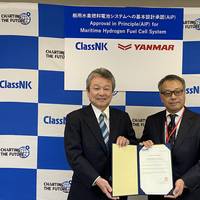
ClassNK has issued an Approval in Principle (AiP) for a maritime hydrogen fuel cell system developed by YANMAR Power Technology, marking the first AiP certification for a maritime hydrogen fuel cell system developed by a Japanese manufacturer.The 300kW maritime hydrogen fuel cell system, developed by Yanmar, is designed with key auxiliary components such as gas valve units integrated within the system enclosure, aimed to facilitate easy installation on ships.On top of that, the system allows for parallel connection of multiple units and adjustments to the number of hydrogen fuel cell modules,
Geogas' New LPG Carriers Are ‘Ammonia Prepared’
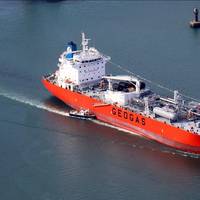
A pair of 40,000-cubic-meter-capacity liquefied petroleum gas (LPG) carriers being built for Geogas at Hyundai Mipo Dockyard (HMD) in South Korea are the first to received Bureau Veritas’ (BV) ‘ammonia prepared’ notation, the classification society said on Wednesday.The HMD hull numbers are 8350 and 8351 and the first delivery will be in June 2023.Ammonia-prepared is applicable to newbuildings, and was developed to support ship owners, designers, shipyards and charterers. Ammonia…
Selvåg Senior: New LNG-Powered Purse Seiner/Trawler cuts GHG 42%
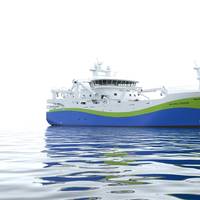
As nations commit to reducing greenhouse gases, a fishing vessel is designed to do its share. Designed by Norway’s Skipsteknisk and Selvåg AS, it is in build at Cemre Shipyard for Sorheim Holding, the Selvåg Senior is a remarkable concept. Capable of both trawling and purse seining, the 79.5- x16.2-m vessel will have a molded depth of 6.9 m. The RSW holds, in the DNV-GL classed vessel, will have a total volume of just under 2550 cu. m.. The main propulsion engine will be a medium-speed Wärtsilä 8V31DF, producing 4,800 kW at 750 RPM.
Ammonia Fuel Cells for Deep-Sea Shipping: A Key Piece of the Zero-emissions Puzzle
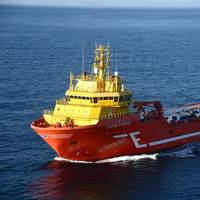
Interest in ammonia-powered fuel cells for the maritime sector is growing, but stakeholders have been hesitant to commit to investments in large-scale systems. Now the ShipFC project is aiming to secure a place for ammonia in the future of deep-sea shipping.The project will equip the offshore supply vessel Viking Energy, owned and operated by Eidesvik and on contract to energy major Equinor, with a 2-megawatt (MW) ammonia fuel cell, allowing it to operate for at least 3,000 hours annually on clean fuel.
Alfa Laval Prepares to Test Marine Biofuel
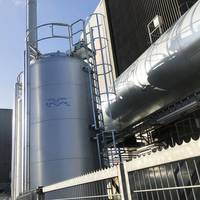
Alfa Laval says its 2800 m2 testing space – already equipped for today’s oil and gas fuels – has been readied for testing with biofuels. In coming years, as the marine industry races to slash greenhouse gas emissions, the center will accumulate knowledge to aid maritime decarbonization.Located in Aalborg, Denmark, the Alfa Laval Test & Training Centre is a core component of Alfa Laval’s own research and development. It is also a site for collaboration with industry partners and research institutes…
Future Ship Fuels: Cut through the Smoke

Ship owners increasingly face complex investment decisions as they try to navigate the most efficient course to the low-carbon future. Ever since the IMO set the industry’s ambitious emission-reduction targets for 2030 and 2050, owners have been inundated with information about future fuels and technologies that may, or may not, ultimately lower the carbon footprints of their fleet.Some of the new technologies hold promise, but the day-to-day viability of too many of them remains unproven; the same can be said for many of the potential fuels.
Wärtsilä Rolls-out Pure Gas Marine Engine
Finnish corporation Wärtsilä has launched the 31SG pure gas engine for marine market applications.The 31SG is based on the successful Wärtsilä 31 product platform; the diesel version of the engine has been recognized by Guinness World Records as being the world’s most efficient 4-stroke diesel engine.The Wärtsilä 31SG engine further reduces the total cost of ownership and the environmental footprint for vessels operating in regions where there is a developed gas infrastructure. The commercial launch of the Wärtsilä 31SG takes place in September at the Gastech 2019 conference and exhibition being held in Houston, Texas, as well as at the Neva St.
Eagle LNG Receives Draft EIS
Eagle LNG, a wholly owned subsidiary of Ferus Natural Gas Fuels, informed that the United States Federal Energy Regulatory Commission (FERC) granted the company their draft environmental impact statement (DEIS).The draft EIS puts Eagle LNG on a clear path to FID on the Jacksonville Export Project and continues Eagle LNG’s success in using small-scale LNG to supply bunkering to the marine industry and to provide small scale LNG cargoes to markets in the Caribbean.“Our customers, and potential clients, join us in being encouraged that FERC has released the DEIS ahead of schedule. It moves us considerably closer to meeting our goal of expanding clean burning, domestic, and affordable LNG supply for marine bunkering and for small-scale LNG projects in the Caribbean.
New Fuel Rules Push Shipowners to Go Green with LNG
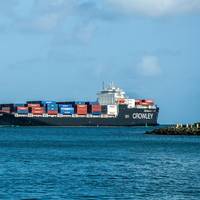
Tough new rules on marine fuel are forcing shipowners to explore liquefied natural gas as a cleaner alternative and ports such as Gibraltar are preparing to offer upgraded refueling facilities in the shipping industry's biggest shake-up in decades.From 2020, International Maritime Organization rules will ban ships from using fuels with a sulphur content above 0.5 percent, compared with 3.5 percent now, unless they are equipped to clean up sulphur emissions. This will be enforced…
World First: LNG-Fueled Fishing Trawler Powered by MAN D&T
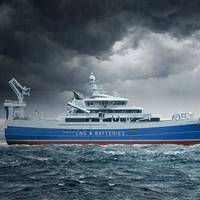
As the marine industry collectively pushes toward decarbonization, there are seemingly daily 'world firsts' as owners, designers, builders and suppliers alike conspire to deliver innovative solutions to reducing marine emissions. MAN Diesel & Turbo was picked to provide a complete propulsion package and fuel-gas system for the world’s first fishing vessel with LNG propulsion, an 86-m newbuild purse-seiner dubbed ‘Libas’ to be built by Cemre Shipyard in Istanbul. Libas will feature a MAN 6L51/60DF main engine…
How Japan Can Lead the Marine Renaissance
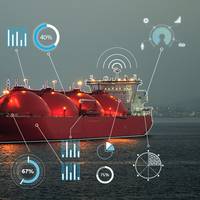
Being an island nation, Japan is inevitably dependent on seaborne trade. Over time, this has led to it becoming a strong player in the global maritime market. Japan’s shipbuilding pedigree has gained the country a foothold in LNG carriers, dry bulk cargo barge and pure car truck carriers (PCTC). While Japan is still a significant player, large-scale investments made by the Chinese and South Korean governments in the 1980s pushed them ahead. Japan’s energy market is also going through a period of change.
GE Exhibits Latest Innovations at Sea Japan
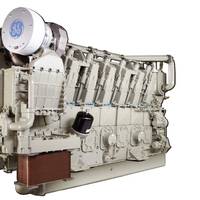
At Sea Japan 2016, GE will showcase its latest marine technologies, helping Japanese shipyards and mariners achieve more efficient maritime operations while meeting stringent environmental regulations. GE’s Marine Solutions business has been a reliable partner of the country’s marine industry. In the military space, Japanese Maritime Self-Defense Force (JMSDF) has chosen GE’s LM2500 and LM500 gas turbines for its naval ships. To date, GE’s marine systems’ supplier IHI has packaged, tested and delivered over 70 LM2500 and more than 30 LM500 marine gas turbines.
GE Brings Latest Technology to Cruise Vessels
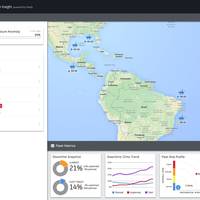
GE’s Marine Solutions business is showcasing how its latest technologies are helping future cruise ships to be safer, cleaner and more efficient. “GE is dedicated to delivering innovative technical solutions to drive the cruise industry forward. Our long track record with major cruise lines underlines our strong position as a strategic partner for our customers,” said Tim Schweikert, president & CEO, GE’s Marine Solutions. Most recently, GE was chosen to provide upgrade services to three cruise vessels owned by the Carnival group.
Alfa Laval to Expand Test & Training Center
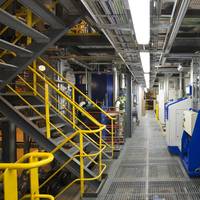
The Alfa Laval Test & Training Center in Aalborg, Denmark will soon be expanded to five times its current size. This development, focused on liquefied natural gas (LNG) and other alternative fuels, aims to address new challenges and possibilities for marine customers as they strive to meet environmental and energy targets. Alfa Laval said the expansion will create the world’s most advanced test center for environmental and combustion technology – regardless of fuel type. Alfa Laval describes its Test & Training Center as a cornerstone of customer-focused technology development.
DNV GL: New Class Notation for Gas Bunkering
DNV GL has developed a new class notation for gas bunker vessels that targets safer fuel transfer operations from one ship to another. Until now, the development of standards guiding gas fuel transfer operations in ports has lagged behind, as the maritime industry focussed on developing standards for gas fuelled ships rather than bunkering arrangements. This notation addresses safety concerns in this field and covers gas bunker vessels design and additional requirements to support the development of gas fuelled shipping and bunker operations in ports. The rules are flexible and include a variety of gas fuels as well as the configuration of bunker transfer systems.
USMRC LNG Bunkering Safety Course for Harvey Energy Crew
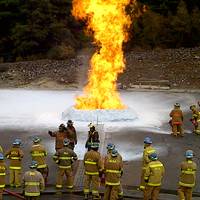
The United States Maritime Resource announced that its training partner, Harvey Gulf International Marine, recently launched the PSV Harvey Energy, the first LNG-fueled vessel to enter service in North America. In March, the PSV Harvey Energy began working on charter to Shell in the Gulf of Mexico shortly after the vessel’s first successful LNG bunkering operation. Middletown, R.I.-based USMRC developed the LNG bunkering safety training course for Harvey Gulf in 2014 as it prepared to launch its first dual fuel offshore supply vessel.
MARAD Evaluates Natural Gas v. Conventional Fuel Emissions
The Maritime Administration (MARAD) informs it has released a study that evaluates total fuel cycle emissions for natural gas versus conventional marine fuels. This study was conducted as a part of MARAD’s Maritime Environmental & Technology Assistance program, which focuses efforts on emerging marine transportation and environmental issues. Results of the study showed that the use of natural gas as a propulsion fuel can reduce air quality pollutants and reduce major greenhouse gas emissions when compared to conventional fuels. The information provided by this study is important as marine transportation stakeholders evaluate the use of natural gas as aviable alternative propulsion fuel for reducing air polluting emissions.
Joint Venture Advances Canadian LNG Market
Ferus Natural Gas Fuels and ENN Canada Corporation announced a Joint Venture to construct, own and operate two LNG liquefaction plants in Canada. The plants will be strategically located in Vancouver, British Columbia and Edmonton, Alberta to service the on-road trucking market as well as other high-horsepower applications including marine, rail, mining and oil and gas exploration. “The benefits of fueling with natural gas are significant”, said Henry Cai, CEO of ENN Canada. "These projects will help build the market for clean burning natural gas as a transportation fuel,” said Ken Hughes, Alberta’s Energy Minister. The partnership brings together two major players in the North American natural gas fueling market.
Proposed Terminal to Bring LNG to Florida
Clean Energy Fuels Corp. announced that it has placed a purchase contract on property where it hopes to build a liquefied natural gas (LNG) fuel terminal in Jacksonville, Fla. This would be the first LNG facility on the Eastern seaboard to specifically supply LNG for the maritime, heavy-duty trucking and rail industries. The planned facility is the first project to be developed by Eagle LNG Partners, the recently-announced consortium of Clean Energy, GE Ventures, GE Energy Financial Services and Ferus Natural Gas Fuels, formed to jointly deliver the cleaner-burning, less-costly fuel in the United States. “Establishing LNG capacity in Jacksonville is a critical strategic effort to enable LNG fueling throughout the Southeast region for our various market segments…
First US Big Ship LNG Bunkering Terminal Proposed
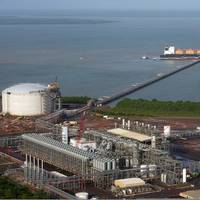
A partnership including Calgary-based Ferus Natural Gas Fuels has unveilled plans to build in Florida the first U.S. terminal to supply liquefied natural gas as fuel for cargo ships, reports 'The Calgary Herald'. The Eagle LNG partnership was announced in September 2013, and includes Ferus, General Electric Co. and Clean Energy Fuels Corp., the transportation-fuel company co-founded by billionare investor T. Boone Pickens; all three are equal equity partners in the project. Citing Ferus chief executive Dick Brown…
Pick Your Power
The inherent diversity of the multitude of vessels plying rivers, lakes, harbors and oceans around the world extends past size and shape and type of service - at the heart of each vessel is a propulsion system. Although propulsion systems may often be considered unique, a variety of typical solutions for most types of vessels already exist. In some cases, it may be preferable to simply specify the duplication of an existing propulsion system, allowing a degree of harmonization in the number of required spares, trained mechanics, and maintenance. It would seem, however, that ship owners and operators are placing an increased premium on designs and solutions both unique and innovative, in order to reduce costs and maximize performance.
An Innovative LNG Carrier Concept
Concurrent with marine industry consolidation on the ship owning, building and supply fronts, increasingly innovative vessels concepts are originating from in-house design teams sitting with the major equipment manufacturers. Single-source supplier is today’s mantra on the commercial and military fronts, with companies such as Wärtsilä leading the way. The company recently published details of an innovative new LNG carrier concept, the Wärtsilä DF-electric propulsion concept for liquefied natural gas (LNG) carriers, bringing together two technologies: electric propulsion and dual-fuel engines. The Wärtsilä DF-electric LNG carrier concept is designed for a single-screw vessel with four cargo tanks and a capacity of about 138,000 cu.