
Alfa Laval Taps Matthews to Head of UK & Ireland Marine Business

Alfa Laval announced it has appointed Tristan Matthews as the Head of Marine Division for the U.K. and Ireland, effective March 1, 2022.In the new role, Matthews will hold responsibility for driving partnerships with U.K. customers in the marine industry with a strong focus on sustainability, decarbonization, future fuels and alternative technologies.Matthews originally joined Alfa Laval in 2016 as a Marine Sales Engineer for Alfa Laval Marine Service. His preceding role was Business Unit Manager - Marine Capital Sales, UK & Ireland.
The Push for "Green" Ships will Keep Ocean Freight Costs High
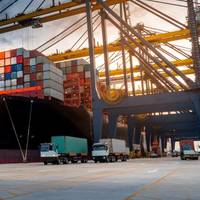
Ocean freight costs are likely to remain high in 2022 as investors and regulators scramble to accelerate decarbonization of the shipping industry and companies grapple with green financing, sources say.Shipping, which transports about 90% of world trade and accounts for nearly 3% of the world's CO2 emissions, is under growing pressure from environmentalists to deliver more concrete action including a carbon levy.The International Maritime Organization (IMO), the UN's specialist shipping agency…
Global Shipping in Crosshairs as Environmental Scrutiny Deepens
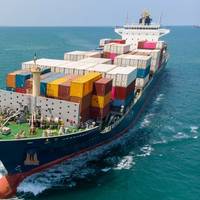
Ocean freight costs are likely to remain high in 2022 as investors and regulators scramble to accelerate decarbonization of the shipping industry and companies grapple with green financing, sources say.Shipping, which transports about 90% of world trade and accounts for nearly 3% of the world's CO2 emissions, is under growing pressure from environmentalists to deliver more concrete action including a carbon levy.The International Maritime Organization (IMO), the UN's specialist shipping agency…
Shooting the Messenger? Shipping Carries the Can as Investors Shun Coal

Shipping companies that transport the world's coal are in the crosshairs of some financial backers who are cleaning up their businesses in the absence of a truly global drive by nations to renounce the dirtiest fossil fuel.In a sign of investors taking the initiative, six European firms collectively representing over 5% of the estimated annual $16 billion capital financing requirements of the dry bulk industry told Reuters they were either reducing their exposure to vessels that…
Commodities Shipping Firms Struggle to Ride Out Worst Downturn
Shipping companies transporting coal, and iron ore and other commodities are urgently seeking ways to conserve cash and withstand the worst market downturn on record as too many ships chase shrinking business. A shortage of financing - estimated at $30 billion and caused in part by banks cutting lending to sectors such as shipping - has also hurt companies, sending some to the wall. "The overall prospects for the dry bulk market are fairly dark - it seems that there is little faith in the market for a recovery. The market mood deteriorates by the day, despite the recent improvement of the Baltic Index," said Basil Karatzas, head of consultancy and brokerage Karatzas Marine Advisors & Co.
Baltic Sea Index Slides to New All-Time Low
The Baltic Exchange's main sea freight index, tracking rates for ships carrying industrial commodities, slumped to an all-time low on Tuesday, as worries over demand from top importer China and huge oversupply of vessels battered sentiment. The overall index, which gauges the cost of shipping dry bulk cargoes including iron ore, cement, grain, coal and fertiliser, was down 5 points, or 1.06 percent, at 468 points, the lowest in records that date back to January 1985. "The outlook is clearly very poor," said Tony Foster, of British shipping asset manager Marine Capital. Adding to the new year gloom, world stocks fell again on Tuesday after their worst first-day performance in years…
Survival of Fittest for 2016 Commodity Shippers
Downturn in dry freight market started in 2008; more ships expected to hit the water next year. Shipping companies that transport commodities such as coal, iron ore and grain face a painful year ahead, with only the strongest expected to weather a deepening crisis caused by tepid demand and a surplus of vessels for hire. The predicament facing firms that ship commodities in large unpackaged amounts - known as dry bulk - is partly the result of slower coal and iron ore demand from leading global importer China in the second half of 2015. The Baltic Exchange's main sea freight index - which tracks rates for ships carrying dry bulk commodities - plunged to an all-time low this month.
Dry Bulk Shipping Record Low a Warning for Global Economy
A slump in dry bulk shipping is set to worsen as the meltdown in global commodities and too many ships free for hire rock the sector used by investors to gauge the health of world trade. Slower coal and iron ore demand from China - the world's biggest industrial importer - have battered the dry bulk sector, already in the midst of its worst ever downturns that is expected to extend well into next year. This week the Baltic Exchange's main sea freight index , which tracks rates for ships carrying dry bulk commodities and seen by investors as a forward-looking indicator of global industrial activity, plunged to an all-time low. A slump in oil and other commodity prices, due to slowing Chinese demand, has widely been seen as one of the reasons for U.S.
Greece Hikes Shipping Tax
Greece has submitted a fresh proposal which includes hiking shipping taxes and to gradually remove the industry's special tax status to the EU in a bid to secure a 53.5 billion euro ($59bn) rescue package to help cover its debts until 2018 and stave off bankruptcy. According to reports among the tax proposals is increased tax on shipping companies, which currently enjoy preferential treatment under the Greek constitution. No details of what the higher taxes would be were available. However taxing the shipping industry is a risky gamble, given the important part that shipping plays in Greece's struggling economy. Tony Foster, chief executive of Marine Capital…
Terragon: Next-Step in Ship Waste Handling
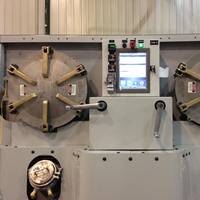
Terragon Environmental Technologies Inc., a developer of waste-to-resource technology solutions, has entered into a strategic partnership with Green Marine Capital (GMC). Terragon CEO and Co-founder Dr. Panayotis Tsantrizos said the partnership will allow the company to commercialize its products in the marine sector. Terragon’s first commercially available product, the Micro Auto Gasification System (MAGS), is designed to convert each kilogram of organic waste generated by a habitat into 2kWh of thermal energy by using gasification technology the company says is clean and simple to operate.
Partnership Targets Waste Conversion Solutions
Terragon Environmental Technologies Inc. has entered into a strategic partnership with Green Marine Capital (GMC) in an effort to enable off grid sustainability by developing and commercializing simple compact and economical products that allow any habitat to convert its waste into useful resources, such as energy and clean water, Terragon said. Terragon’s first commercially available product, the patented Micro Auto Gasification System (MAGS), converts each kilogram of waste generated by a habitat into 2kWh of thermal energy. A second product, the Wastewater Electrochemical treatment Technology (WETT), converts sewage into clean water that can be used for many utilities. Combined, MAGS and WETT can eliminate waste discharge from any habitat while reducing its need for energy and water.
Pension Funds Take Nautical Turn in Hunt For Higher Returns
Pension funds, squeezed by low interest rates, are exploring investments in shipping in their hunt for higher returns, hoping to benefit once this industry starts to recover from one of its worst ever downturns. There are signs of a gradual pick-up in world trade and ship values for the first time since the financial crisis. Ship financier NordLB has said the market could see a broad recovery but not before 2016. The industry's revival could deliver double-digit returns for pension funds that decide to add shipping to their so-called alternative assets such as infrastructure, which can make up about 15 percent of a fund. But they need to do their homework.
Corvus Energy, GMC Close Financing Agreement
Corvus Energy today announced that it has completed a strategic investment by Green Marine Capital (GMC) previously announced on May 5, 2014. Green Marine Capital, an investment partnership of global maritime companies that draws on the maritime heritage of the BW Group and DNV GL to assist Corvus deliver its growth strategy. “We are very pleased to complete this process and continue to drive both the commercial success and the innovation of our solutions not only for the maritime industry, but also in a number of adjacent sectors where our value proposition and competitive advantage is well established,” commented Andrew Morden, Interim CEO of Corvus.
Corvus Energy Gets Green Marine Capital Backing
Lithium-ion battery systems manufacturer, Corvus Energy, says agreement in principle has been reached with BW Ventures’ Green Marine Capital (GMC), a Maritime Technology Investment Partnership, for a strategic investment of US$5 million to fund working capital requirements. Corvus also says that Andrew Morden, Chief Financial Officer, has been appointed interim CEO replacing Brent Perry effective May 5, 2014. “The Board of Directors and majority shareholders of Corvus are very pleased to partner with Green Marine Capital. The firm is focused on the benefits that our technology brings to the marine industry and understands its future potential.” commented Nick Andrews, Chairman of the Corvus Board of Directors.
Corvus Partners with GMC; Morden Named Interim CEO
Corvus Energy today announced that it has entered into an agreement in principle with BW Ventures’ Green Marine Capital (GMC), a Maritime Technology Investment Partnership, for a strategic investment of $5 million with the primary purpose of funding working capital requirements. “The Board of Directors and majority shareholders of Corvus are very pleased to partner with Green Marine Capital. The firm is focused on the benefits that our technology brings to the marine industry and understands its future potential.” commented Nick Andrews, Chairman of the Corvus Board of Directors. “GMC is an industry leader and they have the capability to promote our technology quickly and globally and accelerate its deployment into the marketplace.
STG Ship Efficiency International Conference
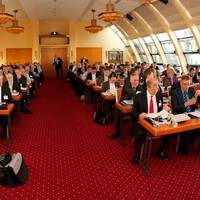
Scheduled for September 23-24, 2013 in Hamburg, the fourth STG Ship Efficiency conference will focus on one of the key issues for future shipping. The German Society for Maritime Technology, STG, launched this series of conferences to provide a platform for maritime leaders to exchange interdisciplinary ideas and expertise on questions related to ship efficiency. How to improve the efficiency of shipping operations. How to increase a ship’s profitability. How to make shipping more environmentally friendly.
Marine Capital and Sinopacific Sign Four Ship Deal
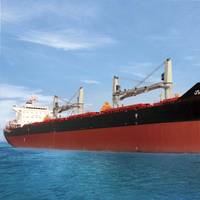
Sinopacific Shipbuilding Group and Marine Capital Ltd (MCL) have entered an agreement for the construction of four Crown 63 bulkers to be built at Yangzhou Dayang Shipyard, China. The deal, which is worth over $100 million, marks another significant step for MCL in its management activity, the compnay said. It is understood the bulkers, a new model of super fuel-efficient ships with the added advantage of significant reduction in CO2 emissions, are destined for MCL’s vehicle Eclipse Shipping and will be operated by MCL in the open market.
GLM Poised for A Strong 2001
Global Marine (GLM) is a holding company that provides offshore contract drilling services on a dayrate basis and offshore drilling management services on a dayrate or fixed-price basis. The company has an active fleet of 31 mobile offshore drilling rigs and two ultra deep-water drillships under construction. The company also participates in offshore oil and gas exploration and development projects: operations conducted mainly in the U.S., the U.K., Nigeria, Canada and other countries abroad. Contract drilling accounted for 64 percent of 1999 revenues; drilling management services 35 percent and oil and gas, one percent. On January 18 the company reported net income for the year ended December 31, 2000, of $113.9 million on revenues of $1 billion.