Shady Triangle: Southeast Asia's Illegal Fuel Market
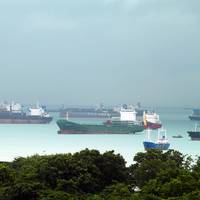
An alleged oil heist in Singapore that has already led to 20 arrests, the seizure of at least one tanker and allegations that thieves siphoned thousands of tonnes of fuel from Shell’s biggest refinery is shining a spotlight on an illegal trade worth tens of billions of dollars worldwide. Working routes in a triangle of sea anchored by Thailand, Vietnam and Singapore and encompassing the oil facilities of Malaysia, the smugglers take advantage of a difficult-to-patrol sea and enticing black market prices, experts say.
Ten Sailors Missing after US Warship, Tanker Collide
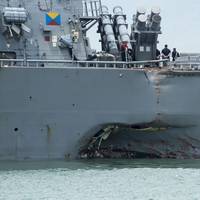
Ten U.S. sailors were missing after a collision between a destroyer and a tanker east of Singapore on Monday, the second involving a U.S. warship and a merchant ship in Asia in about two months, triggering a fleet-wide probe of operations and training. The guided-missile destroyer John S. McCain and the tanker Alnic MC collided while the warship was heading to Singapore for a routine port call. The collision tore a hole in the warship's waterline, flooding compartments that included a crew sleeping area, the U.S. Navy said in a statement. "Initial reports indicate John S.
Shippers Avoid New "pirate hotspot" west of Philippines
Piracy has surged in Sulu, Celebes Seas; waters part of route carrying iron ore to Asia. A surge in piracy to the west of the Philippines is forcing shipowners to divert vessels through other waters, stoking their costs and extending the time it takes to transport goods such as Australian iron ore to key Asian destinations. There have been 16 attacks since last March on ships in the Sulu and Celebes Seas, through which about $40 billion worth of cargo passes each year, according to the Regional Cooperation Agreement on Combating Piracy and Armed Robbery against Ships in Asia (ReCAAP). That government-backed anti-piracy organisation says over a dozen crew are currently being held hostage by Filipino Abu Sayyaf militants, all from ships sailing through the Sulu and Celebes Seas.
Pirates Attacking Bigger Ships off Philippines
Attacks in waters east of Philippines shift to big ships; ReCAAP, security groups recommend avoiding Sulu and Celebes Seas. Asian pirates are focusing more of their attacks on larger merchant ships near the Philippines, hoping for bigger ransom payments from kidnapping their crew, the head of a regional anti-piracy body said on Friday. The region's pirates have changed tactics since October, to target some of the biggest ships travelling through the Sulu and Celebes Seas, and paying less attention to small tugs and fishing boats. The growing problem has prompted Indonesia, Malaysia and the Philippines to step up air and sea patrols in the waters, through which about $40 billion worth of cargo passes each year.
MAST, AMSA Partner for Risk Management Services

Maritime security company Maritime Asset Security Training (MAST) has announced their partnership with Astbury Marine Services & Associates (AMSA), a specialist shipping and insurance response business. The combination of front-line experience and industry knowledge place MAST and AMSA as leaders in their field. The two companies will work together to provide an increased portfolio of risk management services to clients trading in difficult or complex environments. These include support following an insurance incident…
Training Coastguards is Key to Tackling Piracy
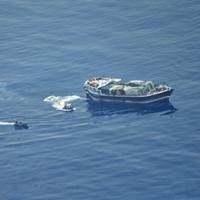
Training and mentoring of coastguards in Africa, Middle East and South East Asia is essential if coastal nations are to have effective control over their Territorial Waters and Economic Zones, says maritime security company Maritime Asset Security & Training Ltd (MAST). Furthermore, if Western Governments continue to cut back on defense spending, these nations will be increasingly reliant on their own resources to provide security in international waters adjacent to their territorial limits. Gerry Northwood OBE, COO of MAST, said, “While the U.K.
Maritime Guns For Hire Adapt to Changes in Sea Piracy
Somali pirate attacks down by 95 pct since 2011 -Maritime bureau. Cash-strapped maritime security firms are being forced to use fewer costly elite guards and to diversify into other businesses such as cyber security, as a steep decline in Somali pirate attacks and hotter competition erode fast-thinning margins. Hundreds of security firms sprang up over the past seven years to offer protection to shipping companies, with scores of merchant vessels being boarded and sailors taken hostage in pirate raids off the coast of conflict-torn Somalia. However, attacks in the Gulf of Aden and Indian Ocean have dropped from a peak of 237 in 2011 to just 10 in the first nine months of this year, the lowest since the piracy scourge began in 2008, according to the International Maritime Bureau.
Private Yacht Owners Warned
MAST launches new perimeter defense for super-yachts. MAST Technololgy, part of MAST group (‘Maritime Asset Security and Training’), a maritime security and piracy protection specialist, says that super yacht owners are turning to close protection amid fears of an escalation in maritime crime due to growing instability in North Africa due to the implications of the Arab Spring. The company, which deliveries both commercial and private maritime security, provides a range of technological and physical protection services to owners of super yachts around the world. However, already this year MAST has seen a marked increase in calls from owners, captains and managers about the security of yachts sailing near the African Continent, particularly those transiting through the Suez Canal.
MAST Partners with Beazley Group
MAST (‘Maritime Asset Security and Training’), a leading security organization that provides specialist global security services for the maritime community, has partnered with Beazley Group to offer a tailored piracy insurance policy designed specifically for shipowners with vessels operating in the Gulf of Guinea. The specialist policy has been developed in response to an increase in attacks, kidnaps and ransom demands against commercial ship owners operating in the Gulf of Guinea. This is in marked contrast to the Gulf of Aden, where latest figures from the International Maritime Bureau show a 54 per-cent drop in the number of piracy attacks in the region…