

Fuel Removed from Barge Grounded off San Juan Harbor
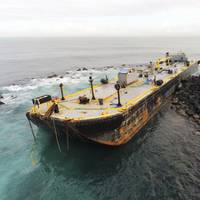
Salvors have removed the fuel from the barge grounded on the rocks off the San Felipe del Morro Castle shoreline in Puerto Rico. Approximately, 1,000 gallons of residual fuel and oily water have been removed from the Defiant barge which grounded at approximately noon, Feb. 9, just off the Port of San Juan harbor entrance.Salvage crews also brought in additional equipment to assess the extent of the barge damage and to test all tanks and voids for pressurization. The proposed plan…
Mexican Ships Carrying Humanitarian Aid Enter Havana Harbor

Two Mexican-flagged ships loaded with humanitarian aid entered Havana Harbor early on Thursday, a Reuters witness said, as Cuba's long-time ally made good on a promise to assist after Washington threatened tariffs on countries that send oil to Cuba.One of the ships, the Papaloapan, carried large quantities of white-wrapped pallets on its deck as it passed beside the El Morro castle before entering the quiet waters of the harbor.The shipment from Mexico arrives just days after the island's communist-run government announced increasingly strict rationing measures to confront U.S.
Russian Warships Enter Havana Harbor Under Washington's Watchful Eye
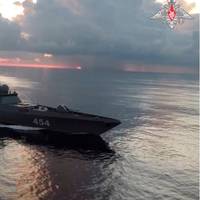
Russian navy ships churned into Havana harbor on Wednesday, a stopover the U.S. and Cuba said posed no threat but which was widely seen as a Russian show of force as tensions rise over the Ukraine war.Small groups of fishermen and curious onlookers lined the Malecon seafront boulevard in light rain to welcome the ships as they passed the 400-year old Morro castle at the harbor's entrance.The first to arrive was a fuel ship, the Akademik Pashin and a tug, the Nikolay Chiker, while…
Race Boat to Attempt US-Cuba Speed Record
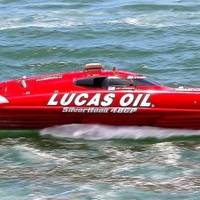
An upcoming world speed record attempt by Nigel Hook and the crew of SilverHook will be a two-for-one as they set out to achieve the fastest crossing from the U.S. to Cuba, and then back. Captain Hook has chosen August 17 to try to set two speed records in what is considered the most technically-advanced offshore monohull race boat in the world. The first objective is a one-way speed record from a point just off the Florida Keys to Havana. If that record is established, then part two will be an equally-fast or faster return trip and a two-way record.
Titanic & the Launch of a Landmark Safety Agreement
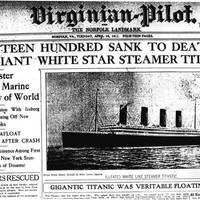
When the RMS Titanic made its debut in 1912, the ship epitomized everything new and advanced about shipbuilding and construction. It was the largest ship of its day, a steel-jacketed vessel that featured cutting-edge safety measures such as 16 watertight compartments, 15 bulkheads and 11 remotely activated watertight doors. The ship had her own waterworks, an electrical power plant more powerful than the then typical city power plant, and two wireless telegraphs. It was a sight to behold and a technological marvel, cutting a course away from the wood and sails of the shipping past.
Disasters at Sea & Their Impact on Shipping Regulation
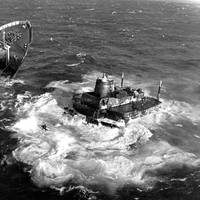
The history of marine safety is soaked in water and written in blood. “I think that most people will tell you that changes in marine safety are almost exclusively disaster-driven,” agrees Dr. Josh Smith, a professor at Kings Point and interim director of the American Merchant Marine Museum. It hasn’t always been that way. Actually, it’s been worse. Despite some efforts early on to exert some control over shipping practices, going to sea has been accepted as a risky undertaking as long as man has floated vessels.
SS United States: Leading Lady to Damsel in Distress
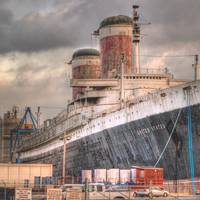
Once queen of the express liners, and the fastest, safest and biggest passenger liner in history, the SS United States today quietly awaits rescue from a pending cruise to the scrapyard. The Big Ship the Big U, the one that didn’t sink. The S.S. She is waiting for a rescue that may never come from an appointment with the scrap yard looming large on her summer schedule. And that would be a shame according to her many supporters, not the least of which was the late newsman and sailor, Walter Cronkite.
This Day in Coast Guard History – September 7
1934- Surfboats and lifeboats from Coast Guard stations Shark River, Squan Beach, Sandy Hook and others responded to a deadly fire aboard the liner Morro Castle, rescuing 129 survivors. Cutters Tampa and Cahoone also responded. After failing to get the Morro Castle under tow due to the worsening weather, they recovered as many victims from the water as they could. All told over 250 Coast Guardsmen participated in the rescue and recovery effort. Eventually this maritime disaster led to a Senate investigation and subsequent changes in maritime safety regulations. 1953-When the Panamanian SS Eugenia grounded as a result of the heavy weather generated off Cape Cod by Hurricane Carol…
Regulation of Ship Design and Construction
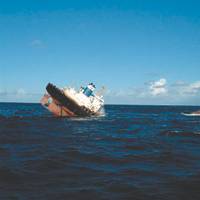
It is often said that humans learn more from their failures than from their successes. While the saying may be an exaggeration, there have certainly been a number of failures in the design and construction of ships that have resulted in improvements of future efforts. Some of those improvements have been forced on the marine industry by government regulation. More often, though, government regulation has been utilized to ensure that all players implement needful improvements that have been voluntarily adopted by forward-thinking companies.
America's Super Liner to Set Sail Once Again?
As a child, I often noticed a framed postcard that hung in the living room of my parents' home in Long Island. It was a simple silver rimmed frame with blue matting that showed back and front of the postcard — the front depicting a large ship with red, white and blue smokestacks — the back holding an autograph of former President Dwight Eisenhower (see photo below). For years, I passed this by as if it were of no significance. However, I would have never thought that one day I'd be writing about this framed postcard. The "large ship" to which I am referring is the United States Lines flagship, the S.S. United States, which my mother, Evelyn (Sullivan) Ciardiello, traveled on from New York to Europe in 1963 — 11 years after the vessel held its maiden voyage on July 3, 1952.



