
US Delays Rule on Gulf of Mexico Whale Protection
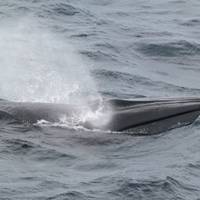
U.S. President Donald Trump's administration will delay by two years a final rule designating protections for the endangered Rice's whale in the oil and gas drilling region of the Gulf of Mexico, according to an agreement with environmental groups filed in a federal court.The U.S. Commerce Department's National Marine Fisheries Service agreed with green group Natural Resources Defense Council to finalize by July 15, 2027 the geographic area deemed critical for the Rice's whale survival. The previous deadline had been Tuesday, July 15, of this year.The agreement filed in the U.S.
Endangered Gulf of Mexico Whale Threatened by Oil and Gas Vessel Strikes
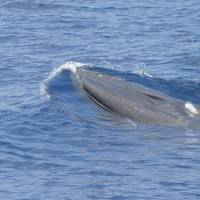
The Trump administration published a long-awaited environmental assessment on Tuesday that found that vessel strikes related to oil and gas drilling in the Gulf of Mexico are likely to jeopardize the existence of the endangered Rice's whale.The analysis, known as a biological opinion, governs how endangered and threatened marine species should be protected from oil and gas activities in the region, which President Donald Trump has renamed the Gulf of America.There are an estimated 51 Rice's whales in the Gulf…
US Halts Empire Wind Project
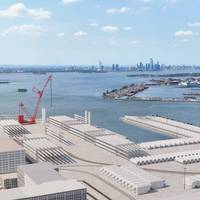
U.S. Interior Secretary Doug Burgum ordered a halt to construction on Equinor's Empire Wind project off the coast of New York, saying information suggested the Biden administration approved it without enough environmental analysis.In a post on X on Wednesday, Burgum said the information would be reviewed further but did not elaborate on the faults identified.The sudden order marks a major blow to Norway's Equinor and the nascent U.S. offshore wind industry, which enjoyed substantial…
Lack of Oversight Impacts U.S. Fishing Industry
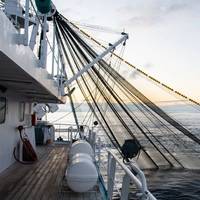
U.S. President Donald Trump’s regulatory freeze has injected chaos and uncertainty into a number of lucrative American fisheries, raising the risk of a delayed start to the fishing season for some East Coast cod and haddock fleets and leading to overfishing of Atlantic bluefin tuna, according to Reuters interviews with industry groups and federal government employees.America’s $320 billion fishing industry relies on a branch of the federal government, the National Oceanic and Atmospheric Administration, to manage coastal fisheries.
APA Applauds Withdrawal of NARW Speed Restriction Regulations
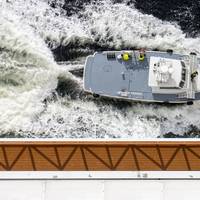
On January 16, 2025, the National Marine Fisheries Service (NMFS) formally withdrew its August 1, 2022, Notice of Proposed Rulemaking (NPRM) that sought amendments to the North Atlantic Right Whale Vessel Strike Reduction Rule that would have had the unintended consequences of endangering pilots, weakening navigation safety, and damaging the maritime supply chain on the East Coast. While the American Pilots’ Association (APA) announced that it welcomes the proposal’s withdrawal…
US Supreme Court Curbs Federal Agency Powers, Overturning Chevron Deference

The U.S. Supreme Court dealt a major blow to federal regulatory power on Friday by overturning a 1984 precedent that had given deference to government agencies in interpreting laws they administer, handing a defeat to President Joe Biden's administration.The justices ruled 6-3 to set aside lower court decisions against fishing companies that challenged a government-run program partly funded by industry that monitored overfishing of herring off New England's coast. It marked the…
BOEM Approves COP for Equinor's Empire Wind Project
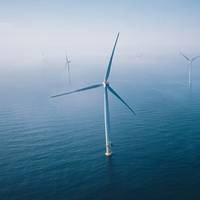
The United States’ Bureau of Ocean Energy Management (BOEM) approved the Construction and Operations Plan (COP) for Equinor’s Empire Wind project, marking another milestone in advancing the New York offshore wind project.With this permitting action by BOEM secured, Empire Wind is on track to begin construction in its federal lease area off the southern coast of Long Island later this year. Already well advanced in planning and development, Empire Wind 1 could deliver first power to New Yorkers by 2026.
USCG Needs to Do More to Improve Fishing Vessel Safety - GAO
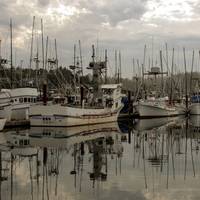
The U.S. Coast Guard must do more to improve safety in the extremely dangerous commercial fishing industry, according to a new report from watchdog agency the U.S. Government Accountability Office (GAO).Commercial fishing has one of the highest industry death rates in the U.S., according to the U.S. Bureau of Labor Statistics. Since fiscal year 2011, multiple commercial fishing vessel safety requirements have been enacted. As the principal federal agency for ensuring marine safety, the U.S.
NOAA Sued Over Whale Injuries from Drift Gillnets off California
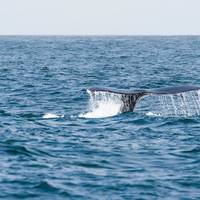
Environmentalists on Thursday sued the agency overseeing U.S. fisheries, claiming it had failed to protect endangered humpback whales from entanglement in drift gillnets - sprawling curtains of nylon mesh - used in commercial fishing off California.The lawsuit accuses the National Marine Fisheries Service of violating the Endangered Species Act by allowing drift gillnets without safeguards and failing to take into account the harm posed to whales already at risk of extinction.The suit…
Enviros Petition Feds for Whale-saving Slow Vessel Rule off Florida
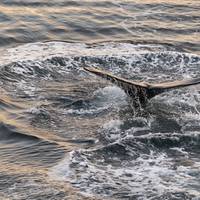
Environmental groups urged the U.S. National Marine Fisheries Service (NMFS) on Tuesday to establish a year-round speed limit for ships in areas of the Gulf of Mexico, home to one of the most endangered whales worldwide, to prevent deadly collisions.The Natural Resource Defense Council and other groups asked the NMFS in a petition to limit the speed of vessels that navigate Gulf waters off the Florida panhandle to 10 knots. The area is home to the endangered Gulf of Mexico whale of which only about 50 survive.
Gulf Copper Wins Contract to Refurbish NOAA's Henry B. Bigelow
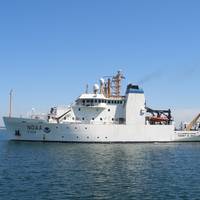
Texas-based Gulf Copper and Manufacturing said it has been awarded a $3.9 million dry docking and refurbishment of the NOAA research vessel Henry B. Bigelow. The work will be performed at Gulf Copper's Galveston yard.Commissioned in 2007 and homeported in Newport, R.I., Henry B. Bigelow is a fisheries survey vessel that studies a wide range of marine life and ocean conditions along the U.S. East Coast, primarily from Maine to North Carolina. The ship's main mission is to study and monitor fish stocks…
Corps Continues Legacy of Dredging at Port of Alaska
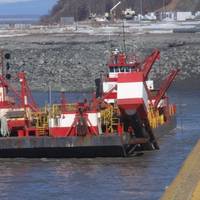
All summer long, a crimson and white boat moves back and forth through the waters near the Port of Alaska collecting silt, sand and gravel off the seafloor to allow vessels to navigate the harbor in Anchorage. The boat is a dredging vessel called the Westport, operated by Manson Construction of Seattle, Wash., which the U.S. Army Corps of Engineers – Alaska District contracted to maintain the mooring areas for the past three years.An estimated 2,400 to 2,600 cargo containers arrive…
Offshore Wind: a Freshening Breeze?
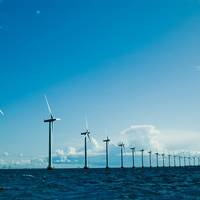
July brought news about offshore wind. There was something for everyone: optimism, disappointment, and construction, too.Finally, starting with Dominion Energy’s Coastal Virginia Offshore Wind Project, a joint venture with Danish wind developer Orsted is underway. True, this is a small project – just two wind turbines to be installed 27 miles east of Virginia Beach. But considering all the preceding hurdles, news about Dominion blew in as proverbial, hopeful fresh air. Surely…
Atlantic Offshore Wind: Favorable Winds for Maritime

Now that the United States finally can envision steady winds blowing from the Atlantic Seaboard due to a pipeline of offshore wind farms on the horizon, the maritime industry can finally step up and earn some of the benefits. This includes shipbuilding, port construction, and worker training. This article reviews the key developments and forecasts the growth in maritime jobs.The federal and state governments share responsibility for developing offshore wind farms and bringing the wind into the power grid and…
Analysis: Government Proposal 'Ill-informed' on Maritime Matters
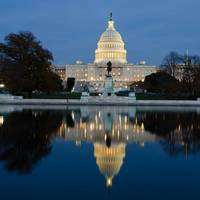
On June 22, 2018, the Office of Management and Budget (OMB) issued a federal government reorganization proposal entitled “Delivering Government Solutions in the 21st Century”. The 132-page document is subtitled ‘Reform Plan and Reorganization Recommendations’. I have not read the entire report, but I have examined those portions that relate to maritime issues. I find those portions to be uniformly ill-advised.Associate Justice Oliver Wendell Holmes, Jr. once wrote: “A page of history is worth a volume of logic.” The authors of this proposal should brush up on their history.
BOEM Proposes New Regulation for OCS
The Bureau of Ocean Energy Management (BOEM) today released proposed regulations that would provide additional clarity and certainty for its Marine Minerals Program regarding negotiated, non-competitive leases for Outer Continental Shelf (OCS) resources such as sand, gravel and shell. The proposed rule describes the negotiated, non-competitive agreement process for qualifying projects, and codifies new and existing procedures for using OCS sand, gravel and shell resources for shore protection, beach restoration or coastal wetlands restoration projects undertaken by federal, state and local governments. It also addresses the use of OCS resources for construction projects authorized or funded by the federal government.
US Fishermen Seek Federal Action against Illegal Fishing
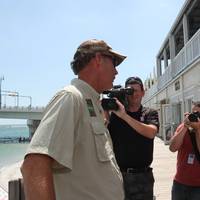
Gulf of Mexico fishermen are threatened by a daily wave of foreign illegal fishing vessels and the U.S. fishing industry is calling on Congress to take action, Florida business owners said April 8 at an event hosted by the Gulf Coast Leadership Conference. Mexican fishing boats enter U.S. sovereign waters and illegally poach hundreds to thousands of fish at a time. Although the U.S. Coast Guard and Gulf state maritime law enforcement agencies have taken aggressive action to find and destroy these illegal Mexican vessels, the frequency of such incursions continues to escalate.
Sunken Barge Near State Marine Reserve Removed
The Coast Guard says it has completed clean up and removal efforts of a barge that sank earlier near Point Conception State Marine Reserve, California. Around 12:15 p.m. on 8, June 2014 the Coast Guard received a distress call from the tugboat Calvin, reporting that the 260-foot barge Nash was sinking. The barge had a cargo of 3,900 metric tons of magnesium chloride, a non-hazardous derivative of sea water. The barge sank stern first leaving the bow extended above the water. During the sinking, air spaces in the aft cargo tanks were crushed and the hull breached. The barge rested approximately 1/2 mile south of the oil and gas pipelines extending from the Freeport-McMorRan Hermosa Platform to the shore near Point Conception.
Georgia Increases Funding for Port Deepening
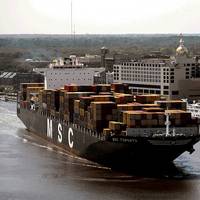
The $35 million in additional port deepening funds proposed by Georgia Gov. Nathan Deal has been approved by the state legislature and now awaits the governor’s signature. Along with previous funding, Georgia has now allocated $266 million, fulfilling the state’s portion of the Savannah Harbor Expansion Project (SHEP). “Lawmakers across Georgia recognize that improving the Savannah Harbor is critically important to the continued economic health of this state and region,” Deal said.
FERC Drafts EIS on Freeport LNG Project

The staff of the Federal Energy Regulatory Commission (FERC) has prepared a draft environmental impact statement (EIS) for the Phase II Modification Project and the Liquefaction Project. The Projects are proposed by Freeport LNG and are located in Brazoria County near the city of Freeport, Texas. The proposed Phase II Modification Project includes: modification to the previously authorized liquefied natural gas (LNG) vessel berthing dock, LNG transfer pipelines, LNG unloading arms, and the access road system at Freeport LNG’s existing Quintana Island terminal.
An Examination of USCG Sonar Expansion
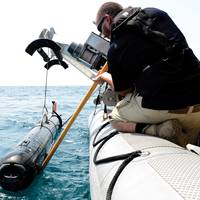
The U.S. Coast Guard is planning to widely use sonar to support its maritime security and marine environmental protection missions. The agency currently has limited capability to detect objects below the water’s surface and relies on others (such as the U.S. Navy or the commercial sector) when such detection is needed. Sonar is an acronym for Sound Navigation and Ranging. The principle is similar to radar, used in the atmosphere. While radar uses radio waves, sonar relies on sound waves, which propagate much better than radio waves do in water.
Coast Guard, Partners Perfom Simulated Oil Spill
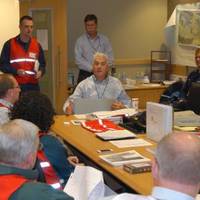
Coast Guard Sector Anchorage personnel along with federal, state, local, tribal partners and industry representatives conducted mutual aid drills in Anchorage and Deadhorse, Wednesday. During the drill, participants tested their ability to establish a Unified Command, implement the North Slope Mutual Aid Agreement and deploy equipment in response to a simulated oil spill at the remote Nikaitchuq Project at Spy Island near Deadhorse. “Drills like this are important because they…
Savannah Harbor Expansion Clears Court Hurdle
U.S. District Judge Richard M. Gergel accepted the settlement agreement between all parties involved in the mediation over the Savannah Harbor Expansion Project (SHEP) in an order that dismissed the federal litigation pending against the proposed deepening of the harbor channel. “We appreciate the patience and persistence of former Congressman Spratt and federal Magistrate Hendricks who worked throughout the mediation process ordered by Judge Gergel to bring this litigation to a successful conclusion,” said GPA Executive Director Curtis Foltz. Parties to the mediation included the South Carolina Department of Health and Environmental Control, the Savannah Riverkeeper, the South Carolina Coastal Conservation League, the South Carolina Wildlife Federation, the U.S.