Crafting Dependability: The Island Vessel Built for Any Challenge
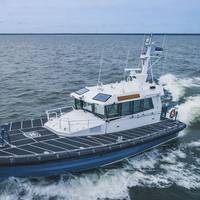
The owners of a private island in the U.S. rely on vessel transport as a lifeline to the mainland. Their boat, used for carrying supplies and even supplying medevac support in emergency situations, must be able to run at any time, in all conditions.So when it came time for their existing vessel to be replaced, the island’s owners sought a new vessel that would be rugged and reliable enough to withstand the harshest weather, said Tim Weston, the island’s general manager (note: Tim Weston is a fictitious name used to protect the identity of the island’s owners…
Port Constraints for Canada's Trans Mountain Pipeline May Crimp Oil Exports
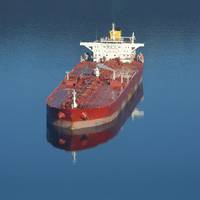
Logistical constraints at the Port of Vancouver mean waterborne oil exports from the highly anticipated Trans Mountain pipeline expansion due to start up on Wednesday may only be around half what the Canadian government-owned corporation has forecast, traders and shipping sources said.The C$34 billion ($24.82 billion) project to nearly triple the flow of crude from Alberta to Canada's Pacific Coast to 890,000 barrels per day is scheduled to start operating on May 1 after years of regulatory delays and construction setbacks.The extra 590…
Fire Breaks Out On Containership Off Canada
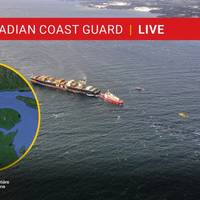
A fire has broken out on board a Liberian-registered containership off Canada's East Coast, the Canadian Coast Guard said.At around 11 p.m. on Sunday, the MSC Sao Paulo V issued a call for help after a blaze erupted in the engine room of the 294-meter-long vessel. The ship had left Montréal in the morning and was approaching the Les Escoumins pilot station while en route to Portugal when the incident occurred.By Monday afternoon, the containership crew had informed the Coast Guard that the fire was under control…
Baltic Workboats Delivers New Launch for the Laurentian Pilotage Authority
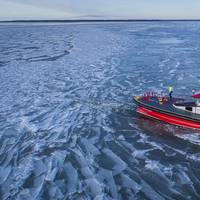
The Laurentian Pilotage Authority (LPA), based in Montreal, Canada, provides pilotage services in Canadian waters in and around the province of Quebec where cold weather can often be an issue for marine operators. So when it came time to order a new pilot boat, the LPA sought a vessel that could stand up to the region’s frigid conditions.The pilots turned to Estonia-based Baltic Workboats for the design and construction of the ice-capable Shipeku, a new 17-meter aluminum pilot…
Captain Rhéaume Joins MSRC

Captain Louis Rhéaume has joined the team at Maritime Simulation and Resource Center (MSRC).At MSRC Captain Rhéaume will supervise the implementation of maritime expertise projects and provide his professional and administrative experience to the pilots in training. Captain Rhéaume is a graduate of the Institute maritime du Québec and holder of a Master Foreign Going Certificate. He was a pilot on the St. Lawrence River in the Quebec-Escoumins sector from 1984 to 2018, President of the Lower St.
Laurentian Pilots Selects Kongsberg Digital Simulators
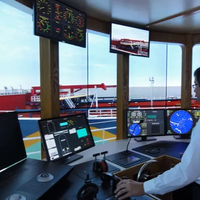
The Montreal-based Federal Crown Corporation, Laurentian Pilotage Authority (LPA) has contracted with Kongsberg Digital for the supply of three state-of-the-art K-Sim Navigation full mission ship bridge simulators, which will help LPA meet its public mandate through the development of best practices, risk assessments and in-depth incident reviews in support of maritime pilotage.The K-Sim Navigation platform can simultaneously integrate multiple bridges to create a near real-life maritime operational environment wherein LPA personnel can evaluate maneuvering techniques…
Great Lakes Pilotages Go Live with Saab
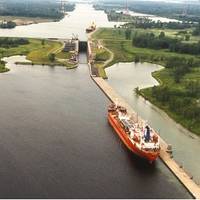
The Canadian Great Lakes Pilotage Authority (GLPA) and the Great Lakes Pilotage Division of the U.S. Coast Guard have opened the 2017 shipping season using an upgraded Great Lakes Pilot Management System based on the latest version of Saab’s KleinPilot. The new system went live on schedule with the season opening. It is being used by the two organizations and the U.S. Great Lakes pilotage associations to manage the rostering and dispatch of the more than 100 marine pilots on the Great Lakes and automatically generate billing in accordance with the applicable tariffs.
Vancouver: Maritime’s New Home Address

The Vancouver International Maritime Centre (VIMC) is on a mission to grow the city and port into one of the world’s premiere maritime centers. Maritime Reporter & Engineering News recently spoke with Kaity Arsoniadis-Stein, Executive Director of the newly re-established VIMC, for her insights on the pace and direction of the initiative. Let’s start out easily. Why Vancouver? Why now? Why Vancouver? Projections and studies indicate that global trade will increase and shift to the Pacific due to the demand of resources by China and India.
APA Chooses MSRC for Pilot Training

Canada's Atlantic Pilotage Authority (APA) once again chose the Maritime Simulation and Resource Centre (MSRC) as its preferred training organization for specialized SEAiq training on Portable Pilot Units (PPUs). A total of 16 pilots from Cape Breton Island Pilotage were trained by MSRC's Captain Bernard Cayer in Port Hawkesbury, Nova Scotia. PPUs are mobile devices such as laptops or tablets that can plug in to a ship’s navigation system, giving pilots added situational awareness, including access to real-time downloadable local navigational information.
Port of Prince Rupert Adds Shore-based Radar
The Port of Prince Rupert has commissioned a new shore-based radar regime designed to safely accommodate the port’s growth in vessel traffic and international trade. Shore-based radar builds on the existing vessel traffic service that provides active vessel monitoring and navigational information to vessels at the Port of Prince Rupert. Transmitting data from three tower sites across the port’s coastal shores, the system provides coverage ranging from the northeast of Haida Gwaii to the Alaskan border. “The addition of radar improves the capability of the port to proactively monitor and manage vessel movement in the harbor,” said Don Krusel, President & CEO of the Prince Rupert Port Authority.
Port of Prince Rupert Adds Navigation Systems
The Port of Prince Rupert, in collaboration with the Canadian Coast Guard (CCG), as well as input from the Pacific Pilotage Authority (PPA) and BC Coast Pilots (BCCP), has established another aid to navigation with advanced technology capabilities at the mouth of Prince Rupert’s Fairview Channel. Prince Rupert’s shore-based radar project also progressed toward completion with the arrival of several metric tons of technical equipment last week. Over the past five years the Port of Prince Rupert has invested millions of dollars in capital to assess risk, streamline practices and procedures, and create a marine safety regime rivaling the world’s largest ports.
Bureau Veritas Issues ISPO Certificate to Port of Cork
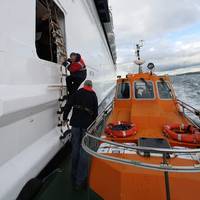
Classification society Bureau Veritas has issued its first certificate under the ISPO (International Standard for Maritime Pilot Organizations) standard of best practice for pilots and pilot organizations to the Pilotage Authority, Port of Cork, Ireland. The ISPO certification covers the Pilotage services and Vessel Traffic Management System. The ISPO is an accessible industry specific standard, managed by a group of users, that improves safety and quality and provides transparency to shipowners and stakeholders on pilotage standards.
Port Monitors Impact of Ship Noise on Whales
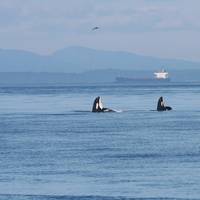
Underwater noise has been identified as a key threat to at-risk whales. In order to better understand and manage the impact of shipping activities on whales throughout the southern coast of British Columbia, a hydrophone listening station has been deployed by the Port Metro Vancouver, with support from the University of Victoria’s Ocean Networks Canada and JASCO Applied Sciences, to monitor underwater vessel noise in the Strait of Georgia. The hydrophone listening station deployment and monitoring activities are part of the Enhancing Cetacean Habitat and Observation (ECHO) Program…
PPA Canada Signs on Helm CONNECT
Today, software developer Helm Operations announced that it has signed Pacific Pilotage Authority (PPA) Canada to its Helm CONNECT Preventive Maintenance software. PPA operates five pilot boats and provides complete pilotage services for all ports on Canada’s west coast including Vancouver and those within the Fraser River. Ekkebus continues, touching on a core element of Helm software’s purpose. Ron deBruyne, CEO and Founder of Helm Operations is proud to have Helm CONNECT serve PPA and says. Helm CONNECT is designed to be intuitive in every way. Helm works closely with workboat personnel when building the product through direct consultation with real life users, like port engineers, crew and shore-based personnel.
Kvichak Delivers 2 Boats to West Coast Launch
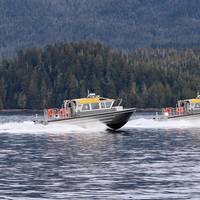
Kvichak Marine delivered two all-aluminum 36.6’ crew/pilot boats to West Coast Launch, Ltd. (WCL), which operates year-round as a water transportation company in Prince Rupert, B.C., Canada. The new vessels, Lelu and Kitson, will join the five vessels already operating in the West Coast Launch fleet, as the company prepares for the growth of Prince Rupert and the demands for transportation with the LNG industry. Lelu and Kitson are powered by twin Volvo D11 diesel engines rated for 510 bhp and ZF 205 marine gears. The engines are coupled to Hamilton 322 waterjets providing a speed of 35 knots.
Ice Causes Shipping Delays Across North America
Inchcape Shipping Services (ISS) is advising that due to the extreme cold weather which has settled over the eastern North American continent, there have been heavy delays in shipping operations since January 4, 2014. The delays have been caused primarily by ice build-up between Lanoraie and the Three Rivers (St. Lawrence River). Three Canadian Coastguard ice breakers have been working round the clock in the area since then, but no ships have been allowed to depart Montreal outbound due to this. There are currently five ships docked at Montreal awaiting favorable ice conditions in order to depart for sea, and Canadian Coast Guard Ice Operations advise that shipping may resume for departures at 0630hrs local time on January 8, 2014.
Port of Montreal Open to post-Panamax Ships
The Canadian Coast Guard (CCG) authorizes the passage of vessels up to 44 metres wide in the Quebec-Montreal section of the St. Lawrence navigation channel. The previous authorized width was 32.1 metres without restrictions. The CCG has made the provisions following a study commissioned by the Montreal Port Authority (MPA) and conducted jointly with Transport Canada, the CCG, the Laurentian Pilotage Authority and the Corporation of Central St. Lawrence Pilots. “I would like to thank everyone who has collaborated on this project,” said MPA President and CEO Sylvie Vachon. Specifically, the new provisions will make it possible for all post-Panamax vessels, including 6,000-TEU (twenty-foot equivalent unit) container ships, to reach Montreal.
Heavy Lift Ship Tests Port Rupert Pilots
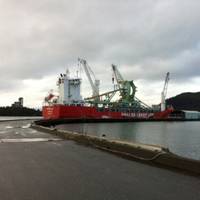
Prince Rupert Port Authority, BC, saw the safe arrival of equipment integral to its coal export operations aboard 'HHL Macao'. The stacker/reclaimer unit, for delivery to Ridley Terminals Inc. is considered important for the planned expansion of coal export operations. The successful arrival of the vessel and subsequent movement of the stacker/reclaimer components required a wide-ranging team effort. The Prince Rupert Port Authority collaborated with ship's agent Peter Riley of G.W.
Canada Introduces Compulsory Pilot Cert. on Great Lakes
The Honourable Steven Fletcher, Minister of State (Transport), announced changes that will allow the Great Lakes Pilotage Authority to maintain safer and more efficient pilotage services on the Great Lakes. The updated regulations allow the authority to ensure that officers have the local knowledge required to navigate their vessels in the region. "These regulatory changes will improve the safety of people and goods crossing the Great Lakes," said Minister Fletcher. Under the changes to the Great Lakes Pilotage Regulations, and in compliance with thePilotage Act, all Canadian ship officers who operate within the Great Lakes region will be required to hold a valid pilotage certificate.
Cat Marine Power New Canadian Pilot Boats

Every marine vessel requires two critical components to ensure a safe journey: a competent master at the helm and a reliable power source in the engine room. Because of the increasing ship traffic and safety concerns, the design of pilot boats used to transfer pilots to and from ships has evolved significantly in recent years. Cat marine engines will power the majority of the new breed of pilot boats built for ports across Canada. The Laurentian Pilotage Authority (LPA), based in Montreal…
Workboats: The Fine Crafting of Aluminum Boats
British Columbian boat builders pioneered aluminum construction in the 1960s and '70s in the building of efficient commercial fishing boats. Aluminum won wide acceptance in BC for its low maintenance costs and durability. Since that time they have honed their skills in the craft of aluminum fabrication on a wide range of single and multi-hulled crew boats, yachts, ferries and pilot boats. Point Hope Shipyard in Victoria, earned recognition for their part in the fabrication of modules for the Incat designed fast ferry project where weight and strength were important criteria. Now, utilizing workers who have come out of this tradition, Point Hope Shipyard in Victoria, BC are building to a highly evolved pilot boat design.