

Phoenix International Expands into Rocket Booster Recovery Sector

Phoenix International has announced their expansion into the rocket booster recovery sector, supporting commercial and government launch programs with advanced subsea search and recovery capabilities.Using our proven Remora Remotely Operated Vehicle (ROV), Towed Pinger Locator (TPL), and Side Scan Sonar systems, Phoenix provides reliable, efficient, and safe location, inspection, and recovery of rockets from ocean depths to 6,000 meters.With decades of subsea recovery and offshore operations experience…
US Navy Ships Exit AirAsia Search
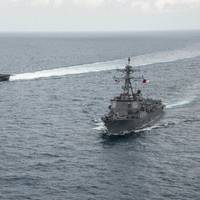
USS Sampson (DDG 102) and USS Fort Worth (LCS 3) concluded their assistance efforts January 15 after contributing more than 650 search hours to the Indonesian-led search effort for AirAsia flight QZ8501, The U.S. Navy reported. Working in coordination with the Government of Indonesia, the U.S. 7th Fleet assigned USS Sampson and USS Fort Worth to the mission shortly after the December 28 crash. USS Sampson departed from Singapore December 29 and arrived on station in the Java Sea December 30.
US Navy Using Advanced Equipment in AirAsia Search
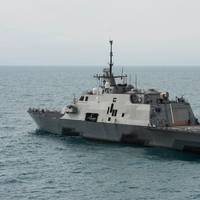
An eight-member team from Mobile Diving and Salvage Unit (MDSU) 1 onboard USS Fort Worth (LCS 3) is supporting the ongoing Indonesian-led search effort for AirAsia flight QZ8501 with advanced Tow Fish side scan sonar systems capable of providing high-resolution images of the ocean floor. The Tow Fish side scan sonar system is used to identify objects on the seafloor and provide accurate imagery for analysis. The sonar carries a passive listening device for detecting an acoustic pulse and is towed behind a vessel between 1-5 knots.
NOAA Begins Hydrographic Survey Season
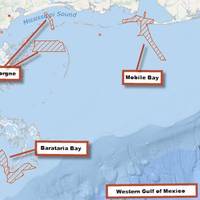
New data will update nautical charts around the country. As sure as spring arrives, NOAA vessels and independent contractors are hitting the seas for the nation's 180th hydrographic surveying season, collecting data for over two thousand square nautical miles in high-traffic U.S. coastal waters. "Nautical charts are the foundation for the nation's maritime economy, and NOAA hydrographers spend months at sea, surveying critical areas to ensure safe navigation for the shipping, fishing, and boating communities," said Rear Admiral Gerd Glang, director of the Office of Coast Survey.
Side Scan Training for Law Enforcement, Government Agencies
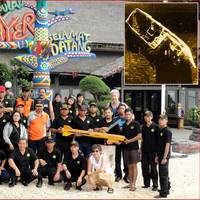
Many public safety dive teams, police and sheriffs departments, and government agencies are acquiring side scan sonar systems to assist in their underwater search and survey operations. Side scan is the ideal tool for these operations because it produces detailed images of the underwater environment regardless of water clarity. In addition, the sonar is able to search large areas quickly, scanning several hundred feet of ocean, lake, or river bottom with each pass of the boat. Side scan can easily locate a variety of targets including sunken boats, submerged vehicles, and drowning victims.
L-3 Klein Wins Port Security Deal
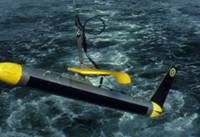
L-3 Klein Associates, Inc. received an order from the Los Angeles Harbor Department for multiple L-3 Klein System 5500 dynamically focused Multi-Beam Side Scan Sonar Systems. Harbor and Port Security professionals with the use of dual L-3 Klein Side Scan Sonar Systems are able to identify potential underwater threats, such as Improvised Explosive Devices (IED), to commercial shipping. Captain Michael Graychik of the Los Angeles Port Police said, “We are excited to be one of the first civilian Law Enforcement agencies to use this technology.
L-3 Appoints Morton as Sales Manager
L-3 Communications announced that its Klein Associates, Inc. division (L-3 Klein) has appointed Rick Morton as Sales Manager for their Side Scan Sonar Systems. Working with other members of the Klein team, Mr. Morton will be responsible for implementing Klein’s strategy to multiply its sales of domestic and international Side Scan and Multi-Beam Sonar Systems. With over 10 years experience in hydrographic and oceanographic markets, both as a salesman and in the field, Mr. Morton is ideally suited to further expand and enhance Klein’s valued customer network. Mr. Morton was most recently with Reson, Inc. in Goleta, CA as an Area Sales Manager responsible for Multi-beam and Single beam Sonar sales in the eastern half of North America.
USS Charlotte Achieves Milestone During Under-Ice Transit
By Lt. j.g. Dave Ozeck, Commander, Submarine Force, U.S. The improved-Los Angeles-class fast attack submarine USS Charlotte (SSN 766) arrived in Norfolk, Va., Nov. 29, following an historic transit that began in Pearl Harbor, Hawaii, and took the boat under the arctic ice cap. During the transit, Charlotte surfaced at the North Pole, ascending through 61 inches of ice - a record for a Los Angeles-class submarine. Upon reaching the Pole, the boat commenced a 12-hour underwater search of the ice canopy, utilizing specialized ice avoidance and side scan sonar systems. Once an ideal location was found, the ship performed a flawless vertical ascent.



