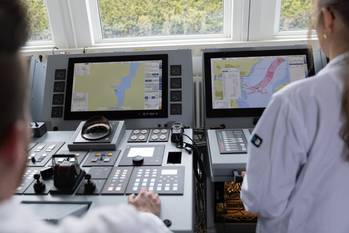

US Navy Using Advanced Equipment in AirAsia Search
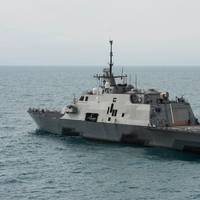
An eight-member team from Mobile Diving and Salvage Unit (MDSU) 1 onboard USS Fort Worth (LCS 3) is supporting the ongoing Indonesian-led search effort for AirAsia flight QZ8501 with advanced Tow Fish side scan sonar systems capable of providing high-resolution images of the ocean floor. The Tow Fish side scan sonar system is used to identify objects on the seafloor and provide accurate imagery for analysis. The sonar carries a passive listening device for detecting an acoustic pulse and is towed behind a vessel between 1-5 knots.
NOAA Finds Lost 19th Century U.S. Coast Survey Steamer
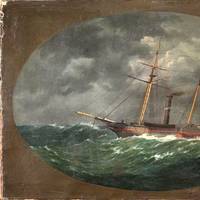
More than 153 years after it was lost in a violent collision at sea, government and university maritime archaeologists have identified the wreck of the ship Robert J. Walker, a steamer that served in the U.S. Coast Survey, a predecessor agency of NOAA. The Walker, while now largely forgotten, served a vital role as a survey ship, charting the Gulf Coast ‒ including Mobile Bay and the Florida Keys ‒ in the decade before the Civil War. It also conducted early work plotting the movement of the Gulf Stream along the Atlantic Coast.
Subsea Wreck Identifed Off NJ Coast 153 Years On
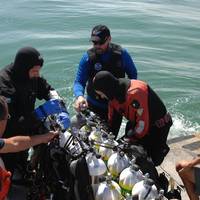
Lost after a violent collision at sea, government and university maritime archaeologists have identified the wreck of the ship 'Robert J. Walker', a steamer that served in the U.S. Coast Survey, a predecessor agency of NOAA. Twenty sailors died when the Walker sank in rough seas in the early morning hours of June 21, 1860, ten miles off Absecon Inlet on the New Jersey coast. The crew had finished its latest surveys in the Gulf of Mexico and was sailing to New York when the Walker was hit by a commercial schooner off New Jersey.